Government orders plan to train 10,000 young professionals annually as Tanzania puts human capital at the centre of its long-term economic transformation
By Business Insider Reporter, Arusha
Tanzania has ordered the preparation of a programme to recruit and develop the skills of 10,000 young professionals every year, putting human capital at the centre of the country’s drive to achieve the National Development Vision 2050 (Dira 2050).
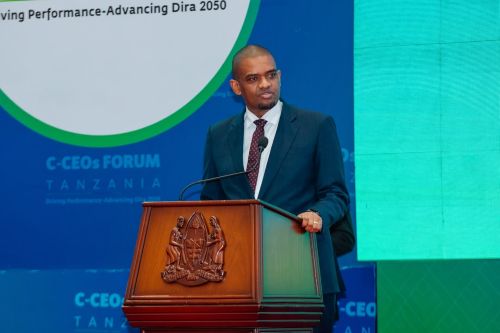
Vice President Deogratius Ndejembi (pictured above) gave the Minister of State in the President’s Office responsible for Planning and Investment, the Finance Minister, Agriculture Minister and Treasury Registrar two weeks to develop the plan.
Speaking at the opening of the C-CEOs Forum 2026 in Arusha, Ndejembi said Tanzania could not achieve Dira 2050 without investing in young people equipped with the skills and expertise required by a changing economy.
“Public entities should not be measured only by the level of dividends they contribute, but also by how they increase productivity among young people, who are important to our national development,” he said.
The programme is expected to involve young people from different professional backgrounds and provide opportunities to develop their capacity to participate in implementing national development priorities.
Ndejembi said human-capital investment would be critical to raising productivity, driving innovation and improving the ability of public institutions to respond to economic change.
The growing adoption of artificial intelligence and other digital technologies, he added, means institutions will increasingly require workers capable of using new tools to improve efficiency and service delivery.
From asset custodians to value creators
The youth directive forms part of a broader push to redefine the role of public institutions under Dira 2050.
Ndejembi said state entities should go beyond safeguarding government assets and instead use them to generate greater economic value.
“Do not become merely custodians of assets; become value creators for the assets entrusted to you,” he said.
Public entities, he added, should become engines of economic transformation by increasing production, improving service quality, strengthening competitiveness and using resources more efficiently.
He also called on chief executives to develop future leaders and nurture talent, arguing that leadership should ultimately be judged by the strength and performance of institutions they leave behind.
Ndejembi also directed every public institution to prepare plans to address potential effects of El Niño, including collaboration with the private sector.
Private sector expected to drive growth
Minister of State in the President’s Office, Planning and Investment Prof Kitila Mkumbo said achieving Dira 2050 would require closer cooperation between government institutions and businesses.
“Implementation of Dira 2050 requires the public and private sectors to work closely together, given the role of each side in achieving the country’s national development goals,” Mkumbo said.
The Vision envisages the private sector contributing 70 percent of the economy and the public sector 30 percent, according to Mkumbo, making a conducive business and investment environment crucial.
“For the private sector to perform well, public institutions must create a conducive environment for business and investment,” he said.
Chairperson of the Parliamentary Standing Committee on Public Investments Masanja Kadogosa (who has since then been appointed Minister for Works) said reforms in public institutions had made progress, but further improvements were required.
He called on state entities to increase productive activity, facilitate greater private-sector participation and align their corporate plans with Dira 2050.
Beyond dividends
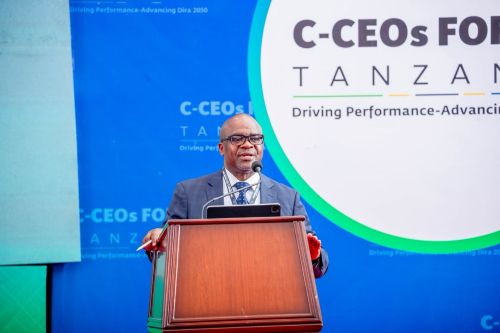
Treasury Registrar Nehemiah Mchechu said implementation of the Vision would also require a broader approach to measuring the performance of public enterprises.
Dividends alone, he said, do not capture their full economic contribution.
Performance should also be measured through productivity, service quality, resource efficiency, financial resilience, innovation, technology adoption, competitiveness and wider economic impact.
The value of government investments in public entities and companies in which the state holds minority interests increased from TSh67.95 trillion in 2020/21 to TSh92.28 trillion in 2024/25.
Non-tax revenue generated from government investments also rose from TSh637.7 billion in 2020/21 to TSh1.327 trillion in 2025/26.
Mchechu said the growth places greater responsibility on public institutions to ensure that state assets are managed efficiently and generate greater value.

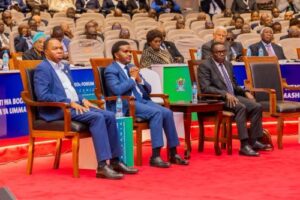
The three-day C-CEOs Forum, which runs from September 28 to 30, has brought together more than 700 participants from public institutions, businesses, financial institutions, investors, development partners and academia.
The forum, sponsored by Tanzania Commercial Bank (TCB), is being held under the theme “High-Performing Public Entities for a Competitive, Inclusive and Resilient Economy: Advancing Dira 2050.”
TCB Managing Director Adam Mihayo said the bank was ready to work with stakeholders to implement Dira 2050 and would continue aligning its strategy and financing with productive sectors supporting the country’s long-term development goals. The government’s proposed 10,000-youth annual programme, however, puts another measure of success on the table: whether Tanzania can develop enough skilled people to turn the ambitions of Dira 2050 into productive businesses, stronger institutions and sustained economic growth.