
By Correspondent John Mapepele, Washington D.C.
Tanzania has agreed with the US Chamber of Commerce in Washington, and the US Government to pursue the strategic implementation of the recently signed health-sector agreement for the mutual benefit of both sides, while positioning Tanzania as a hub for the production and distribution of medicines and medical equipment across Africa.
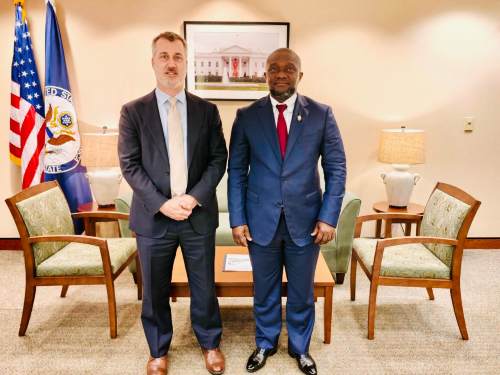
Speaking on September 4, 2026, at the US-Tanzania Health Cooperation Stakeholders’ Meeting held between the Government of Tanzania and the US Chamber of Commerce, and later during a meeting with senior officials of the US Department of State, Minister for Health, Mohamed Mchengerwa, explained that Tanzania is already well prepared to ensure the agreement is fully implemented.
Elaborating on the investment-friendly environment in the pharmaceutical sector, he said Tanzania is working to align its taxation and tariff arrangements for pharmaceutical raw materials and packaging materials with the systems of the East African Community (EAC) and the Southern African Development Community (SADC).
The aim is to make domestic production more competitive than importing finished products from abroad.
He also said Tanzania has been selected to host and lead the SADC Pooled Procurement Services, an initiative aimed at consolidating the demand for medicines and health products across the 16 member states of SADC. This creates a powerful opportunity for manufacturers.
Rather than establishing production facilities in Tanzania solely to serve a domestic market of approximately 60 million people, investors can use Tanzania as a production and distribution hub serving the regional market of 16 SADC countries, representing more than 300 million people.
He said Tanzania is ready to work with serious investors from the United States and is prepared to receive capital and technology.
He added that the Government has expanded and improved health facilities across the country, while the Universal Health Insurance Act, signed in 2023, provides the legal foundation for a nationwide health insurance system.
Tanzania is also planning to officially launch Universal Health Insurance nationally in the near future, with the ambition of gradually bringing more than 60 million people into a single system for sharing the risks and costs of healthcare.
The Minister further said the Government is pursuing another strategic objective: transforming Tanzania from a country that relies heavily on imported medicines into a country that manufactures medicines.
Making Tanzania easier to invest in
Minister Mchengerwa explains: “The Government recognises that attracting investment in pharmaceutical manufacturing requires more than simply promoting opportunities. It requires transforming the environment in which companies operate.
“To address this challenge, the Ministry of Health has established the Pharmaceutical Investment Acceleration Taskforce (PIAT), bringing together key institutions including the Tanzania Investment and Special Economic Zones Authority (TISEZA), the Tanzania Medicines and Medical Devices Authority (TMDA), the Medical Stores Department (MSD), and the Tanzania Revenue Authority (TRA).”
He also said Tanzania is developing a special economic zone dedicated to the pharmaceutical sector at Mloganzila, outside Dar es Salaam, where prepared plots are available for investors. Initial allocation of some plots has already taken place.
In addition, the country is developing a plan for a National Vaccine and Biological Products Manufacturing Plant, as part of its broader ambition to build domestic manufacturing capacity.
He further said that TMDA has attained Level 3 maturity under WHO standards, placing Tanzania among the African countries with more advanced regulatory systems. The authority is also developing systems based on reliance on decisions by other regulatory authorities. This could reduce duplication of regulatory procedures for products that have already been approved by recognised regulators such as the U.S. Food and Drug Administration (FDA).