
By Peter Nyanje
Zanzibar has opened talks with EgyptAir on a potential partnership to establish a government-owned airline, signalling an ambition to strengthen domestic air transport while expanding the islands’ reach into regional and international markets.
Zanzibar Minister for Construction and Transport, Dr Khalid Salum Mohamed, said discussions with EgyptAir were already under way on the possibility of establishing a joint airline that would serve Zanzibar and the wider region.
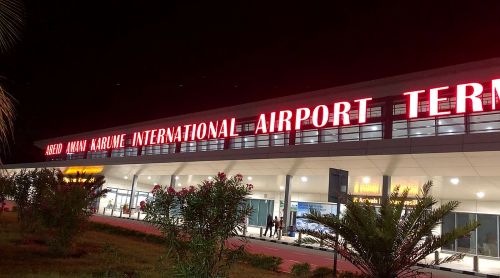
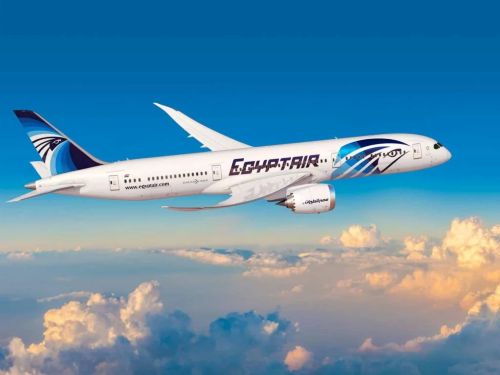
He made the disclosure on Saturday, September 5, 2026, during a reception at Abeid Amani Karume International Airport (AAKIA) marking EgyptAir’s inaugural direct flight from Cairo to Zanzibar.
“Besides bringing this aircraft, we have been in discussions with EgyptAir to establish a joint airline,” Dr. Khalid said.
He said Zanzibar wanted to establish its own airline, with the proposed carrier expected to serve domestic routes as well as destinations outside the islands.
The initiative, he suggested, could eventually see Zanzibar develop an airline capable of connecting the islands with markets in the region and further afield.
The discussions therefore represent potentially more than a new airline project. They point to an attempt by Zanzibar to build greater control over the air transport infrastructure underpinning its tourism and investment economy.
From tourism gateway to aviation hub
The proposal comes as Zanzibar’s aviation market is expanding rapidly.
Dr Khalid said nearly 33 international airlines currently operate through AAKIA, while more than 90 airlines in total use the airport, including domestic passenger carriers.
He said passenger traffic was approaching three million annually, underlining the growing commercial importance of the airport.
The figures help explain why Zanzibar is considering establishing its own carrier.
An expanding airport with a growing international airline presence creates an increasingly attractive market for a locally anchored airline—but it also raises the stakes for how such a carrier is structured and managed.
For Zanzibar, the objective would not necessarily be to compete directly with every international airline using AAKIA. Instead, a local carrier could focus on strengthening domestic connections, regional routes and selected international markets where demand can support commercially viable services.
That could include links to neighbouring East African destinations and selected long-haul markets.
EgyptAir brings more than a new route
EgyptAir’s arrival provides Zanzibar with an immediate connection to Cairo and, potentially, a strategic partner with experience operating an international network.
The Egyptian carrier launched its direct Cairo-Zanzibar service in September 2026 with two weekly flights, with the frequency expected to rise to three flights a week from December, according to Dr Khalid.
The new route is significant because Cairo is one of Africa’s major aviation hubs.
A direct Zanzibar-Cairo connection gives travellers access not only to Egypt but also to a broader network linking Africa with Europe and the Middle East.
Dr. Khalid said the route was expected to open new opportunities particularly for travellers from North America, Western Europe and Eastern Europe.
The inaugural flight also recorded a load factor of more than 90 per cent, according to Egypt’s State Information Service, suggesting strong initial demand for the route.
For Zanzibar, the question now is whether that demand can be converted into a deeper commercial relationship with EgyptAir.
Why an airline matters to Zanzibar’s economy
The economic rationale for the proposed airline is closely linked to Zanzibar’s dependence on tourism.
Official statistics show that Zanzibar received 98,370 international visitors in July 2025, an increase of 44.2 per cent from 68,223 in July 2024.
Significantly, 91 per cent of those visitors—89,325 people—entered Zanzibar through the airport, including 71,696 on international flights.
The numbers illustrate the central role of aviation in the island’s tourism economy.
The relationship extends beyond hotels and tour operators.
More visitors create demand for accommodation, restaurants, taxis, tour companies, food suppliers, retailers, entertainment and other services. International air links also make it easier for investors, business executives and conference delegates to reach the islands.

OCGS data shows that the accommodation and food-services industry recorded nominal value added of TSh 759.7 billion in the first quarter of 2025, up from TSh 666.6 billion in the corresponding quarter of 2024.
Transport and storage value added also increased from TSh 149.3 billion to TSh 154.7 billion during the same period.
The figures do not mean that all activity in these sectors is generated by aviation or tourism. But they demonstrate the scale of the economic ecosystem that depends on the movement of people and goods.
A market approaching three million passengers
The proposed airline comes at a time when AAKIA itself is becoming an increasingly important economic asset.
OCGS data shows the airport handled 1.59 million passengers in 2022, following the severe disruption caused by the Covid-19 pandemic.
More recent data indicates that passenger traffic has continued to expand. OCGS recorded 247,618 inbound and outbound flight passengers in February 2026 alone, while international tourist arrivals reached 86,839 during the month.
Dr Khalid’s latest estimate that annual passenger traffic is approaching three million suggests that Zanzibar’s aviation market has moved significantly beyond its pre-pandemic recovery phase.
For investors, that growth represents an expanding pool of potential passengers.
But for a new airline, passenger numbers alone are not enough.
The commercial test
The most important question is whether a Zanzibar-owned airline can turn market growth into a sustainable business.
Airlines are capital-intensive businesses. A new carrier would need aircraft, trained pilots and cabin crew, maintenance arrangements, insurance, airport facilities, route rights, marketing capacity and substantial working capital.
It would also need to maintain high safety and operational standards while ensuring that aircraft are deployed on routes capable of generating adequate yields.
This is where the proposed relationship with EgyptAir could become particularly important.
If the discussions result in a meaningful strategic partnership, EgyptAir could potentially contribute expertise in airline operations, network planning, training, safety management and route development.
However, the precise nature of the proposed partnership remains to be established.
Zanzibar will need to clarify whether EgyptAir’s role would involve technical assistance, management support, aircraft leasing, training, financing, equity participation or a combination of these elements.
The ownership structure and capitalisation of the proposed airline will also be crucial.
A state-owned carrier that is established without a commercially disciplined operating model could become a financial burden rather than an economic asset.
Conversely, a well-capitalised airline with professional management, clearly defined routes and strong integration with Zanzibar’s tourism strategy could strengthen the islands’ economic connectivity.
Beyond carrying tourists
The strategic opportunity is therefore larger than simply bringing more tourists to Zanzibar.
A successful local carrier could improve domestic air connectivity, particularly between Unguja and Pemba, while creating stronger links between Zanzibar and regional markets.
It could also support business travel, conferences, investment missions, high-value tourism and potentially air cargo.
That could allow more economic sectors to benefit from the growth in international connectivity.
Farmers and food suppliers, for example, could benefit from stronger links to premium markets if suitable cargo capacity and logistics systems are developed.

Small businesses could gain from increased visitor flows, while investors could benefit from easier access to the islands.
The challenge will be ensuring that the economic value generated by rising passenger numbers spreads beyond the airport, hotels and airlines.
EgyptAir route provides an early test
The Cairo route offers an early indication of what may be possible.
EgyptAir is initially operating two weekly flights, with the frequency expected to increase to three weekly services from December.
The strong initial load factor suggests that there is appetite for the connection.
For Zanzibar, the immediate priority should be to understand who is travelling on the route, why they are travelling and where they are connecting beyond Cairo.
That information could help determine which future routes a Zanzibar-based airline should target.
Rather than attempting to operate a large international network from the beginning, the carrier could potentially build around routes where Zanzibar has strong underlying demand and where existing connectivity remains limited.
A strategic opportunity – with financial risks
The proposed airline is therefore both an opportunity and a test.
Zanzibar has a growing tourism economy, an expanding international airport and a passenger market approaching three million a year. It also has an increasingly diverse group of international airlines serving the destination.
Those conditions provide a potentially strong foundation for a local carrier.
But aviation history is littered with state-owned airlines that struggled because commercial decisions were subordinated to political objectives.
Zanzibar’s proposed airline will need to avoid that trap.
Its success will depend on professional management, realistic route selection, efficient fleet utilisation, financial discipline and uncompromising attention to safety.
EgyptAir could provide valuable expertise, but the partnership must ultimately be judged by the commercial value it creates for Zanzibar.
For now, the most significant development is that the conversation has moved beyond the arrival of an Egyptian airline at AAKIA. Zanzibar is now exploring whether that relationship can help create an airline of its own.