
By Business Insider Reporter
Tanzania has been urged to strengthen enforcement of its national cleanliness programme, with the Government warning that poor waste management is not only an environmental and public health concern but also a growing threat to urban productivity, tourism and investment.
Minister of State in the Vice-President’s Office (Union and Environment), Hamad Yussuf Masauni, said regional and district authorities, councils and local government leaders must establish effective systems to ensure that the last Saturday of every month is observed as the National Environmental Cleanliness Day.
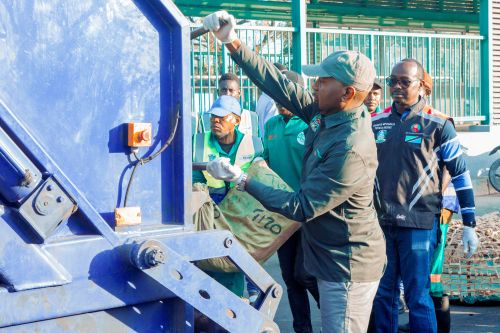
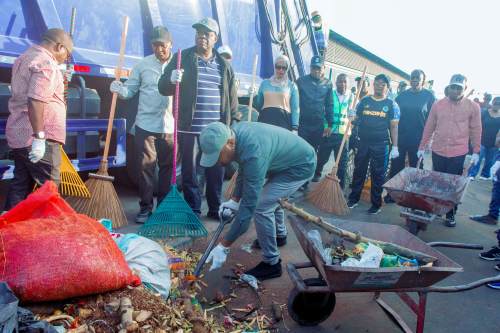
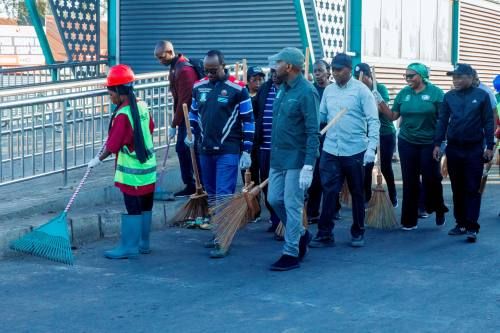
Masauni made the call on September 5, 2026, after leading a cleanliness exercise at Buguruni Market in Dar es Salaam.
The monthly initiative dates back to 2016, when the Government, under then Vice-President Samia Suluhu Hassan, designated the last Saturday of every month as the National Environmental Cleanliness Day.
The Vice-President’s Office subsequently issued the Environmental Management (Designation of National Cleanliness Day) Guidelines, 2016, under Government Notice No. 139, providing a framework for implementing the directive.
But Masauni said the effectiveness of the programme depends on stronger implementation at the local level.
He called on regional and district commissioners, council directors, local government leaders and village and neighbourhood authorities to put in place practical mechanisms for enforcing the cleanliness directive while taking into account the needs of different groups within communities.
The responsibility, he stressed, extends beyond government.
Businesses, investors, manufacturers, private-sector companies, waste service providers, educational institutions and communities all have a role to play in keeping their surroundings clean and ensuring that waste is properly managed.
A cost to the economy
The Government’s concern goes beyond the appearance of towns and cities.
Masauni warned that indiscriminate dumping, blocked drainage systems, dirty commercial areas and poorly managed solid and hazardous waste can have direct consequences for public health, infrastructure, waterways and the wider economy.
Poor environmental management can increase the incidence of disease and raise public and private healthcare costs. It can also reduce the attractiveness of Tanzania’s cities to tourists and investors while damaging rivers, beaches, marine ecosystems and other natural resources that support livelihoods.
For businesses, inefficient waste management can translate into higher operating costs, disruption caused by flooding and deteriorating urban infrastructure, as well as reputational risks for companies operating in poorly maintained commercial areas.
The scale of the challenge remains substantial.
Masauni said urban waste management is still inadequate, with an average of only 37 per cent of solid waste generated being collected, leaving a significant proportion of waste unmanaged.
For a rapidly urbanising economy, the gap presents both a challenge and an investment opportunity.
From waste problem to business opportunity
Masauni pointed to the potential for waste to become an economic resource through the circular economy, recycling, waste-to-energy projects, compost production and carbon markets.
This could create opportunities for private investors and entrepreneurs across the waste value chain – from collection and sorting to recycling, processing, energy generation and the production of organic fertiliser.
According to the minister, Tanzania has investment opportunities estimated at about TSh22 billion in areas including plastic waste, waste paper, electronic waste and used batteries.
The opportunity is particularly relevant as businesses and governments globally move towards more sustainable production and consumption models.
Instead of treating waste as something to be collected and discarded, a circular economy seeks to recover materials and energy and put them back into productive use.
For Tanzania, that could mean transforming waste management from a predominantly municipal cost into a source of employment, enterprise and investment.
The private sector has a role
The challenge, however, is to build systems capable of turning that potential into commercially viable businesses.
That requires reliable waste collection, segregation at source, appropriate infrastructure, predictable regulations and stronger enforcement. It also requires local authorities to work more closely with private waste operators and investors.
Markets such as Buguruni illustrate the scale of the opportunity. Large concentrations of traders and consumers generate significant quantities of organic and packaging waste every day. With appropriate systems, some of that waste could become raw material for recyclers, compost producers or energy projects rather than ending up in drains and waterways.
Masauni’s message therefore goes beyond asking Tanzanians to clean their surroundings once a month.
It points to a broader economic question: how can Tanzania build a waste-management system that protects public health while creating new businesses and jobs?
As cities expand and consumption rises, the volume of waste is unlikely to decline. The economic choice is whether that waste becomes an increasing burden on municipalities – or a new resource for Tanzania’s emerging green economy. For investors, the message is increasingly clear: Tanzania’s waste challenge may also be a business opportunity.