By Business Insider Correspondent
Tanzania is stepping up efforts to build an internationally competitive aviation regulator, with the Tanzania Civil Aviation Authority (TCAA) targeting regulatory and operational standards comparable with those of European aviation authorities.
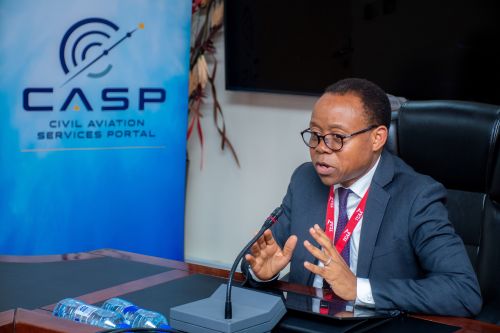
TCAA Director General Dr. Jabiri K. Bakari said the Authority was committed to becoming a world-class aviation regulator in Africa, with a particular focus on regulatory quality, professional competence, operational efficiency and aviation safety oversight.
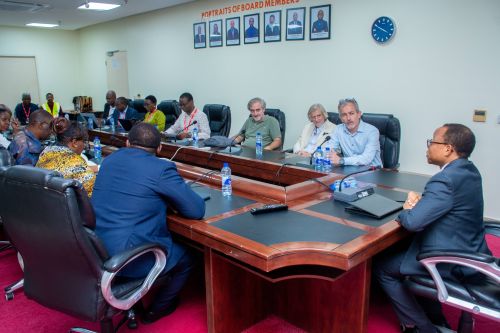
Dr Bakari made the remarks on September 3, 2026 at TCAA headquarters in Dar es Salaam during a closing meeting with a technical capacity-building mission from the European Union Aviation Safety Agency (EASA).
He thanked the European Union for its continued technical support and confidence in Tanzania’s aviation sector, while highlighting reforms being undertaken by TCAA to strengthen its regulatory and administrative systems.
Among the initiatives is the development and implementation of TCAA’s Civil Aviation Services Portal (CASP), an internal digital platform that received positive recognition from the EASA team.
The three-day EASA mission, which ran from 1 to 3 September, assessed Tanzania’s progress in implementing corrective measures and strengthening aviation safety oversight.
The mission reviewed several areas critical to the functioning of a modern aviation regulatory system, including legislation, institutional structures, aircraft accident investigation, personnel licensing, airworthiness and aircraft operations.
The EASA experts also held discussions with airline operators on identified safety issues, Corrective Action Plans and mechanisms for monitoring implementation.
For Tanzania’s aviation industry, stronger regulatory oversight has implications beyond safety. A credible and efficient regulatory environment can improve investor confidence, support airline operations and strengthen the country’s position as an aviation gateway for East Africa.
The EASA team expressed satisfaction with the progress made by TCAA during the mission, while urging the Authority to maintain momentum in addressing outstanding aviation safety oversight issues.
The EU delegation also reaffirmed its commitment to supporting Tanzania through technical assistance, practical implementation approaches and knowledge-sharing.
The European Union has allocated €2 million towards further support for improvements in Tanzania’s aviation sector, according to the delegation.
The EASA mission was led by Jose Miguel Manso Angulo, accompanied by Gustavo Juan Roman Barba and Antonio Portales Pelaez.
Removing barriers to international aviation
The reforms form part of Tanzania’s broader efforts to strengthen aviation safety oversight and demonstrate sustained progress towards meeting the requirements for removal from the European Union Air Safety List.
For airlines and investors, such regulatory recognition matters because access to international markets increasingly depends not only on infrastructure and commercial viability but also on confidence in a country’s safety oversight system.
Tanzania’s aviation market is also strategically important to tourism, trade and investment. Improved regulatory capacity could therefore support the expansion of air connectivity while strengthening the country’s ability to attract and retain international aviation operators.
Dr Bakari’s ambition of positioning TCAA among Africa’s leading aviation authorities reflects this wider economic dimension.
The challenge now is to translate technical assistance and regulatory reforms into lasting institutional capacity. That means maintaining qualified personnel, modernising systems, enforcing safety standards consistently and ensuring that corrective measures are implemented rather than simply documented.
The latest engagement with EASA provides Tanzania with another opportunity to demonstrate that progress. For the country’s aviation industry, the stakes extend well beyond regulatory compliance. A stronger aviation authority can help create a safer, more predictable and internationally credible operating environment – one capable of supporting Tanzania’s ambitions in tourism, trade, investment and regional connectivity.