By A Correspondent, Ulaanbaatar – Mongolia
Tanzania is stepping up efforts to protect the economic value of its land and rangelands as drought, land degradation and climate change increasingly threaten agriculture, livestock production and rural livelihoods.
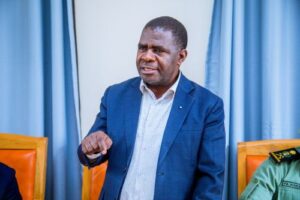
Minister of State in the Vice-President’s Office (Union Affairs and Environment), Eng. Hamad Yussuf Masauni, said sustainable land management should be treated not only as an environmental priority but also as an economic imperative, requiring greater public and private investment.
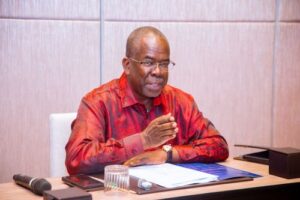
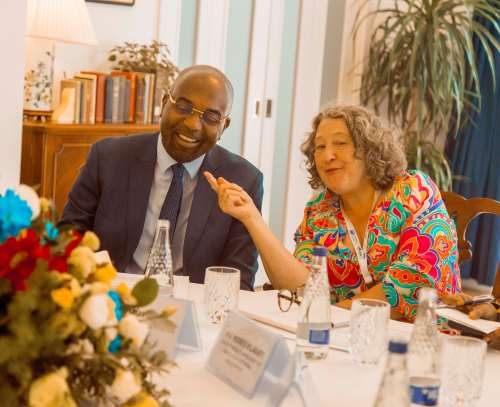
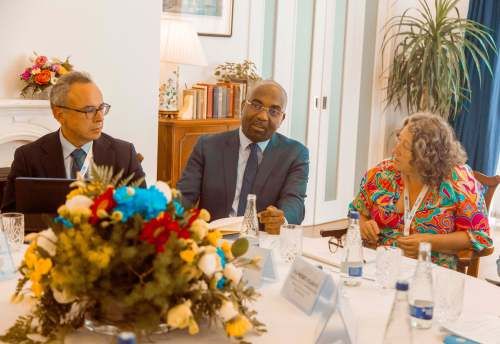
Masauni made the remarks in Ulaanbaatar during a high-level meeting bringing together international leaders to discuss soil health, responsible fertiliser use and measures to combat desertification and drought.
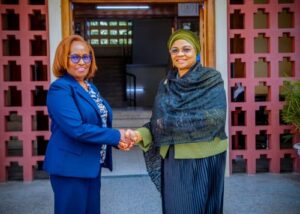
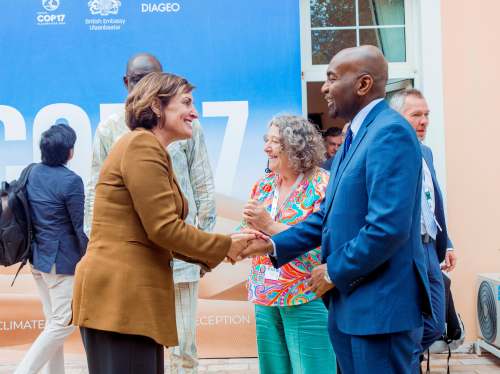
Held at the British Embassy in Mongolia on August 26, the meeting brought together the UK’s Special Representative to Mongolia, Ruth Davis; Food and Agriculture Organisation (FAO) Deputy Director-General Beth Bechdol; African Union Commissioner for Agriculture, Rural Development, Blue Economy and Sustainable Environment Moses Vilakati; and other representatives from different countries.
Masauni said Tanzania was promoting sustainable grazing, participatory land-use planning, restoration of degraded rangelands, improved water infrastructure, drought early-warning systems and more productive livestock systems.
The strategy, he said, was aimed at protecting the productive capacity of land while strengthening the resilience of communities and businesses that depend on natural resources.
“Rangelands are critical to Tanzania’s livestock production, food security, biodiversity, water resources and rural livelihoods,” Masauni said.
The economic stakes are significant. Tanzania had approximately 8.97 million agricultural households in 2022/23, according to the Agricultural Sample Census cited by the minister, with 60.6 per cent involved in livestock keeping.
This makes the health of rangelands an important factor not only in environmental protection but also in household incomes, food supply chains and the wider rural economy.
However, the resource base is under mounting pressure from prolonged drought, land degradation, overgrazing, changing land-use patterns, water shortages, deforestation and climate change.
These pressures can translate directly into economic costs through declining livestock productivity, reduced agricultural output, competition over scarce resources and increased vulnerability of rural households to climate shocks.
Masauni called for greater investment in rangeland restoration, arguing that the responsibility should extend beyond government.
He urged stronger private-sector participation and public-private partnerships, alongside greater public awareness and investment in climate resilience.
For businesses, the emerging land-restoration agenda could create opportunities in areas ranging from climate-smart agriculture and livestock production to water infrastructure, land rehabilitation, early-warning technologies and sustainable supply chains.
Tanzania has sought to institutionalise its response through the National Programme to Combat Desertification and Drought (2025–2030), which focuses on drought preparedness, early-warning systems and sustainable land management.
The programme is also aligned with the National Development Vision 2050, particularly its third pillar on environmental conservation and climate resilience.
The government sees restoration of degraded rangelands as part of a broader development strategy linking environmental protection with livestock development, food security and climate resilience.
That connection is becoming increasingly important as Tanzania seeks to expand agricultural and livestock production while protecting the natural resource base on which future growth depends.
The discussions in Mongolia also highlighted the growing importance of soil health to agricultural productivity. Responsible use of fertilisers, improved land management and restoration of degraded soils can help sustain productivity while reducing pressure to expand cultivation into environmentally sensitive areas.
For Tanzania, the challenge is therefore increasingly one of balancing economic expansion with the long-term productivity of its land and natural resources.
Masauni is attending the 17th Session of the Conference of the Parties to the United Nations Convention to Combat Desertification (UNCCD COP17) in Mongolia, which began on August 24, 2026. As Tanzania seeks to attract more investment into agriculture, livestock and rural infrastructure, the government’s message in Mongolia is increasingly economic: protecting land today is essential to safeguarding production, jobs and livelihoods tomorrow.