By A Correspondent, Ulaanbaatar – Mongolia
Tanzania is stepping up its international environmental engagement by participating in the 17th Session of the Conference of the Parties to the United Nations Convention to Combat Desertification (UNCCD COP17), currently taking place in Ulaanbaatar, Mongolia.
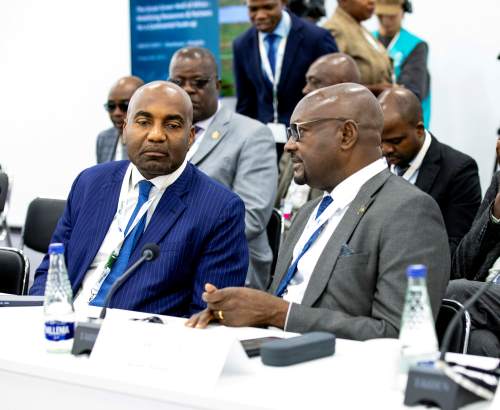
The Tanzanian delegation, led by the Minister of State in the Vice-President’s Office (Union and Environment), Hon. Eng. Hamad Yussuf Masauni, attended the opening of the conference on August 24, 2026. The meeting was officially opened by Mongolian President Khurelsukh Ukhnaa.
This year’s conference is being held under the theme “Restore Land, Restore Hope”, placing land restoration, drought resilience and sustainable management of rangelands at the centre of global efforts to address land degradation and desertification.
The 2026 declaration of the year as the International Year of Rangelands and Pastoralists has added further significance to the conference for Tanzania, where livestock keeping and rangelands remain critical to rural livelihoods and the wider agricultural economy.
Masauni said Tanzania faces a range of pressures contributing to land degradation, including deforestation, expansion of agricultural activities, uncontrolled bush fires, soil erosion, unsustainable land-use practices and settlement expansion.
“For Tanzania, the challenge of land degradation is associated with various factors, including deforestation and forest degradation, expansion of farmland for agriculture, uncontrolled fires, soil erosion, unsustainable land use and settlement development,” he said.
He said Tanzania’s participation in COP17 provides an opportunity to access international experience, technology, partnerships and financial resources needed to strengthen sustainable rangeland management and restore degraded land.
The country also hopes to strengthen initiatives aimed at protecting forests, water sources and biodiversity while improving the resilience of farming and pastoral communities to desertification and drought.
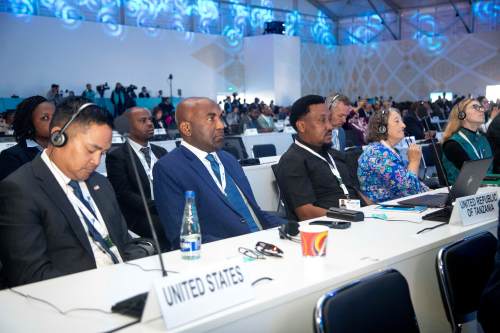
“Tanzania’s participation in this conference provides an opportunity to gain experience, technology, cooperation and financial resources to strengthen sustainable rangeland management, restore degraded land, conserve forests, water sources and biodiversity, and enhance the resilience of farming and pastoral communities in combating desertification and drought,” Mr. Masauni said.
Linking land, biodiversity and climate action
Thimoth Mande, Tanzania’s national focal point for the UNCCD, said international cooperation under the convention allows countries to address land degradation, biodiversity loss and climate change as interconnected challenges rather than treating them as separate problems.
He said Tanzania’s participation goes beyond simply attending an international conference, providing an opportunity to showcase measures already being implemented domestically while making a stronger case for increased investment and technology.
For Tanzania, this could be particularly important as the country seeks to scale up land restoration and climate-resilience initiatives from individual projects to larger landscape-level programmes.
Mande said the outcomes of COP17 could also help Tanzania mobilise additional resources from international environmental and development financing institutions, including the Global Environment Facility (GEF), the International Fund for Agricultural Development (IFAD), the United Nations Development Programme (UNDP), the Food and Agriculture Organisation (FAO) and the United Nations Environment Programme (UNEP).
The private sector and innovative financing mechanisms could also play a greater role in expanding investment in land restoration, sustainable agriculture, rangeland management and climate resilience.
From environmental challenge to investment opportunity
The discussions at COP17 come at a time when land degradation is increasingly being viewed not only as an environmental challenge but also as an economic issue.
For Tanzania, restoring degraded land can support agricultural productivity, protect water resources, strengthen livestock production and safeguard rural livelihoods. It can also create opportunities for investment in sustainable agriculture, forestry, carbon-related initiatives and climate-smart land management.
A key challenge, however, will be converting international commitments and financing opportunities into projects that can be implemented at scale and deliver measurable benefits to communities.
Aminata Kirama, Eastern Southern Zone Manager at the National Environment Management Council (NEMC), said the council has responsibilities covering identified areas, particularly in relation to research.
Her remarks underline the importance of scientific evidence in identifying degraded areas, understanding the drivers of land degradation and developing interventions suited to local conditions.
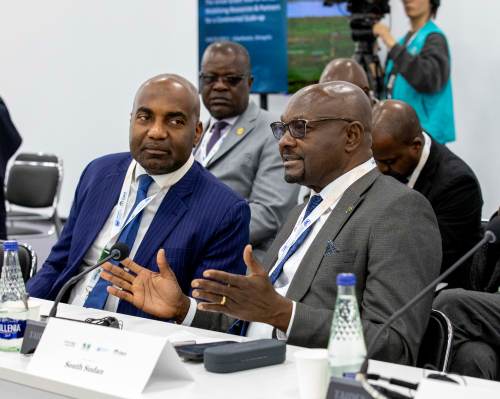
As Tanzania continues to position itself as an active player in global environmental diplomacy, COP17 offers an important platform to connect the country’s domestic land-management priorities with international financing, technology and partnerships. For the country, the bigger opportunity lies in turning the global push to “Restore Land, Restore Hope” into practical investments capable of improving productivity, protecting natural resources and strengthening the resilience of communities whose livelihoods depend directly on the land.