By Correspondent Joseph Mahumi
The United Nations Children’s Fund (UNICEF) has commended Tanzania for significant progress in improving child health, nutrition, education and overall welfare, pledging continued support for the country’s development ambitions under the National Development Vision 2050.
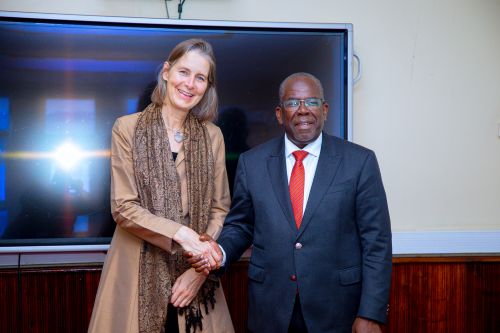
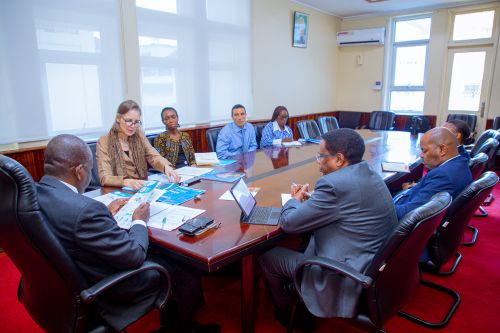
The commitment was made by UNICEF Tanzania Representative Elke Wisch during talks with Finance Minister Khamis Mussa Omar at the Ministry of Finance’s offices in Dar es Salaam.
Ms. Wisch said UNICEF was proud of its longstanding partnership with Tanzania in advancing social and economic development, particularly in areas linked to children’s rights and wellbeing.
She said the organisation would remain an important partner in strengthening human capital, noting that Tanzania had made substantial progress over the past three decades.
Among the gains, she highlighted a significant reduction in under-five mortality and a decline in childhood stunting.
“We recognise and commend this progress, but challenges remain, particularly around the first 1,000 days of a child’s life, education, nutrition and early childhood development,” Ms Wisch said.
Tanzania has reduced childhood stunting from roughly one in every two children in 1992 to about one in three in recent years, according to UNICEF.
Ms. Wisch said UNICEF was working with the Government to develop investment cases for early childhood development and nutrition, while calling for a national dialogue on financing early childhood development.
Such a dialogue, she said, could help bring together resources from the Government, development partners, the private sector and philanthropic institutions.
For a country seeking to translate the ambitions of Dira 2050 into sustained economic growth, the emphasis on human capital carries significant economic implications. Better nutrition, health and education in the early years can strengthen productivity and reduce the long-term social and economic costs associated with poor childhood development.
UNICEF also praised the Government for its cooperation on budget transparency, budget analysis and expenditure monitoring, saying these efforts had contributed to Tanzania’s improved standing in international budget transparency assessments.
“UNICEF will continue supporting the Government to strengthen capacity in budget analysis and monitoring at both national and local government levels, particularly because many services affecting children are delivered at these levels,” Ms. Wisch said.
Investing in tomorrow’s workforce
Minister Omar described UNICEF as a key development partner because of its focus on children and young people under the age of 18, a group that accounts for nearly 30 million people in Tanzania.
He said this demographic represented an important part of the country’s future and therefore required greater attention in national development planning.
“The UNICEF agenda in Tanzania is highly important in ensuring children receive the essential services that enable them to grow in a supportive environment, including maternal and child health, education, nutrition and early childhood development,” he said.
The minister said investment in children and young people should be viewed as an investment in Tanzania’s future workforce.
Since they have not yet reached productive age, he said, they need access to quality services and an enabling environment that can prepare them to become a productive human resource base.
“We must invest in them today for tomorrow’s work and build human capital that will serve as the foundation of national development. Human capital is not limited to education; it also encompasses good health, nutrition, care and child wellbeing,” Minister Omar said.
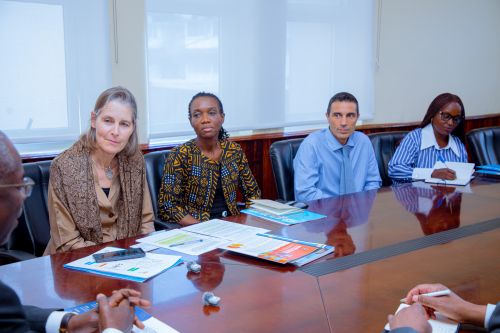
He pledged that the Ministry of Finance would continue working closely with UNICEF in areas falling within its mandate, noting that child welfare, health, education, nutrition and human capital development were directly linked to government planning and budgeting.
The meeting was also attended by the Acting Deputy Permanent Secretary in the Ministry of Finance and Commissioner for External Finance, Rished Bade; Assistant Commissioner for External Finance, Robert Mtengule; and senior officials from the Ministry of Finance and UNICEF. For Tanzania, the partnership highlights an increasingly important dimension of its development strategy: that the country’s ability to achieve the economic ambitions of Vision 2050 will depend not only on infrastructure and investment, but also on the quality of the people who will drive the economy in the decades ahead.