

By Business Insider Reporter, Rufiji
Tanzania is stepping up efforts to position carbon trading as a new source of rural income and environmental investment, with communities in Rufiji District set to receive specialised training aimed at unlocking opportunities in the rapidly expanding global carbon market.
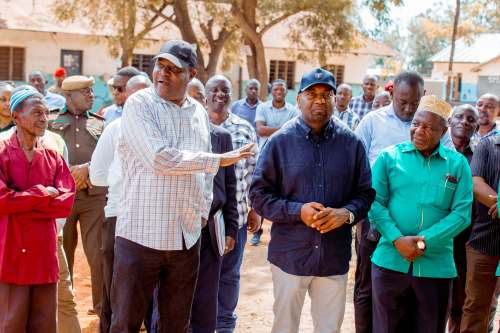
The Minister of State in the Vice President’s Office (Union and Environment), Eng. Hamadi Yussuf Massauni, has directed the National Carbon Monitoring Centre (NCMC) in Morogoro to provide carbon trading education to Rufiji residents, describing the district as one of the country’s areas with significant potential to generate revenue from environmental conservation.
Speaking during a working visit to Rufiji on July 21, Massauni said carbon markets represent an emerging green economy capable of transforming environmental assets such as forests, plantations and sustainable agriculture into long-term income streams.
He said communities should begin viewing environmental conservation not merely as an ecological responsibility but as an economic opportunity capable of attracting climate finance while creating new livelihoods.
“The carbon market presents a real opportunity for communities to increase their incomes through responsible environmental management,” Massauni said. “The Vice President’s Office is ready to deploy experts to train communities that wish to participate in carbon trading.”
He encouraged residents to establish conservation projects involving forests, banana plantations, cashew farms and other tree-based land uses that can qualify for carbon credit programmes, noting that proper technical guidance would enable communities to maximise returns from the sector.
New revenue streams
Global demand for verified carbon credits has grown steadily as governments and corporations seek to offset greenhouse gas emissions in pursuit of net-zero commitments under the Paris Agreement.
Under these arrangements, countries and communities that conserve forests, restore degraded landscapes or adopt sustainable land management practices can generate certified carbon credits that are sold to organisations seeking to compensate for unavoidable emissions.
Massauni said Tanzania possesses abundant natural resources capable of supporting this market, particularly extensive forest ecosystems that can generate significant economic value if protected rather than degraded.
“Climate change has created a global carbon market where countries with environmental resources can benefit financially by reducing emissions and protecting ecosystems,” he said.
He warned that indiscriminate tree felling continues to undermine both environmental sustainability and potential earnings from carbon trading.
“Instead of losing forests through uncontrolled harvesting, communities can protect these resources and generate income for individuals, cooperatives and villages,” he added.
According to the minister, the Government intends to ensure that every viable carbon trading opportunity benefits local communities, particularly those living in environmentally rich districts such as Rufiji.
Communities already participating in carbon projects, he noted, are beginning to experience tangible economic returns.
Green economy supports development vision
Pwani Regional Commissioner Abubakar Kunenge said the region continues to strengthen its economic performance through industrial investment, revenue collection and education, creating a strong foundation for integrating green economic activities into broader development plans.
He highlighted major investments, including the new sugar factory in Rufiji and other industrial projects that are creating employment while expanding the region’s economic base.
Kunenge said Tanzania’s Development Vision 2050 places increasing emphasis on employment creation, higher incomes and sustainable economic growth, with environmental enterprises expected to play a growing role in achieving those objectives.
At district level, Rufiji District Commissioner Lt Col Frederick Komba said local authorities remain focused on protecting existing revenue sources while supporting sustainable development initiatives.
He said the district continues implementing annual tree-planting programmes, targeting at least 1,500 trees each year, including fruit trees planted across public institutions and residential areas.

The initiative complements broader efforts to strengthen forest cover, enhance climate resilience and expand future participation in carbon trading schemes.
Conservation becomes an investment asset
The Government’s push to educate communities on carbon markets reflects a broader shift in Tanzania’s environmental policy – from treating conservation solely as ecological protection to recognising it as an economic asset capable of attracting international investment.
For districts such as Rufiji, endowed with extensive forests and natural ecosystems, carbon trading could become a new pillar of the local economy, generating income while encouraging sustainable land management. As global demand for high-quality carbon credits continues to expand, Tanzania is increasingly positioning its natural capital not only as an environmental resource but also as a strategic business opportunity within the country’s emerging green economy.