By Peter Nyanje
As Africa moves to dismantle trade barriers under the African Continental Free Trade Area (AfCFTA), the real competition is no longer about signing agreements but about who can translate policy into commerce.
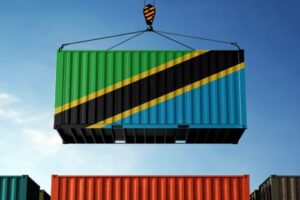
By that measure, Tanzania is quietly emerging as one of the continent’s strongest performers.
While many African countries are still aligning domestic regulations with the AfCFTA framework, Tanzania has shifted its focus to implementation – accelerating trade facilitation, upgrading infrastructure and positioning itself as a gateway to regional markets.
The results are becoming increasingly visible.
By June 2025, Tanzania had issued 392 AfCFTA Certificates of Origin, the highest number among East African Community (EAC) member states.
These certificates are essential for exporters seeking preferential tariffs across the continent, effectively unlocking access to a market of more than 1.4 billion people with a combined GDP exceeding US$3.4 trillion.
The momentum is already translating into trade.
According to government figures, Tanzania exported goods worth approximately US$3.9 billion under the AfCFTA framework in 2024, with products such as coffee, sisal fibre, horticultural produce, float glass and insecticide-treated mosquito nets finding new markets across Africa.

Economists argue that these numbers reflect more than administrative efficiency.
“The countries that will benefit most from AfCFTA are not necessarily those with the largest economies, but those that reduce the cost and time of doing business,” notes the World Bank, which estimates that full implementation of the agreement could raise Africa’s exports by more than 80 percent by 2035 while lifting millions out of poverty.
That observation appears increasingly relevant to Tanzania.
Rather than treating AfCFTA as merely another trade agreement, the country has embedded it within its long-term industrial strategy.
The launch of a 10-year National Strategy for the Implementation of AfCFTA in 2025 aligned continental trade ambitions with the National Trade Policy 2023, providing businesses with greater policy certainty.
Equally significant has been Tanzania’s participation as one of only eight countries selected for the AfCFTA Guided Trade Initiative (GTI) – a pilot programme designed to test how the agreement works in practice.
Through the initiative, Tanzanian exporters have already shipped products such as coffee to Algeria under AfCFTA rules, giving local firms valuable practical experience while many competitors remain at the preparatory stage.
For trade analysts, however, the country’s biggest competitive advantage may lie elsewhere.
Infrastructure.
Few African countries have invested as heavily in trade logistics over the past decade.
The Standard Gauge Railway (SGR), together with expanded ports at Dar es Salaam, Tanga and Mtwara, is reshaping Tanzania’s role from a domestic market into a regional logistics hub serving Rwanda, Burundi, Uganda, Zambia, Malawi and the eastern Democratic Republic of Congo.
The African Development Bank has consistently argued that poor infrastructure remains one of the biggest barriers to intra-African trade, often adding more to business costs than tariffs themselves.
By reducing transport time and logistics costs, Tanzania is positioning itself to capture a growing share of regional commerce.
The government’s financing strategy also deserves attention.
Unlike many infrastructure programmes across Africa that depend heavily on external borrowing, Tanzania’s 2026/27 Ministry of Industry and Trade budget of TSh137.8 billion is financed entirely through domestic resources.
The budget prioritises export promotion, market access and innovation hubs aimed at preparing young entrepreneurs for digital trade – the next frontier of continental commerce.
Yet Tanzania’s trade strategy also reflects a careful balancing act.
While championing continental integration, the government has simultaneously introduced the Business Licensing (Prohibition of Business Activities for Non-Citizens) Order, 2025, reserving selected low-capital sectors for Tanzanian citizens.
Critics have questioned whether such measures contradict the spirit of AfCFTA.
Government officials, however, argue that they represent targeted protection of vulnerable segments of the economy rather than opposition to free trade.
This approach mirrors what economists increasingly describe as “strategic openness” – embracing international competition in sectors where economies are globally competitive while safeguarding livelihoods in areas dominated by small domestic enterprises.
According to the United Nations Conference on Trade and Development (UNCTAD), successful participation in AfCFTA will depend not only on tariff reductions but also on industrial capacity, efficient customs systems, logistics performance and the ability of countries to add value to their exports.

On each of these indicators, Tanzania has made measurable progress.
The country still faces challenges. Manufacturers continue to cite high production costs, limited access to affordable finance and persistent non-tariff barriers in some African markets. Expanding value addition, improving industrial productivity and increasing export diversification will remain critical if Tanzania is to maximise the opportunities presented by AfCFTA.
Nevertheless, compared with many of its regional peers, Tanzania appears to have moved beyond the policy discussion.
It is building the institutions, infrastructure and regulatory systems required to compete. As AfCFTA enters its implementation phase, the race is no longer about who signed first. It is about who trades first – and, increasingly, Tanzania is positioning itself to lead.