
By Peter Nyanje
Tanzania enters the next phase of its economic transformation from a position of relative strength, but the latest UNCTAD World Investment Report 2026 suggests that sustaining momentum will require the country to compete more aggressively for increasingly selective global investment.
The report portrays an international investment environment marked by uncertainty.
Global foreign direct investment (FDI) rose modestly by six percent in 2025, largely because of exceptional gains in Europe, while Africa’s inflows declined from the unusually high level recorded in 2024 to US$70 billion.
Even so, this remained Africa’s third-highest level of FDI in more than two decades, highlighting the continent’s continued appeal despite global economic headwinds.
For Tanzania, the report offers both encouragement and caution.
Although Tanzania does not feature among Africa’s largest FDI recipients in 2025, the country’s investment trajectory reflects broader trends reshaping investor behaviour. Capital is becoming increasingly concentrated in strategic sectors such as energy, critical minerals, digital infrastructure, advanced manufacturing and logistics, while investors are favouring fewer but much larger projects.
This pattern aligns closely with the country’s development priorities under Dira 2050, which places industrialisation, mineral beneficiation, energy expansion and private sector-led growth at the centre of economic policy.
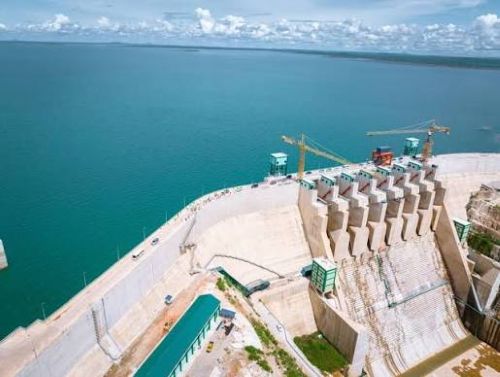
The report also indicates that East Africa continues to attract investment linked to large-scale projects.
For instance, Ethiopia maintained approximately US$4 billion in inflows, supported by increased greenfield investment, while Uganda attracted about US$3.4 billion through oil refining and battery storage projects.
The comparison underscores the increasingly competitive regional environment.
For Tanzania, whose economy is pursuing major investments in liquefied natural gas (LNG), critical minerals, transport infrastructure and manufacturing, the challenge is no longer simply attracting investors but ensuring projects reach financial close and implementation more rapidly than competing destinations.
Another notable trend is the changing character of investment.
Across Africa, announced greenfield investment values declined in 2025, yet the number of projects increased.
This indicates investors are spreading capital across a wider range of smaller investments instead of relying on a handful of mega-projects, although large projects still account for roughly 40 per cent of announced investment value.
This plays to the advantage of Tanzania.
The country has increasingly diversified its investment pipeline beyond extractive industries into manufacturing, agribusiness, tourism, renewable energy and logistics.
Such diversification may position it well as investors seek lower-risk opportunities with shorter implementation periods.
The report also reinforces another important lesson: global competition for investment is increasingly policy-driven.
Governments worldwide are deploying industrial policies, targeted incentives and strategic support to attract investors in emerging industries. Developed economies continue to dominate large subsidy programmes, while developing countries are competing through regulatory reforms, infrastructure improvements and investment facilitation.
This has direct implications for Tanzania.
Recent reforms, including improvements to the investment regime, expansion of special economic zones, continued investment in transport and energy infrastructure, and efforts to streamline business regulation, are becoming increasingly important competitive tools rather than optional policy measures.
The report further shows that cross-border mergers and acquisitions in Africa remain subdued, with investors preferring new productive investments over corporate acquisitions.
This trend favours countries capable of offering land, infrastructure, reliable energy and predictable regulation for greenfield investments – areas where Tanzania has made considerable progress but where implementation speed remains critical.
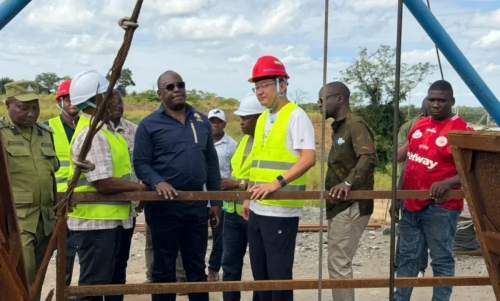
Ultimately, the UNCTAD assessment suggests Tanzania possesses many of the ingredients investors seek: abundant natural resources, a strategic Indian Ocean location, expanding infrastructure, political stability and an ambitious long-term development strategy.
However, the country’s future success will depend less on announcing investment ambitions and more on converting them into operational projects.
As neighbouring economies intensify efforts to attract capital into energy, manufacturing and critical minerals, Tanzania’s competitiveness will increasingly be judged by policy consistency, project execution and the ease with which investors can move from commitment to production. In an era of selective global capital flows, the race for investment is no longer about who offers the biggest market – it is about who delivers the greatest certainty.