By Business Insider Correspondent, Banjul
Tanzania has purchased and accumulated almost 28 tonnes of gold over the past 18 months, creating a strategic reserve now valued at approximately US$3.68 billion (about TSh9.76 trillion), in one of the country’s most significant monetary policy interventions in recent years.
The programme, implemented by the Bank of Tanzania (BoT), is strengthening the country’s foreign exchange reserves, supporting the stability of the Tanzanian shilling, deepening financial inclusion and accelerating the formalisation of the mining sector.
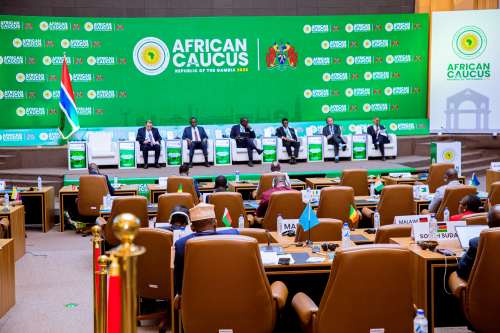
Governor Emmanuel Tutuba disclosed the figures while participating in a high-level panel on Central Bank Gold Operations during the 2026 African Caucus Meeting of the World Bank and International Monetary Fund (IMF) in Banjul, The Gambia.
The African Caucus brings together finance ministers and central bank governors from 54 African countries to discuss common economic priorities, including debt sustainability, climate finance, infrastructure development, trade and economic reforms.
Gold emerges as a strategic reserve asset
The accumulation of nearly 28 tonnes of gold marks a major milestone in Tanzania’s efforts to diversify its reserve assets at a time when central banks around the world are increasingly turning to gold to hedge against currency volatility, geopolitical uncertainty and inflation.
Under Tanzania’s Domestic Gold Purchase Programme, the Bank of Tanzania buys refined gold directly from licensed miners and dealers, adding it to the country’s official reserves instead of relying solely on foreign currencies.
Governor Tutuba said the initiative has delivered benefits extending well beyond reserve management.
“The programme has not only enabled Tanzania to accumulate gold as an alternative reserve asset, but has also strengthened the formalisation of the mining sector and expanded financial inclusion, particularly among small-scale miners,” he said.
Formalising the mining economy
One of the programme’s most notable achievements has been bringing thousands of artisanal and small-scale miners into the formal financial system.
According to Governor Tutuba, the initiative has facilitated the opening of more than 4,000 bank accounts for miners and gold traders across various financial institutions.
The move supports the Government’s broader objective of increasing transparency within Tanzania’s mining industry while improving access to banking services for participants who previously operated largely outside the formal financial sector.
The programme has also been well received by gold producers because of the Bank’s transparent pricing model.
Governor Tutuba said the central bank purchases gold at the prevailing London Bullion Market price and settles payments within 24 hours of delivery.
“We pay miners and gold traders promptly, within 24 hours of completing the transaction, using the London market price for that day,” he said.
The pricing mechanism has encouraged strong participation from both commercial dealers and artisanal miners, increasing the volume of gold sold through official channels.
Supporting monetary stability
The gold purchasing programme forms part of Tanzania’s broader strategy to strengthen macroeconomic resilience.
Unlike foreign currency reserves, gold provides a physical store of value that is less exposed to exchange-rate fluctuations and external financial shocks.
As global central banks continue increasing their gold holdings amid heightened geopolitical risks and persistent economic uncertainty, Tanzania’s reserve strategy aligns with an emerging international trend that places greater emphasis on diversified reserve management.
The initiative also complements ongoing efforts by the Bank of Tanzania to maintain exchange-rate stability and preserve confidence in the country’s financial system.
For a country that ranks among Africa’s leading gold producers, converting a portion of domestic mineral output into official reserves represents an efficient use of natural resources while reducing dependence on external reserve assets.
Mining sector gains momentum
The programme also reflects the growing importance of mining within Tanzania’s economy.
Gold remains the country’s leading mineral export, generating billions of dollars in foreign exchange earnings annually and contributing significantly to government revenues.

Over recent years, the Government has implemented reforms aimed at increasing local participation in mining, improving mineral trading systems and strengthening value addition.
The Domestic Gold Purchase Programme has become another pillar of that strategy by creating a guaranteed domestic market for locally produced gold while supporting formalisation across the value chain.
African leaders discuss shared priorities
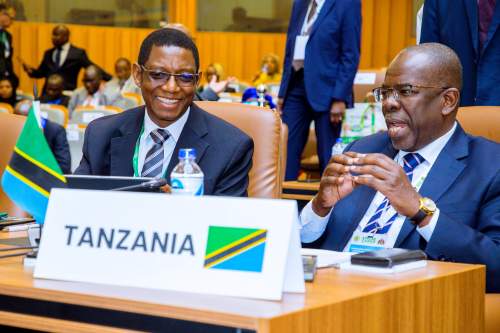
Governor Tutuba was part of the Tanzanian delegation led by Minister for Finance Ambassador Khamis Mussa Omar, which also included Zanzibar’s Minister for Finance and Planning Dr Juma Malik Akil and senior government officials.
The African Caucus serves as a platform through which African countries present unified positions to the World Bank and IMF on key development issues, including infrastructure financing, climate resilience, poverty reduction, employment creation and economic transformation.
Against that backdrop, Tanzania’s experience in building strategic gold reserves attracted attention as an example of how resource-rich economies can leverage domestic mineral wealth to strengthen macroeconomic stability while advancing financial sector development. With nearly 28 tonnes of gold now held in reserve and the programme continuing to gain momentum, Tanzania is positioning gold not only as a mining commodity but also as a strategic financial asset capable of underpinning long-term economic resilience.