By Business Insider Reporter
Tanzania’s flagship trade exhibition, the Dar es Salaam International Trade Fair (DITF), popularly known as Sabasaba, has generated an estimated TSh129.31 trillion in trade and investment opportunities over the past five decades, reinforcing its position as a key driver of economic transformation, industrialisation and export promotion.
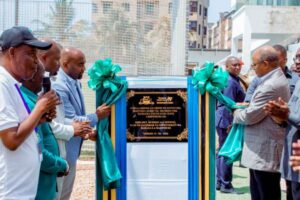
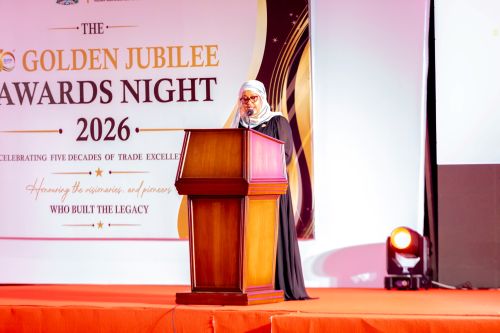
The milestone was announced by Dr. Latipha Khamis, Director General of the Tanzania Trade Development Authority (TanTrade), during celebrations marking the Golden Jubilee of the 50th DITF on July 7, 2026.
Dr. Khamis said the exhibition has evolved beyond a platform for showcasing products into a strategic marketplace connecting businesses, investors and markets. She noted that Sabasaba has expanded opportunities for Tanzanian enterprises by creating partnerships, opening market access and attracting investments that have contributed significantly to national economic growth.
“This achievement demonstrates the important role the exhibition has played in promoting trade, investment, innovation and industrial development,” Dr. Khamis said, adding that the fair has become a catalyst for business expansion and economic linkages.
The 50th edition of DITF, which runs from June 28 to July 13, 2026, at the Mwalimu Julius K. Nyerere Trade Fair Grounds in Dar es Salaam, has attracted more than 3,700 local exhibitors and participants from 23 countries.
Held under the theme “Hii Ni Kubwa Kuliko!!” (This Is Bigger Than Ever), the Golden Jubilee edition reflects the transformation of Sabasaba from a national exhibition into an international trade platform supporting Tanzania’s ambition to become a competitive regional manufacturing and investment hub.
Dr. Khamis highlighted the importance of the “Made in Tanzania” initiative, urging local manufacturers to focus on quality, innovation and value addition to strengthen the competitiveness of Tanzanian products in regional and global markets.
She said improving production standards and expanding value chains will enable Tanzanian businesses to take greater advantage of opportunities presented by regional markets, including the East African Community (EAC), the Southern African Development Community (SADC) and the African Continental Free Trade Area (AfCFTA).
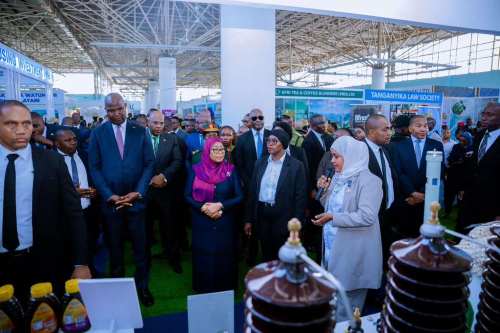
The Golden Jubilee celebrations reflected the broader economic vision championed by President Samia Suluhu Hassan when she officially opened the exhibition. The President called on businesses and industries to use platforms such as Sabasaba to build partnerships, attract investment, transfer technology and expand production capacity.
Dr Samia emphasized that Tanzania’s economic future depends on a strong private sector, increased industrial production and the ability to transform abundant natural resources into competitive products for domestic and international markets.
She also highlighted the importance of continued investments in infrastructure, energy, transport, logistics and digital systems, which are creating a more favourable environment for businesses by improving connectivity, reducing costs and enhancing competitiveness.
The achievements of Sabasaba come at a crucial time as Tanzania advances the implementation of the National Development Vision 2050 (Dira 2050), which places private sector-led growth, industrial transformation, technology adoption and export competitiveness at the centre of the country’s long-term economic strategy.
The Vision identifies trade and investment as key drivers of sustainable growth, with emphasis on building productive industries, strengthening value chains and integrating Tanzanian businesses into regional and global markets.
Officiating at the DITF Golden Jubilee celebrations, Vice President Dr Emmanuel Nchimbi said Tanzania’s ambition to attain upper-middle-income status will depend on building a competitive industrial economy anchored on innovation, technology and value addition.
Dr Nchimbi said the Sixth Phase Government has placed industrialisation at the heart of its economic transformation agenda, with President Samia Suluhu Hassan’s administration continuing to implement reforms aimed at creating a more conducive business environment through improved policies, strategic infrastructure development, institutional reforms and stronger support for the private sector. “The government’s commitment is to build a competitive industrial economy that will propel Tanzania towards upper-middle-income status,” Dr Nchimbi said, adding that industrial growth will strengthen the country’s competitiveness in regional and global markets.