


By Peter Nynaje
By the time the Tanzania Revenue Authority (TRA) marks its 30th anniversary on July 1, 2026, the institution will have evolved from a fledgling tax agency grappling with weak compliance and fragmented systems into one of East Africa’s most technologically advanced revenue authorities.
The transformation, according to TRA Commissioner General Yusuph Juma Mwenda, mirrors Tanzania’s broader economic journey – from a relatively small domestic economy to one financing an increasingly ambitious development agenda largely through internally generated revenue.
Created in 1996 under the Tanzania Revenue Authority Act, TRA was established to replace a fragmented tax administration system that had long been characterised by inefficiency, revenue leakages and low taxpayer confidence. Three decades later, the authority has become the financial backbone of the government, collecting the domestic revenues that fund roads, railways, ports, hospitals, schools and other strategic public investments.
For Commissioner General Mwenda, TRA’s greatest achievement is not merely the sharp increase in tax collections but the institution’s ability to modernise alongside Tanzania’s rapidly changing economy.
“When TRA was established, our primary challenge was simply collecting taxes efficiently. Today, we are managing a sophisticated, technology-driven tax administration system that supports economic growth while making compliance easier for taxpayers,” he told editors at a briefing held in Dar es Salaam ahead of the celebrations to be graced by President Samia Suluhu Hassan.
From paper files to digital tax administration
Few public institutions in Tanzania have experienced a technological transformation comparable to that of TRA.
In its early years, nearly every tax process – from registration and assessment to filing returns and making payments – was manual. Lengthy queues, extensive paperwork and delays were common features of tax administration.
Today, virtually every major taxpayer service has been digitised.
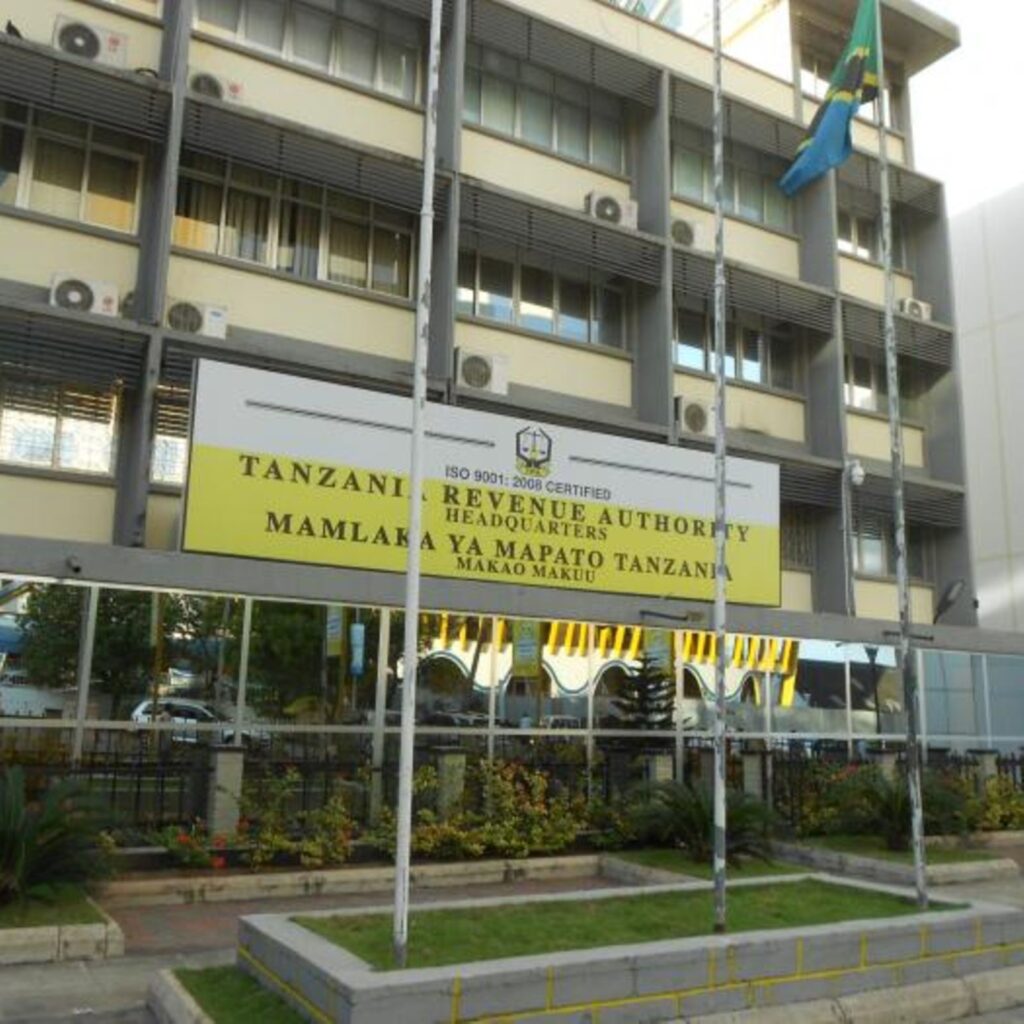
Electronic filing, online taxpayer registration, digital tax payments, electronic fiscal devices (EFDs), cargo tracking systems and integrated customs management platforms have fundamentally changed how businesses interact with the tax authority.
The adoption of digital technologies has significantly reduced compliance costs for businesses while improving transparency, minimising opportunities for corruption and enabling real-time monitoring of tax transactions.
Mwenda says technology has become the single most important tool in strengthening voluntary compliance.
Revenue growth reflects a changing economy
Perhaps the clearest measure of TRA’s transformation is the remarkable growth in domestic revenue collection.
When the authority began operations in 1996, annual tax collections were measured in only a few hundred billion shillings.
Today, annual collections are approaching TSh36 trillion, making domestic revenue the largest source of financing for Tanzania’s national budget.
The increase has been driven not only by stronger enforcement but also by sustained economic expansion, tax policy reforms, widening of the taxpayer base and improved administrative efficiency.

The growing reliance on domestic revenue has gradually reduced Tanzania’s dependence on external financing for recurrent expenditure, providing the government with greater fiscal flexibility.
For investors, this has strengthened confidence in the country’s macroeconomic management by demonstrating an improving capacity to finance development from internal resources.
Building a culture of voluntary compliance
One of TRA’s most significant institutional shifts has been its transition from being viewed primarily as an enforcement agency to becoming a service-oriented organisation.
Mwenda says modern tax administration increasingly depends on voluntary compliance rather than coercive enforcement.
Consequently, TRA has invested heavily in taxpayer education, stakeholder engagement and customer service improvements.
Special service centres, digital self-service platforms, taxpayer education campaigns and simplified filing procedures have all contributed to improving the relationship between the authority and the business community.
Annual initiatives such as the President’s Outstanding Taxpayer Awards have also helped recognise compliant taxpayers while promoting a culture of responsible tax citizenship.
Customs modernisation drives trade efficiency
Beyond domestic taxation, TRA has played a critical role in facilitating regional and international trade.
The modernisation of customs administration has shortened cargo clearance times, strengthened border controls and enhanced trade facilitation across Tanzania’s ports and border posts.
Digital customs systems, risk-based inspections and closer collaboration with regional customs administrations have helped improve efficiency while reducing opportunities for illicit trade.
These reforms have become increasingly important as Tanzania positions itself as a regional logistics hub serving neighbouring landlocked countries.
Supporting Tanzania’s industrialisation agenda
As Tanzania pursues its ambition of becoming an upper-middle-income and eventually a trillion-dollar economy by 2050, TRA’s role has expanded beyond revenue collection.
The authority now serves as a strategic partner in creating a competitive business environment through tax incentives, improved administrative efficiency and support for investment promotion.
Tax reforms aimed at simplifying compliance for small and medium-sized enterprises, encouraging formalisation and promoting manufacturing have become central components of the government’s industrial development strategy.
Mwenda believes an efficient tax administration system is itself an investment incentive.
“Businesses invest where tax systems are predictable, transparent and efficient,” he notes.
Fighting tax evasion through intelligence
The increasing sophistication of business transactions has also required TRA to strengthen its investigative capacity.
Over the years, the authority has invested in data analytics, intelligence-led audits and integrated information systems capable of identifying tax risks more accurately.
Cross-agency collaboration, electronic transaction monitoring and improved taxpayer profiling have significantly enhanced the authority’s ability to detect tax evasion while minimising unnecessary audits of compliant businesses.
This risk-based approach has improved efficiency for both the authority and taxpayers.
Expanding the tax base
One of TRA’s continuing priorities has been bringing more economic actors into the formal tax system.
Despite substantial progress, Tanzania’s informal sector remains significant, limiting the country’s revenue potential.
The authority has therefore focused on simplifying registration procedures, encouraging business formalisation and leveraging digital platforms to identify previously unregistered taxpayers.
As the digital economy expands, TRA has also introduced reforms targeting e-commerce and digital service providers, reflecting broader global trends in tax administration.
Challenges that still remain
Despite three decades of progress, Mwenda acknowledges that important challenges remain.
The informal economy continues to account for a substantial share of economic activity.
Cross-border tax avoidance, rapid technological changes, increasingly complex international business structures and evolving digital business models require continuous adaptation.
Balancing efficient revenue collection with maintaining a competitive investment climate also remains an ongoing policy challenge.
Climate-related economic shocks, commodity price volatility and fluctuations in global trade further complicate revenue forecasting.
Maintaining public trust is another critical priority.

Mwenda emphasises that transparency, integrity and professionalism will remain essential if TRA is to sustain voluntary compliance in the years ahead.
Looking beyond the anniversary
As TRA enters its fourth decade, its strategic focus extends well beyond increasing tax collections.
The authority aims to become a fully digital, intelligence-driven revenue administration capable of supporting Tanzania’s long-term economic transformation.
Future priorities include deeper digital integration, greater use of artificial intelligence and data analytics, enhanced taxpayer services, stronger regional cooperation and continued efforts to broaden the tax base without increasing unnecessary compliance burdens.
For Tanzania, whose development ambitions increasingly depend on strong domestic resource mobilisation, the next phase of TRA’s evolution may prove just as important as its first thirty years.
As Commissioner General Mwenda reflects on the institution’s journey, he sees the anniversary not simply as a celebration of past achievements, but as the beginning of a more demanding chapter. “The economy is evolving rapidly, and so must we. Our responsibility is not only to collect revenue but to build a modern tax administration that supports investment, promotes fairness and contributes to Tanzania’s sustainable economic growth. That is the legacy we intend to leave for the next generation,” he concludes.