By Business Insider Reporter, Dodoma
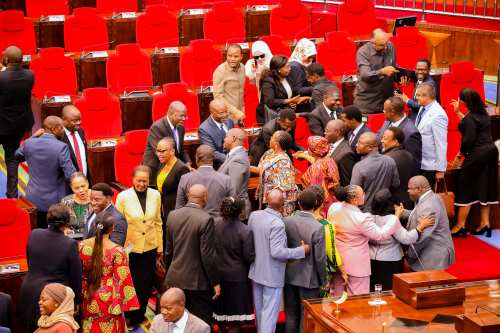
Tanzania’s Parliament has overwhelmingly approved the Government’s TSh62.33 trillion budget for the 2026/27 financial year, giving President Samia Suluhu Hassan’s administration a strong mandate to pursue its ambitious agenda of economic transformation, infrastructure expansion and social development.
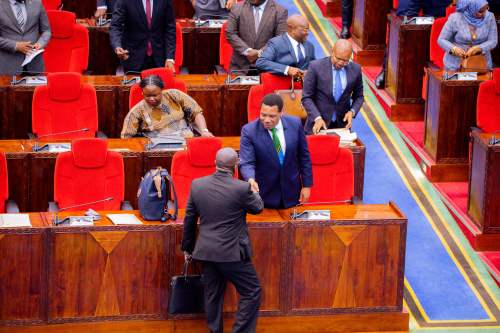
The budget, the largest in Tanzania’s history, was approved by 385 Members of Parliament, representing 97.66 percent of votes cast, following weeks of intensive debate in Dodoma over taxation, public spending priorities, debt management and economic growth.
Announcing the results of the open vote, Speaker of Parliament, Mussa Azzan Zungu, said 393 legislators participated in the exercise, with only eight voting against the budget while another eight were absent.
The approval authorises the Government to begin implementing its expenditure plans from the Consolidated Fund for the 2026/27 fiscal year.
“The Government has now been authorised to spend these funds. Parliament will continue monitoring implementation to ensure all projects and priorities outlined in the budget are delivered for the benefit of Tanzanians,” Speaker Zungu told the House.
Budget debate focused on jobs, taxes and development
The approval concludes a parliamentary budget session that saw lawmakers scrutinise spending proposals from ministries and agencies while raising concerns about employment creation, agricultural productivity, industrialisation, access to finance and the cost of living.
Members of Parliament also pressed the Government on the pace of project implementation, the need to broaden the tax base without overburdening businesses, and measures to strengthen domestic revenue mobilisation.
Several legislators welcomed tax relief measures introduced in the budget, particularly those aimed at supporting agriculture, manufacturing, digital innovation and the country’s clean cooking agenda.
Others urged the government to accelerate investment in rural infrastructure, water supply, healthcare facilities and education to ensure that economic growth translates into tangible improvements in living standards.
The debate reflected growing expectations among lawmakers that Tanzania’s recent economic gains should be matched by faster job creation and greater private-sector participation in national development.
A bigger budget for a growing economy
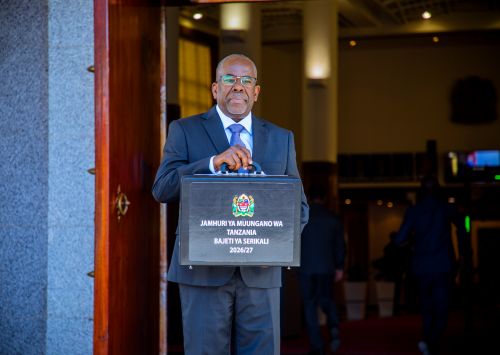
Presenting the budget earlier this month, Minister for Finance, Khamis Mussa Omar, sought parliamentary approval for TSh62.33 trillion in total expenditure, representing an increase of 10.3 percent compared to the 2025/26 budget.
The expansion comes as Tanzania continues to record solid economic growth driven by infrastructure investment, tourism recovery, mining, agriculture and expanding industrial activity.
The Government expects to collect TSh46.79 trillion in revenue during the financial year.
Of this amount:
- TSh36.99 trillion will come from tax revenue;
- TSh9.24 trillion from non-tax revenue, including local government collections;
- TSh563.1 billion from grants provided by development partners.
A notable feature of the budget is its continued emphasis on self-reliance. According to the Finance Minister, 74.2 percent of total expenditure will be financed through domestic revenue sources.
The strategy reflects the Government’s long-term objective of reducing dependence on foreign aid while strengthening fiscal sustainability.
Key spending priorities
The budget allocates substantial resources to both recurrent and development expenditure.
Public servants’ salaries and pension contributions will account for TSh10.13 trillion, while TSh5.22 trillion has been allocated for goods and services.
Interest payments on public debt are projected at TSh6.86 trillion.
The Government has also earmarked significant resources for subsidies, social welfare programmes and strategic development projects designed to support industrialisation, food security and economic competitiveness.
Major investments are expected to continue in:
- Transport infrastructure, including roads, railways and ports;
- Energy generation and transmission;
- Water supply projects;
- Healthcare infrastructure and specialised medical services;
- Education facilities and skills development;
- Agricultural modernisation and irrigation;
- Digital economy initiatives and innovation.
The budget aligns closely with Tanzania’s broader development agenda, including implementation of the national Vision 2050 framework and efforts to position the country as a regional trade and logistics hub.
Managing deficits and debt
Despite strong revenue projections, the Government anticipates a budget deficit of TSh7.71 trillion.
To bridge the financing gap, authorities plan to borrow Sh15.54 trillion through a combination of domestic and external sources.
The borrowing plan includes:
- TSh6.56 trillion from domestic markets;
- TSh6.55 trillion in concessional external loans;
- TSh2.43 trillion in commercial external borrowing.
At the same time, the Government expects to repay Sh7.84 trillion in maturing debt obligations.
Officials maintain that borrowing will continue to be guided by Tanzania’s Medium-Term Debt Management Strategy, which seeks to balance financing needs with long-term debt sustainability.
Looking ahead
With the budget now approved, attention shifts to implementation and the passage of the Finance Bill 2026, which contains the tax and regulatory measures needed to support the Government’s fiscal plans.
For investors, businesses and development stakeholders, the 2026/27 budget signals continuity in Tanzania’s economic policy direction: maintaining macroeconomic stability while investing heavily in infrastructure, industrialisation, agriculture, energy and social services.
The strong parliamentary endorsement also provides the Government with political momentum as it seeks to translate budget commitments into measurable economic outcomes. The real test, however, will be execution. As lawmakers repeatedly emphasised during the debate, the success of the country’s largest-ever budget will ultimately be measured not by its size, but by its ability to create jobs, improve services and sustain Tanzania’s growth trajectory in an increasingly competitive regional economy.