By Business Insider Reporter
Tanzania and the European Investment Bank (EIB) have moved to accelerate financing for two major infrastructure projects that are expected to strengthen urban mobility, improve water services and support long-term economic growth.
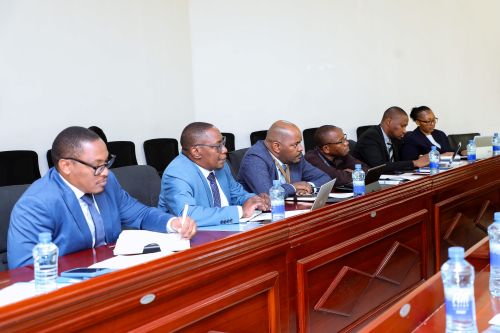
Officials from the Ministry of Finance and the European Investment Bank agreed to expedite the completion of financing agreements for the second phase of the Lake Victoria Water and Sanitation Project (LV WATSAN II) in Mwanza and the fourth and fifth phases of Dar es Salaam’s Bus Rapid Transit (BRT) system.
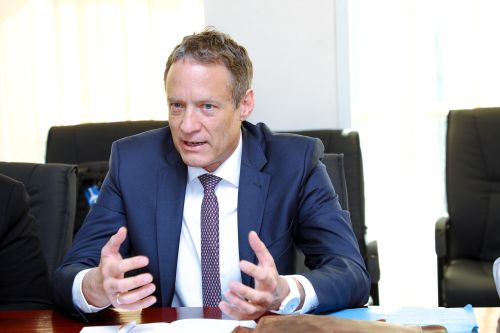
The commitment emerged during high-level talks in Dodoma between officials from the Ministry of Finance and an EIB delegation led by Christian Elias, Head of Public Sector and Country Relations for East and Southern Africa.
The discussions underscored Tanzania’s growing partnership with European development finance institutions as the country seeks to close infrastructure gaps, support urbanisation and sustain strong economic growth.
Representing the Permanent Secretary and Paymaster General at the Ministry of Finance, Dr Natu El-Maamry Mwamba, Assistant Commissioner for External Finance Robert Mtengule said the government values the EIB’s contribution to Tanzania’s development agenda.
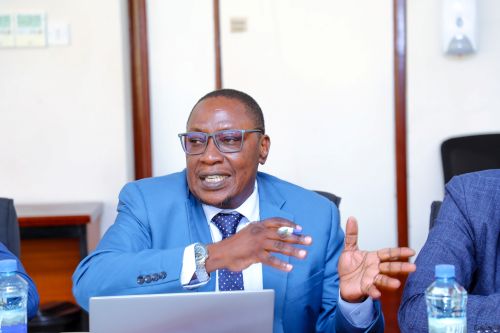
“This cooperation is important in accelerating the implementation of projects and programmes that contribute to the country’s sustainable development,” Mtengule said.
Focus on water security
A key outcome of the meeting was an agreement to fast-track financing arrangements for the LV WATSAN II project, which aims to expand access to clean water and sanitation services in Mwanza and neighbouring areas around Lake Victoria.
The project comes at a critical time as Tanzania’s urban centres continue to experience rapid population growth, increasing pressure on water infrastructure and sanitation systems.
Mwanza, Tanzania’s second-largest city and a major commercial hub serving the Lake Zone, plays a strategic role in trade, fisheries, manufacturing and transport. Improved water and sanitation services are expected to enhance public health, support industrial development and improve the city’s attractiveness for investment.
Advancing Dar es Salaam’s mass transit network
The two sides also reviewed final steps toward concluding financing agreements for the fourth and fifth phases of the Dar es Salaam Bus Rapid Transit system.
The BRT network has become one of Tanzania’s most visible urban infrastructure success stories, helping to reduce travel times and improve mobility in East Africa’s fastest-growing city.
Dar es Salaam, which is projected to become one of Africa’s largest metropolitan areas over the coming decades, faces increasing challenges related to traffic congestion, productivity losses and environmental sustainability.
The expansion of the BRT system is expected to extend mass transit services to new corridors, improve connectivity between residential and commercial districts and reduce pressure on the city’s road network.
Transport economists have long argued that efficient public transport systems are essential for improving labour mobility, lowering logistics costs and supporting urban economic competitiveness.
Expanding areas of cooperation
Beyond water and transport, discussions explored opportunities for future collaboration in energy, information and communications technology (ICT), and private-sector development.
Particular attention was given to programmes that support entrepreneurship through financing channels established between the EIB and commercial banks operating in Tanzania.
Access to affordable long-term financing remains one of the biggest challenges facing Tanzanian small and medium-sized enterprises (SMEs), which account for a significant share of employment and economic activity.
Strengthening financing mechanisms for businesses could therefore play an important role in boosting industrialisation, innovation and job creation.
Strategic development partnership
The European Investment Bank has been a longstanding development partner across Africa, financing projects in transport, energy, water, climate resilience and private-sector development.
For Tanzania, partnerships with institutions such as the EIB are increasingly important as the government pursues ambitious investments in infrastructure while maintaining fiscal sustainability.
Christian Elias commended Tanzania for its cooperation and expressed optimism that the financing agreements would soon move into implementation.
“We look forward to completing the next steps, including the signing of financing agreements for the BRT IV and V projects and the LV WATSAN project, and beginning implementation,” he said. As Tanzania advances its infrastructure-led development strategy, the successful conclusion of these agreements could unlock substantial economic and social benefits, improving service delivery while strengthening the foundations for future growth.