- Tri-Nations Expo positions Tanzania for regional livestock leadership
By Business Insider Reporter
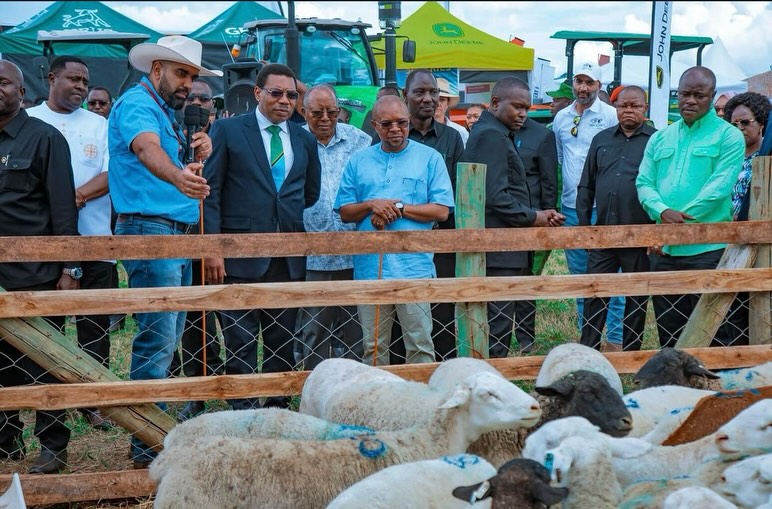
Prime Minister Dr. Mwigulu Nchemba has thrown his weight behind Tanzania’s ambition to transform its vast livestock resources into a modern, export-oriented industry.
He made the remarjks recently when opening the 2026 Tri-Nations Livestock Expo in Chalinze, highlighting the sector’s growing importance to economic diversification, food security and rural incomes.
The annual exhibition, held at the Mbogo Tanch Show Grounds in Ubena Sisal Estate, has rapidly evolved into one of East Africa’s most influential livestock platforms, bringing together breeders, farmers, investors, financial institutions, technology providers and policymakers from across the continent.
This year’s gathering attracted participants from Tanzania, Kenya, Namibia, South Africa, Uganda and other countries, reflecting growing regional interest in livestock genetics, animal health, value addition and cross-border trade.
From ranch conversation to regional platform
What makes the expo particularly notable is the story behind its creation.
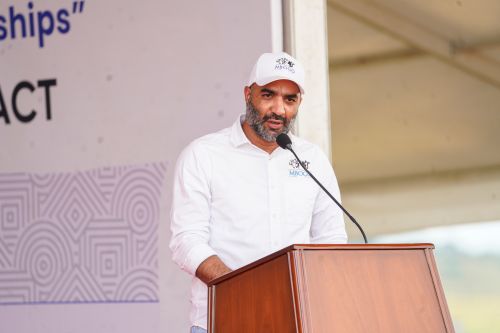
According to Naweed Mulla (pictured below), Co-Founder of Mbogo Tanzania and Chairman of the Tri-Nations Livestock Expo, the initiative emerged from discussions among livestock entrepreneurs who believed Africa’s livestock industry needed a platform capable of connecting producers, investors and buyers across borders. Those conversations eventually led to the launch of the first Tri-Nations Expo in 2025.
What began as a collaboration among commercial cattle breeders has since grown into a regional exhibition attracting stakeholders from East and Southern Africa, as well as interest from international markets.
“The expo is proof that when Africans work together, they can create opportunities far greater than any individual, company or country could achieve alone,” Mulla told participants.
Unlocking Tanzania’s livestock economy
The event comes at a critical moment for Tanzania’s livestock industry.
The country possesses one of Africa’s largest livestock populations, making the sector a major source of livelihoods, employment and food security. Yet industry experts argue that future growth will depend less on animal numbers and more on productivity, genetics, disease control and commercialisation.
Mulla noted that despite significant progress in veterinary services, breeding programmes and private-sector participation, challenges remain, including limited access to superior genetics, climate-related pressures, inadequate processing capacity, financing constraints and market access barriers.
“The future of the sector will not be determined by the number of animals we own, but by their productivity, profitability and sustainability,” he said, urging a shift from quantity-driven livestock keeping to quality-focused production.
That message aligns with broader government efforts to modernise agriculture and livestock as strategic economic sectors capable of generating jobs, attracting investment and increasing export earnings.
Genetics and Value Addition Take Centre Stage
A recurring theme throughout the exhibition has been the importance of livestock genetics.
Industry players argue that improving breeds is essential if Tanzania is to compete in higher-value regional and international markets.
Discussions at the expo have focused on breeding technologies, biosecurity systems, animal health management and market-oriented production models.
The exhibition has also highlighted opportunities in dairy processing, meat production, feed manufacturing and livestock-related technologies, sectors increasingly viewed as critical for creating value beyond traditional livestock keeping.
For investors, the sector offers significant untapped potential. Tanzania’s expanding population, rising urbanisation and growing demand for protein are creating opportunities across the livestock value chain, from breeding and animal nutrition to processing and distribution.
Building a regional hub
Beyond showcasing livestock, the expo is positioning Tanzania as a regional centre for livestock innovation and trade.
Organisers envision a future in which Tanzanian farmers have access to world-class genetics, modern fattening operations, reliable markets and advanced veterinary services. They also see the country becoming a recognised exporter of livestock genetics, meat, dairy products and technical expertise.
Achieving that vision, however, will require collaboration among government, financial institutions, researchers, development partners and the private sector.
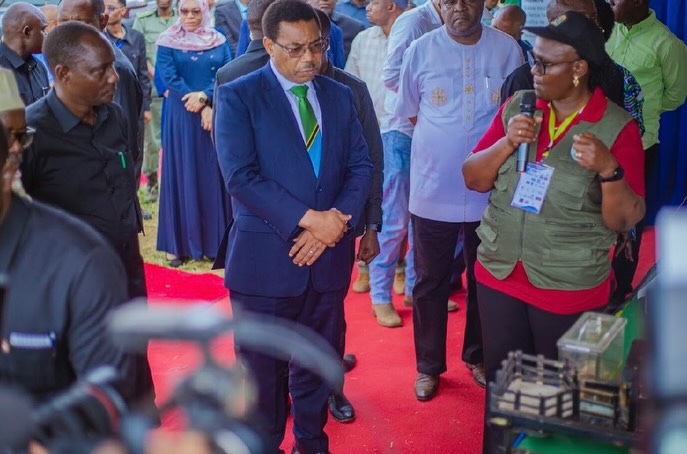
The presence of senior government leaders, including Prime Minister Dr Mwigulu Nchemba and Livestock and Fisheries Minister Dr Bashiru Ally, underscored the strategic importance increasingly attached to the industry.
More than an exhibition
Organisers insist the Tri-Nations Expo should be viewed as more than a livestock show.
They see it as a platform where investment opportunities are identified, partnerships are formed and knowledge is exchanged. As Tanzania seeks new growth engines beyond traditional sectors, livestock is increasingly being recognised as a business capable of delivering significant economic returns while improving rural livelihoods.
For a country with one of the continent’s largest livestock resources, the challenge now is converting that natural advantage into a globally competitive industry. The message from Chalinze was clear: Tanzania’s livestock sector is no longer simply about keeping animals – it is increasingly about building an industry.