Tanzania’s political culture was built on ideals of integrity, modesty and public service. Yet history shows that values alone are not enough. The enduring test for the country is whether it can build institutions strong enough to protect ethical governance regardless of who occupies public office.
By Anatoli Rugaimukamu
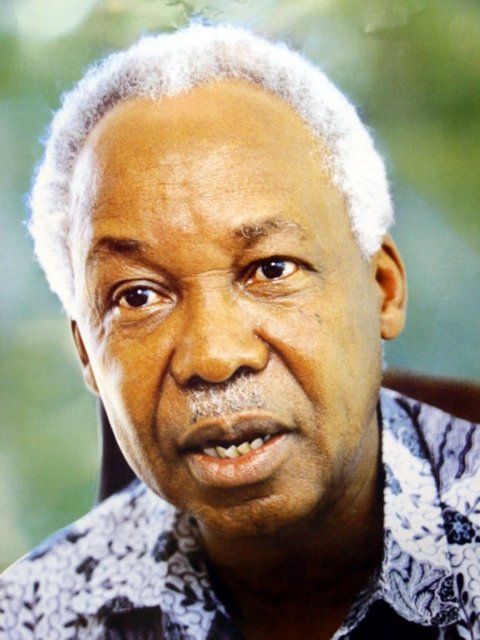
Tanzania’s political journey has long been associated with a strong sense of public duty. In the years following independence, leadership was widely viewed not merely as a pathway to power, but as a responsibility to serve the nation. Public officials were expected to demonstrate modesty, integrity and commitment to the common good.
That legacy remains one of Tanzania’s greatest national assets. It continues to shape public expectations of leadership and provides a moral foundation upon which future generations can build. Yet history offers an important lesson: values, however noble, cannot by themselves sustain good governance. Without strong institutions, clear rules and effective accountability mechanisms, even the most admirable traditions can gradually erode.
This is not simply a Tanzanian challenge. Around the world, nations that have achieved lasting progress have done so not because they consistently produced exceptional leaders, but because they built institutions capable of maintaining standards regardless of changes in political leadership.
The central question facing Tanzania today is therefore not whether ethical leadership is important – it undoubtedly is. The real question is whether the country has built sufficiently strong systems to ensure that ethical governance survives beyond individual personalities.
When institutions depend on individuals
One of the recurring challenges in Tanzania’s political development has been the tendency to place excessive faith in leaders rather than institutions.
In many areas of public life, citizens often look to individual leaders to solve problems that should ordinarily be addressed through functioning systems. When roads deteriorate, people wait for a presidential directive.

When local disputes emerge, intervention from senior political figures is frequently sought. When public services fail, attention often turns to individual office holders rather than institutional accountability.
Such expectations may reflect public confidence in leadership, but they can also reveal institutional weakness.
Strong institutions should not require constant intervention from top leaders to perform basic functions. A procurement system should prevent abuse regardless of who is in office. Regulatory agencies should enforce standards consistently. Local government authorities should deliver services according to established mandates rather than political instruction.
When governance becomes overly dependent on individual personalities, continuity becomes vulnerable. Progress achieved under one administration may weaken under another, not because policies are necessarily wrong, but because institutions were never sufficiently empowered to carry them forward independently.
The rise of transactional politics
Institutional weakness often creates fertile ground for transactional politics.
In such environments, political success increasingly depends not on competence, ideas or public service, but on access to influential networks. Loyalty can become more valuable than expertise.
Connections may matter more than performance.
The consequences are visible in many democracies, including emerging ones across Africa. Political support may be exchanged for appointments, contracts, protection or other advantages. Public office risks becoming a tool for rewarding allies rather than advancing national priorities.
Tanzania has not been immune to these pressures.
Public debate over party defections, electoral competition, political appointments and access to state resources frequently reflects concerns about the relationship between political influence and institutional fairness.
While the country has made significant progress in maintaining stability and national cohesion, concerns about accountability, transparency and equal treatment under the law continue to surface in public discourse.
The issue is not whether such challenges exist – they do in virtually every democracy. The issue is whether institutions are strong enough to address them consistently and credibly.
Why citizens ultimately pay the price
When institutions weaken, ordinary citizens bear the greatest cost.
A business owner seeking a licence should not need political connections to receive fair treatment. A young graduate applying for public employment should believe merit will matter more than personal networks.
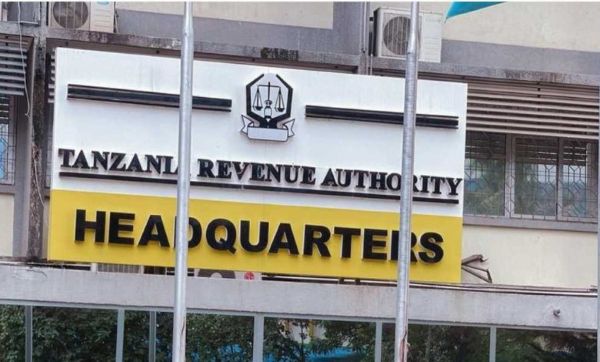
An investor should have confidence that regulations will be applied consistently regardless of status or influence.
Where institutions function effectively, citizens can pursue opportunities based on talent, effort and innovation. Where institutions are weak, uncertainty grows and trust declines.
Consider public procurement. If tendering processes are perceived as transparent and competitive, businesses invest confidently and taxpayers receive better value for money. If procurement decisions appear influenced by personal connections, public confidence suffers and economic efficiency declines.
The same principle applies to recruitment, service delivery, regulation and justice. Citizens do not merely need good leaders; they need reliable systems.
The personification of government
A particularly concerning trend in many developing democracies is the tendency to personalise government achievements.
Roads, schools, hospitals and water projects are sometimes presented as gifts from political leaders rather than outcomes of public policy funded by taxpayers. Yet governments do not build infrastructure using personal resources.
They do so using public funds collected through taxes and managed through public institutions.
Recognising this distinction is important because it strengthens citizenship.
When citizens understand that public services are rights rather than favours, they become more willing to demand accountability and better performance. Strong democracies flourish when public institutions are respected as national assets rather than extensions of individual leaders.
Building a more resilient future
The answer is not to abandon the moral values that have historically guided Tanzania. On the contrary, those values remain essential.
However, ethical aspirations must be reinforced by institutions capable of enforcing standards fairly and consistently.
Parliament must exercise effective oversight. Courts must remain independent and accessible. Regulatory bodies must be protected from undue influence. Public servants must be recruited and promoted on merit.
Procurement systems must be transparent. The media and civil society must have sufficient space to inform public debate and scrutinise power responsibly.
Political parties also have a role to play by strengthening internal democracy and encouraging competition based on ideas, policies and national development priorities rather than personal loyalties.
Ultimately, the strength of a nation should never depend on the character of a single individual. Strong leaders may inspire progress, but strong institutions are what sustain it.

Tanzania still possesses a powerful tradition of integrity, service and national responsibility. The challenge now is to embed those values within systems robust enough to withstand political transitions, changing interests and future uncertainties.
Public institutions rarely collapse overnight.
More often, they weaken gradually through neglect, complacency and the normalisation of practices that prioritise loyalty over merit.
The opportunity remains firmly within reach. By strengthening accountability, protecting professionalism and ensuring that public office remains a responsibility rather than a privilege, Tanzania can preserve its ethical legacy while building institutions capable of serving future generations.
That, ultimately, is the true test of national leadership.Anatoli Rugaimukamu is a development practitioner, policy analyst and humanitarian leader with more than two decades of experience in governance, ethics, public policy and social transformation across Africa.