By Business Insider Reporter
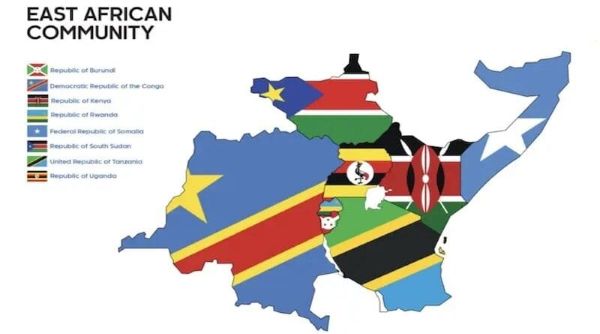
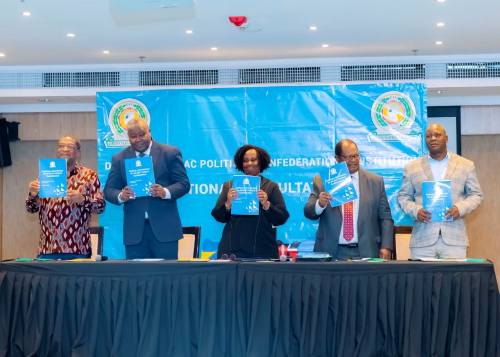
The East African Community (EAC) has taken another significant step towards its ambitious goal of creating a politically integrated region, with Rwanda becoming the latest Partner State to launch public consultations on the drafting of a Constitution for the proposed East African Political Confederation.
The consultations, officially launched in Kigali this week, mark a critical phase in one of the continent’s most ambitious integration projects, a process that could eventually reshape governance, trade, investment, and economic cooperation across a bloc that now represents more than 330 million people.
While the exercise is primarily political in nature, its implications extend well beyond governance. For businesses, investors and regional markets, the proposed Political Confederation represents another milestone in East Africa’s gradual journey towards a more harmonised economic and institutional framework.
Building on decades of integration
The Political Confederation is envisioned as a transitional stage towards the ultimate objective of establishing an East African Political Federation, the highest level of integration under the EAC framework.
It forms the fourth and final pillar of the Community’s integration agenda, following the establishment of the Customs Union, Common Market and the ongoing Monetary Union process.
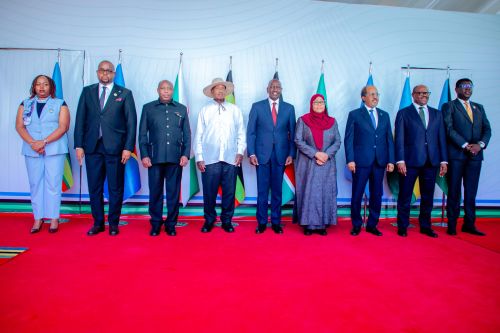
The latest consultations seek to collect citizens’ views on the proposed constitutional framework and ensure that East Africans play a direct role in shaping the governance structure of the future confederation.
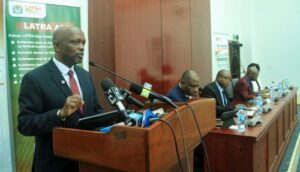
Speaking at the launch, Rwanda’s Minister of State for Foreign Affairs, Dr. Uster Kayitesi, emphasised that regional integration remains central to the country’s development strategy.
“Many of the opportunities and challenges facing our countries require collective action,” she said. “Whether we consider trade and investment or infrastructure development, cooperation provides a stronger foundation for progress than working in isolation.”
Her remarks reflect a growing recognition among regional leaders that economic competitiveness increasingly depends on stronger cross-border cooperation, particularly as African countries seek to attract investment, improve infrastructure connectivity and strengthen intra-African trade.
Why the private sector is watching closely
Although discussions on political integration often appear distant from day-to-day business concerns, analysts argue that greater institutional harmonisation could have significant economic implications.
A more coordinated governance framework could accelerate policy alignment, reduce regulatory fragmentation and improve the predictability of business environments across the region.
For investors operating across multiple East African markets, such developments could lower transaction costs, simplify compliance requirements and enhance market access.
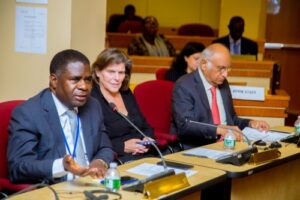
The EAC Secretary General, Amb. Stephen Mbundi, said the consultations are designed to ensure broad participation across society, bringing together government institutions, the judiciary, academia, civil society, the private sector, youth groups, women, political parties and faith-based organisations.
According to Mbundi, discussions in Rwanda will take place over two weeks across Kigali, Rubavu, Huye and Nyagatare.
“The engagements are intended to ensure that Rwanda’s perspectives are fully reflected in the draft Constitution and that citizens actively contribute to shaping the institutional and governance framework of the Political Confederation,” he said.
A long road towards political integration
The current process is the culmination of more than two decades of discussions on East Africa’s political future.
The journey began in 2004 when EAC Heads of State established the Wako Committee to explore ways of accelerating political integration within the Community.
Subsequent consultations across the region revealed widespread support for deeper integration but also highlighted the need for a gradual and practical approach.
In 2017, the EAC Heads of State adopted the Political Confederation as the preferred transitional model towards an eventual Political Federation and directed the commencement of a constitution-making process.
A regional launch followed in Entebbe, Uganda, in 2018 under the political leadership of Ugandan President Yoweri Museveni, who was tasked with guiding the initiative.
Since then, a team of constitutional experts appointed by the EAC Council of Ministers has been developing the draft Constitution. The experts have studied confederation systems from different parts of the world and reviewed existing EAC legal frameworks to ensure compatibility with the proposed governance model.
Shaping the future of East Africa
Rwanda’s Permanent Secretary in the Ministry of Foreign Affairs and International Cooperation, Ambassador Fidelis Mironko, described the consultations as an opportunity for citizens to directly influence the future of the region.
“The views gathered through these engagements will help shape a Constitution that reflects the hopes and ambitions of our people,” he said.
Similar sentiments were echoed by the Chairperson of the Constitutional Experts Team, former Ugandan Chief Justice Benjamin Odoki, who stressed that public participation is essential to building legitimacy and ownership of the process.
“The Constitution belongs to the people of East Africa,” he said.
As consultations continue across Partner States, the exercise represents more than a constitutional drafting process. It signals the EAC’s determination to push forward with one of Africa’s most far-reaching integration projects at a time when regional economic cooperation is increasingly viewed as critical to competitiveness and sustainable growth. For businesses, investors and policymakers alike, the outcome could help shape the future operating environment of one of Africa’s fastest-growing economic regions.