
By Business Insider Reporter
Tanzania’s creative industry has reached a defining moment on the world stage.
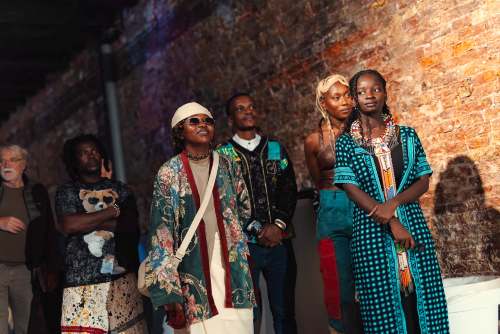
At the 61st International Art Exhibition of La Biennale di Venezia, widely regarded as the most prestigious platform in contemporary art, four Tanzanian artists have delivered a powerful statement about the country’s growing cultural influence and artistic confidence.
Through the national pavilion Minor Frequencies: The Inner Life of a Nation, artists Turakella Editha Gyindo, Amani Abeid, Lazaro Samuel, and Valerie Asiimwe Amani are not merely exhibiting their work – they are reshaping global perceptions of Tanzanian creativity.
Their participation marks only Tanzania’s second appearance at the Venice Biennale, yet the message is unmistakable: Tanzanian artists are ready to compete, contribute, and lead conversations on the international cultural stage.
The exhibition explores four interconnected themes – the Body, the Gesture, the Archive, and the Mind – offering audiences a deeply personal and distinctly Tanzanian perspective on identity, memory, survival, and transformation.
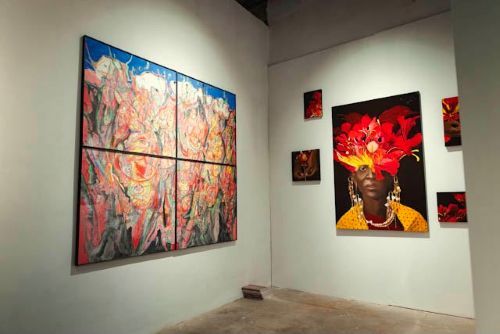
From Gyindo’s exploration of women’s knowledge and decolonial memory through loofah installations, to Samuel’s emotionally charged paintings rooted in lived experiences of hardship, the pavilion presents narratives that are local in origin but universal in relevance.
Perhaps most significant is the way these artists challenge long-standing assumptions about African art. Rather than presenting Tanzania through stereotypes or simplified cultural symbols, the exhibition showcases complex contemporary voices engaging with issues such as migration, unrealised aspirations, cultural inheritance, and globalisation.
This positions Tanzania not as a peripheral participant in global art discourse but as an active contributor shaping it.
For the entertainment and creative industries, the implications are substantial. International recognition at Venice often serves as a gateway to broader opportunities, including museum acquisitions, global exhibitions, cultural partnerships, and increased investment in creative sectors.
The visibility generated by the Biennale can elevate not only the featured artists but also Tanzania’s wider ecosystem of visual arts, film, music, fashion, and cultural tourism.
The exhibition also highlights the growing importance of institutions such as Rangi Gallery, whose role in bringing the pavilion to life demonstrates how local cultural organisations can become powerful international connectors. Its involvement reflects a broader shift in which African-led institutions are increasingly driving the narrative around African contemporary art rather than relying solely on external validation.
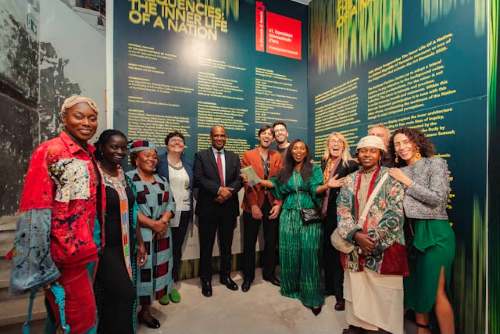
Beyond the artworks themselves, Tanzania’s presence in Venice sends a strategic message about the value of cultural diplomacy. As nations compete for influence through soft power, creative excellence has become an increasingly important asset.
By investing in artists and international platforms, Tanzania is strengthening its cultural brand and expanding its global reach. The success of Minor Frequencies suggests that Tanzania’s contemporary art scene is no longer emerging – it is arriving. And for the country’s entertainment and creative industries, that arrival could mark the beginning of a new era of international recognition and opportunity.