By Business Insider Reporter
As East Africa battles recurring outbreaks of Ebola and other infectious diseases, the region is receiving a significant boost in its efforts to protect public health and safeguard economic stability.
The East African Community (EAC) and Germany have signed a new €8 million partnership aimed at strengthening regional preparedness and response to infectious disease outbreaks, underscoring growing recognition that health security has become an essential pillar of economic resilience and regional integration.
The funding package includes €5 million from Germany through KfW Development Bank to strengthen laboratory systems and regional capacity to combat Mpox and other highly infectious diseases, alongside an additional €3 million dedicated to Ebola response efforts.
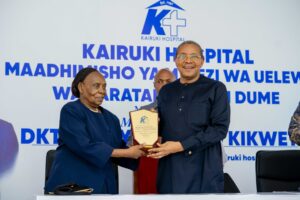
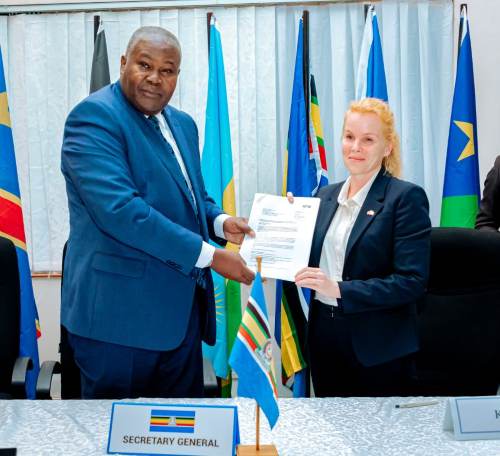
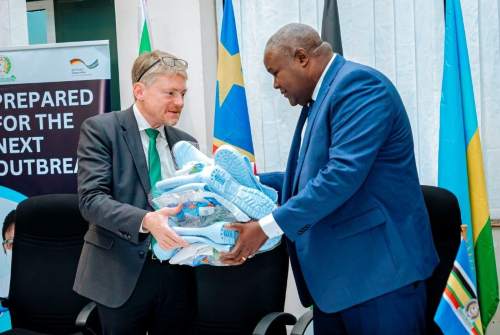
The agreement was signed at the EAC headquarters in Arusha by EAC Secretary General Amb. Stephen Mbundi and KfW Development Bank Country Director for Tanzania and the EAC, Vanessa Eidt.
The new support comes at a critical time, with both the Democratic Republic of Congo and Uganda continuing to report cases of Ebola Virus Disease, raising concerns over cross-border transmission in one of Africa’s most interconnected economic regions.
Health security becomes economic security
While disease outbreaks are primarily viewed as public health emergencies, policymakers increasingly recognize their broader economic consequences.
The COVID-19 pandemic exposed how health crises can disrupt trade, tourism, investment flows and supply chains across the region. Subsequent outbreaks of Ebola, Marburg and Mpox have reinforced the need for stronger surveillance systems capable of detecting and containing threats before they escalate into wider economic shocks.
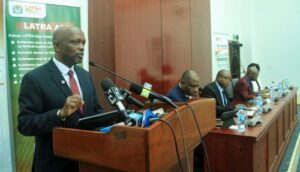
Speaking during the signing ceremony, Amb. Mbundi described Germany as one of the EAC’s most dependable development partners and praised its long-standing support in building regional health systems.
“This support will go a long way in advancing regional coordination in response to current public health threats. It will strengthen surveillance systems, laboratory capacity and technical expertise across Partner States,” he said.
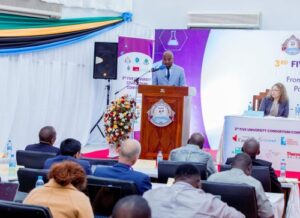
Germany’s Chargé d’Affaires in Tanzania, Manuel Müller, said years of investment in preparedness infrastructure are now proving their value.
“At this very moment, it is paying off that German development cooperation has been partnering with the EAC for many years in pandemic preparedness,” he said.
According to Müller, investments in early warning systems, laboratory infrastructure and training of medical professionals have equipped the region with tools necessary to respond more effectively to emerging outbreaks.
Building a regional defence system
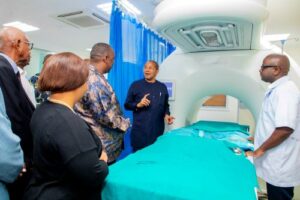
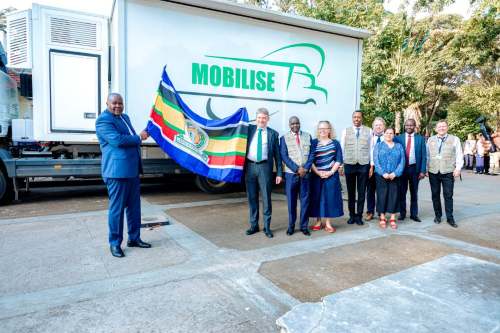
One of the most visible outcomes of the Germany-EAC partnership has been the deployment of mobile laboratories across the region.
During the event, the EAC commissioned an additional mobile laboratory, bringing the total number supported by Germany to ten across seven Partner States: Burundi, the Democratic Republic of Congo, Kenya, Rwanda, South Sudan, Tanzania and Uganda.
The mobile laboratories enable rapid disease diagnosis and confirmation, helping authorities contain outbreaks before they spread widely.
Their importance has already been demonstrated during major health emergencies, including the COVID-19 pandemic, Uganda’s Ebola outbreak in 2022, Tanzania’s Marburg outbreak in 2023 and the regional Mpox outbreak in 2024.
Germany also donated 500 sets of Personal Protective Equipment (PPEs) to support frontline health workers engaged in outbreak preparedness and response activities.
Beyond emergency response
The latest funding builds on a decade-long partnership between Germany and the EAC that has focused on strengthening laboratory networks, disease surveillance systems, emergency response mechanisms and workforce development.
Regional health experts argue that such investments have benefits that extend far beyond disease control. Stronger health systems improve investor confidence, reduce economic disruption and enhance the resilience of regional trade corridors that connect East Africa’s rapidly growing economies.
The EAC is also expanding the role of its Rapidly Deployable Pool of Experts, a multidisciplinary network of more than 180 specialists who can be mobilized quickly during outbreaks and other public health emergencies.
Additional training programmes focusing on infection prevention, risk communication, outbreak management and community engagement are expected to further strengthen regional readiness. As East Africa continues to experience recurring health threats, the new German funding highlights a growing consensus among policymakers that investing in health security is no longer simply a public health priority – it is a strategic economic investment essential for protecting growth, trade and regional prosperity.