Chalinze–Dodoma transmission project expected to strengthen national grid, support industrial investment and improve electricity reliability across central Tanzania.
By Business Insider Reporter
Tanzania’s ambitious 400-kilovolt Chalinze–Dodoma electricity transmission project is expected to be completed by August 18, 2026, in a major boost to the country’s energy infrastructure and long-term industrialisation agenda.
The project, which is being implemented by the Tanzania Electric Supply Company (TANESCO), is designed to transport electricity generated from the Julius Nyerere Hydropower Project (JNHPP) to Dodoma and other parts of the country through a high-capacity transmission network.
Speaking during an inspection tour of the project across Morogoro and Dodoma regions on May 20, 2026, TANESCO Managing Director Lazaro Twange said implementation had reached 82.5 percent, with the government investing approximately Sh514 billion into the strategic project.
Twange described the transmission line as one of Tanzania’s most important energy infrastructure investments, particularly as electricity demand continues to rise alongside industrial expansion, urbanisation and economic growth.

“This transmission line is critical because it increases the capacity to transport electricity generated from the Julius Nyerere Hydropower Project to consumers across the country,” Twange said.
“As the population grows and economic activities expand, demand for reliable electricity also increases. We have now agreed that the project will be completed by August 18, 2026.”
The 345-kilometre transmission line stretches from Chalinze to Zuzu in Dodoma and includes expansion works at power substations in both Chalinze and Dodoma to strengthen electricity reception and distribution capacity.
According to TANESCO, the project is being financed entirely by the Government of Tanzania, reflecting the state’s continued push to modernise the country’s energy infrastructure as part of broader industrial development ambitions under President Samia Suluhu Hassan’s administration.
Energy analysts say the project will play a major role in stabilising electricity supply to Dodoma – Tanzania’s fast-growing administrative capital – while also strengthening power distribution to industries, businesses and households in central regions.
The transmission line is also expected to improve integration of electricity generated from the 2,115MW Julius Nyerere Hydropower Project into the national grid, helping Tanzania reduce dependence on expensive thermal power generation and imported fuel.
Over the past few years, Tanzania has accelerated investment in energy infrastructure to support its industrialisation strategy, attract investment and improve national competitiveness.
The government has prioritised large-scale power generation and transmission projects, including rural electrification expansion, grid upgrades and regional power interconnection initiatives linking Tanzania with neighbouring countries.
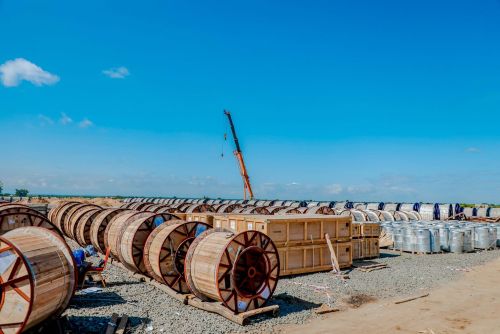
Twange said TANESCO was satisfied with the current progress but instructed the contractor to increase the pace of implementation to ensure timely completion.
“We have agreed to increase the number of experts and equipment to ensure the project is completed within the agreed timeline,” he said.
Project Manager Engineer Newtone Lingstone confirmed that construction of both the transmission line and substation expansion works was progressing steadily.
Upon completion, the project is expected to significantly improve electricity reliability not only in Dodoma Region but across several parts of Tanzania connected to the national grid.
Economists say reliable electricity remains one of the most critical foundations for Tanzania’s industrial transformation, particularly as the country seeks to expand manufacturing, mining, agro-processing and digital economic activities under its long-term development agenda. The improved transmission capacity is also expected to create stronger conditions for private sector investment by reducing power interruptions and improving energy security for businesses.