
By Business Insider Reporter
The Government has stepped up its push for a modernised waste management system, calling on private sector players to invest in advanced recycling technologies as part of a broader strategy to transform waste into economic value.
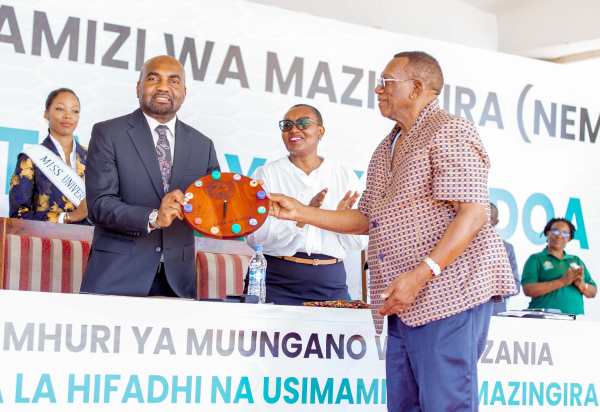
Speaking during the commemoration of the International Day of Zero Waste at Mnazi Mmoja grounds in Dar es Salaam, Minister of State in the Vice President’s Office (Union and Environment), Hamad Yussuf Masauni, said the government has already laid the groundwork through the National Waste Management Strategy (2025–2030).
The strategy is anchored on the principles of a circular economy, aiming to reduce waste generation while promoting reuse, recycling and recovery of materials.
According to the minister, the success of this framework will depend heavily on private investment in waste processing technologies, recycling plants and efficient collection systems.
“The goal is to strengthen the entire waste management value chain and ultimately reduce environmental pollution by turning waste into raw materials for industrial production,” he said.
The call comes at a time when Tanzania, like many rapidly urbanising economies, is grappling with rising volumes of solid waste. Major cities such as Dar es Salaam, Mwanza and Arusha are at the centre of this challenge, driven by population growth, consumption patterns and limited waste infrastructure.
Official estimates indicate that the country generates more than seven million tonnes of solid waste annually. However, only about 45 to 50 percent is collected and disposed of at designated sites, leaving the remainder to accumulate in the environment, often clogging rivers, drainage systems and urban waterways.
The situation is compounded by limited adoption of proper waste disposal practices at the household level.
Data from the 2022 Population and Housing Census shows that around 40 per cent of households burn solid waste, while only 22 percent rely on regular and formal collection services.
Officials argue that these trends underscore the urgency of shifting from a linear “use-and-dispose” model to a circular system where waste is reintegrated into the economy.
The theme for this year’s global observance – “Empowering Zero Waste in the Food Sector” – highlights the need to address waste across food production and consumption systems.
At the national level, Tanzania’s theme, “Waste is Opportunity,” reinforces the government’s message that waste should be viewed as a valuable resource rather than a burden.
Immaculate Sware, Director General of the National Environment Management Council, emphasised that a shift in mindset is critical to unlocking the economic potential of waste.
“Food waste can be converted into fertiliser and energy, plastics can be recycled into new products, and scrap metal can be reprocessed into industrial inputs,” she said, urging households, businesses and industries to adopt waste segregation and recycling practices.
Analysts note that strengthening Tanzania’s waste management ecosystem could open up new investment opportunities in green industries, including recycling, waste-to-energy and composting. It also aligns with broader national priorities on industrialisation, environmental sustainability and climate resilience. With urban populations projected to continue rising, the government’s push to integrate technology, policy reform and private capital into the waste sector is increasingly seen as essential – not only for environmental protection but also for unlocking new economic value chains.