By Business Insider Reporter
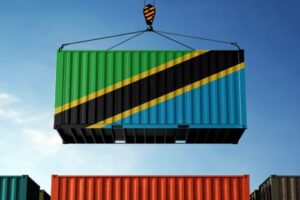
As regional demand for food, minerals and manufactured goods continues to grow, Tanzania is steadily strengthening its position as a dependable supplier to neighbouring markets.
Increasingly, competitiveness is being shaped not only by how much the country produces, but by how reliably goods move from farms, factories and mines to buyers across the region
From maize, rice and horticultural produce to cement, fast moving consumer goods and minerals, the ability to deliver on time and at scale has become a defining factor in regional trade.
Analysts say that behind physical infrastructure such as roads, railways and ports lies a less visible but critical enabler: financial systems that keep supply chains liquid, predictable and resilient.
For years, Tanzanian producers and traders have faced supply chain disruptions linked to delayed payments, input shortages, foreign exchange gaps and logistics bottlenecks. Addressing these challenges, economists argue, requires more than physical investment. It requires transactional systems that allow money, goods and risk to move smoothly across borders.
“Supply chains break down when liquidity dries up,” said Fredrick Max, Head of Business and Commercial Banking at Stanbic Bank Tanzania. “Working capital allows farmers to buy inputs on time, manufacturers to keep production lines running and exporters to move goods without delays.”
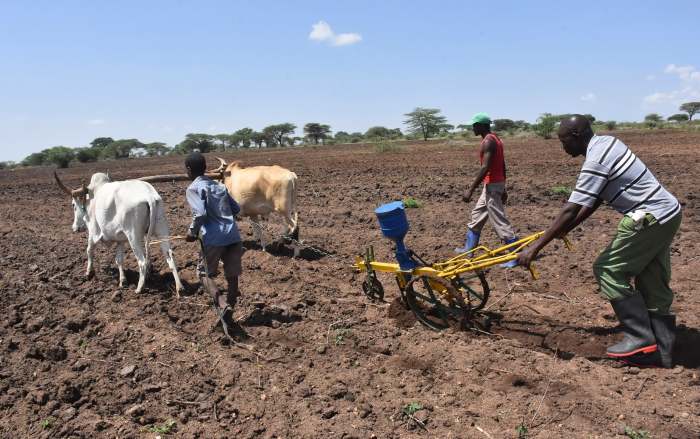
Agriculture remains the backbone of Tanzania’s economy, employing the majority of the population and supplying markets in Kenya, Rwanda, Burundi, the Democratic Republic of Congo and Zambia. Yet many small and medium sized agribusinesses struggle to finance seeds, fertiliser, machinery and storage, particularly at the start of production cycles.
According to Mr. Max, financing must reflect the realities of how agriculture operates.
“Agriculture does not follow monthly salary cycles,” he said. “When credit is aligned to planting, harvesting and marketing periods, productivity and reliability improve.”
Predictability of cash flow, analysts add, is just as important as access to credit. Senior Manager for Transactional Solutions at Stanbic Bank Tanzania, Danny Simkoko, said timely collections and settlements play a central role in maintaining trust across value chains.
“When suppliers are paid on time, they can reinvest in inputs and scale production,” he said. “That predictability strengthens relationships between farmers, aggregators, processors and exporters.”
Manufacturing, FMCG and payment certainty
Similar dynamics apply across manufacturing, processing and fast moving consumer goods. Production schedules depend on steady access to raw materials, while suppliers rely on predictable settlement to manage inventory and logistics.
Delays in payments or access to foreign exchange can ripple through value chains, affecting everything from packaging to retail shelves. Trade finance instruments such as letters of credit, guarantees and invoice discounting help mitigate these risks by assuring suppliers of payment and allowing businesses to unlock cash tied up in invoices.
“Risk mitigation is not about avoiding trade,” Mr Max said. “It is about enabling it. When buyers and suppliers trust the settlement mechanisms, trade flows more smoothly across borders.”
Transactional banking platforms are increasingly being designed to support end to end supply chains rather than isolated transactions. Integrated solutions that link payments, collections and working capital allow businesses to manage liquidity more efficiently and meet delivery commitments to regional partners.

Analysts note that Tanzania’s growing reliability as a supplier is also closely linked to improvements in logistics corridors. Investments in railways, ports and road networks have reduced transit times and costs for exporters serving landlocked neighbours.
“Physical infrastructure without financial infrastructure limits competitiveness,” said Dr. Amina Msuya, a trade policy analyst based in Dar es Salaam. “Exporters need financing for storage, transport and border processes. When these systems work together, Tanzania becomes a more reliable partner in regional markets.”
Industry, mining and supply chain discipline
The mining and industrial sectors also depend heavily on working capital and transactional systems. Mining firms require financing for equipment, fuel and spare parts, while manufacturers rely on imported machinery and intermediate goods.
“Industry is highly sensitive to cash flow disruptions,” Dr Msuya said. “Invoice discounting and guarantees help firms bridge payment gaps, maintain output and meet regional demand.”
Transactional solutions also improve transparency and control in complex supply chains. Real time visibility over payments and liquidity allows firms to plan production more effectively and respond quickly to shifts in regional demand. As Tanzania deepens its role in regional trade, supply chain reliability is becoming a competitive advantage. Increasingly, that reliability depends as much on financial discipline and transactional systems as it does on physical infrastructure.