
By Business Insider Reporter
Sokoine University of Agriculture (SUA) is advancing a major expansion of its academic footprint, reinforcing its position as a centre of academic and research excellence
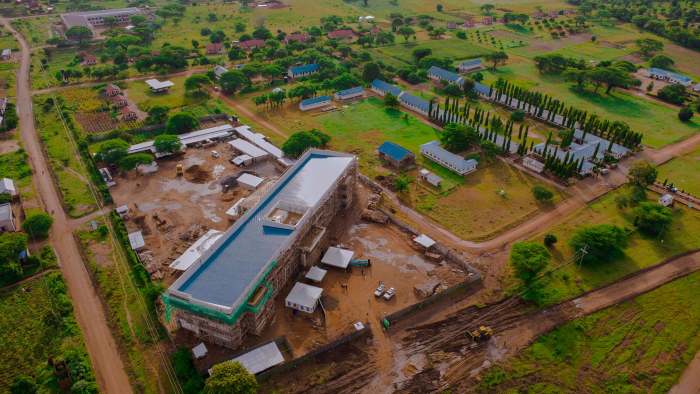
To meet the country’s long-term development ambitions, the university is accelerating investment in modern teaching and residential infrastructure, most notably through the establishment of the Mizengo Pinda Campus in Katavi Region.
Speaking during the foundation stone laying ceremony for the new campus’s academic building and students’ hostel last week, the leadership of the university underscored that the project is designed to decentralise access to quality higher education while extending specialised agricultural training to historically underserved regions.
The ceremony, held on March 14, 2026, was officiated by Prime Minister Mwigulu Nchemba, whose presence highlighted strong government commitment to the initiative and reaffirmed its strategic importance to the country’s broader development agenda.
“The Government will continue to invest in higher education infrastructure to strengthen the quality of training, research, and community service delivery,” emphasised Premier Nchemba during the ceremony, which brought together senior government officials, SUA’s top management, staff, and students.
Dr. Nchemba further urged students to make the most of the enhanced learning environment by committing themselves to academic excellence and harnessing knowledge and innovation as tools for advancing national development.
Valued at TSh 17.4 billion, the project is being implemented under the Higher Education for Economic Transformation (HEET) programme, a flagship government initiative designed to enhance institutional capacity, improve learning environments, and align higher education outputs with the country’s socio-economic priorities.
Beyond expanding physical infrastructure, the investment is expected to strengthen SUA’s capacity to deliver high-quality training, research, and innovation in agriculture and allied sciences – sectors that remain central to Tanzania’s economic transformation.
By increasing student intake, improving accommodation facilities, and supporting cutting-edge research, the Mizengo Pinda Campus is poised to become a strategic hub for skills development and knowledge generation.
Crucially, the project aligns with Tanzania’s long-term development blueprint, Dira 2050, which places human capital development, innovation, and productivity at the heart of national progress.
As the country seeks to transition towards a more diversified and competitive economy, investments in higher education institutions like SUA are expected to play a catalytic role in building a skilled workforce capable of driving sustainable growth.
The expansion also underscores the Government’s broader commitment to equitable access to education, ensuring that regions like Katavi are not left behind in the nation’s development journey. In doing so, SUA is not only growing in size but also deepening its impact – positioning itself as a key enabler of Tanzania’s development ambitions under Dira 2050.
Speaking on behalf of Vice Chancellor Prof. Raphael Chibunda, Prof. Maulid Mwatawala said the new academic building and students’ hostel will significantly expand the university’s enrolment capacity, enhance the learning environment, and raise teaching standards.

“These facilities are designed to reinforce SUA’s position as a centre of academic and research excellence. They will not only accommodate more students, but also improve the quality of teaching and learning, while strengthening the delivery of inclusive, high-quality higher education,” he noted.
As Tanzania embarks on the Dira 2050 journey, investments like the Mizengo Pinda Campus expansion underscore the pivotal role of higher learning institutions in equipping a new generation of Tanzanians with the knowledge, skills, and mindset required to drive sustainable development. The completion of the project is expected to create a more conducive learning environment while enhancing SUA’s ability to respond to the country’s evolving agricultural and economic needs.