
By Business Insider Correspondent, New York
The Government has reaffirmed its commitment to working with the international community to advance the global agenda on gender equality and women’s rights.
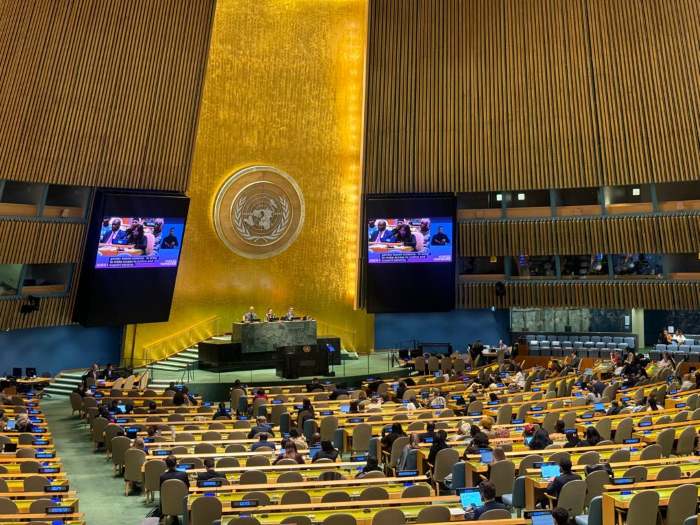
Speaking at the 70th international conference on women’s issues and rights, Tanzania’s representative at the meeting, Dorothy Gwajima, said the country views access to justice as a fundamental pillar for both economic and social development.
Dr. Gwajima noted that Tanzania’s National Development Vision 2050 (Dira 2050) places gender equality and social inclusion at the centre of the country’s development agenda, guiding ongoing reforms in national laws and policies.
She said the government has continued to enact and implement key legislation aimed at protecting the rights of women and girls. These include reforms related to the Land Act, Legal Aid Act, Village Land Act, the Law of the Child Act, the Education Act and provisions within the Penal Code.
At the same time, Tanzania has strengthened its judicial system, achieving a 50 per cent reduction in the backlog of appeal cases between 2021 and 2024.
“Through legal reforms, Tanzania has addressed discriminatory customs and traditions and amended several laws, including electoral laws, to criminalise gender-based violence in politics,” Dr. Gwajima said.
The minister added that the government has introduced several national strategies to improve access to justice and protect vulnerable groups. These include the National Strategy for Women’s Access to Justice, the Second Five-Year National Plan of Action to End Violence Against Women and Children, and the National Land Policy, which guarantees women’s rights to inherit land.
Efforts are also underway to eliminate harmful practices such as female genital mutilation and child marriage, she said.
Dr. Gwajima further explained that Tanzania has introduced innovative approaches to improve access to legal services and enhance the efficiency of the justice system.
These include the electronic Case Management System (e-CMS), Integrated Justice Centres and specialised One Stop Centres that provide coordinated services to survivors of violence.
According to the minister, 88 percent of cases handled at these centres were resolved in 2025, with women accounting for 61 per cent of beneficiaries of legal aid services.
She also highlighted the impact of the Samia Legal Aid Campaign, under which more than 2.1 million women and girls across Tanzania have received legal assistance, legal education and court representation.
Despite these achievements, Dr. Gwajima acknowledged that significant work remains in ensuring full gender equality and access to justice for all. She called on countries and development partners to strengthen cooperation and collaboration in advancing the global gender equality agenda, adding that Tanzania remains ready to learn from international experiences and work collectively towards achieving inclusive justice worldwide.