By Business Insider Reporter
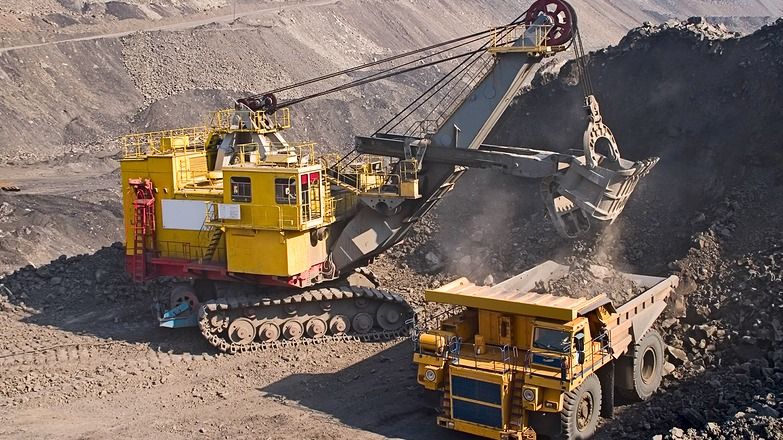
Tanzania is increasingly positioning itself as one of Africa’s most attractive destinations for mining investment, a development that signals growing momentum in the country’s efforts to attract foreign direct investment (FDI) into its natural resource sector.
According to the Annual Survey of Mining Companies 2025 released by the Fraser Institute, Tanzania has climbed to 34th place globally out of 68 jurisdictions on the Investment Attractiveness Index (IAI), a key benchmark used by global mining firms when deciding where to deploy exploration capital.
The latest ranking also places Tanzania fourth in Africa, behind Botswana (7th globally), Morocco (15th globally) and Zambia (25th globally), underscoring the country’s growing standing in an increasingly competitive global race for mining finance.
The survey shows that Tanzania’s overall score rose to 68.04 in 2025, continuing a strong upward trajectory from 62.75 in 2024 and 46.38 in 2023, reflecting improved investor sentiment about the country’s mining prospects and the direction of its investment environment.
Industry analysts say the improvement highlights the country’s vast geological potential, which continues to attract international exploration companies seeking new mineral discoveries.
In the Fraser Institute’s Best Practices Mineral Potential Index, which measures the attractiveness of a jurisdiction’s geology assuming world-class regulatory conditions, Tanzania ranks 15th globally with a score of 75.00, placing it among the most resource-rich jurisdictions in the world.
The strong geological ranking confirms Tanzania’s position as a major mineral frontier, with abundant deposits of gold, nickel, graphite, rare earth elements and other strategic minerals that are increasingly important in the global energy transition.
However, the survey indicates that while Tanzania’s mineral potential is among the world’s best, policy perceptions still shape how investors assess the country’s overall investment climate.
Under the Policy Perception Index (PPI) – which evaluates factors such as taxation, regulatory certainty, legal frameworks and political stability – Tanzania ranks 48th globally, although its score improved to 57.61 in 2025 from 55.41 in 2024.
Despite this gap between geological strength and policy perception, Tanzania’s overall performance shows significant progress over recent years.
The country has climbed from 67th place out of 84 jurisdictions in 2021 to its current 34th position globally, representing one of the strongest upward movements among emerging mining jurisdictions.
Within Africa, Tanzania has also outperformed several traditional mining heavyweights, including the Democratic Republic of the Congo, Namibia, South Africa and Ghana in the latest rankings.
Analysts say the improved performance strengthens Tanzania’s ability to attract international exploration spending at a time when mining companies are seeking new resource frontiers amid rising demand for critical minerals.
The Fraser Institute survey remains one of the most closely watched indicators of investor sentiment in the mining sector. The 2025 edition reached 2,304 senior executives from exploration and mining companies worldwide, whose firms reported a combined US$4.2 billion in exploration spending.
For Tanzania, the positive trend in the rankings adds momentum to the government’s broader strategy of positioning mining as a central pillar of economic transformation.
Authorities have been seeking to expand exploration, strengthen regulatory institutions and increase local participation across the mining value chain while attracting international capital. As global demand for minerals continues to grow, particularly those linked to clean energy technologies, Tanzania’s strong geological potential and improving investor confidence could help the country secure a larger share of global mining investment flows in the coming years.