By Correspondent Benny Mwaipaja
Tanzania is stepping up efforts to deepen cooperation between government and business as it seeks new ways to finance large-scale infrastructure projects and accelerate economic transformation.
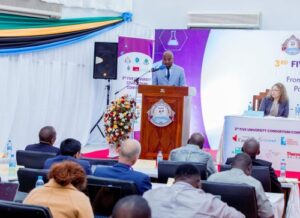
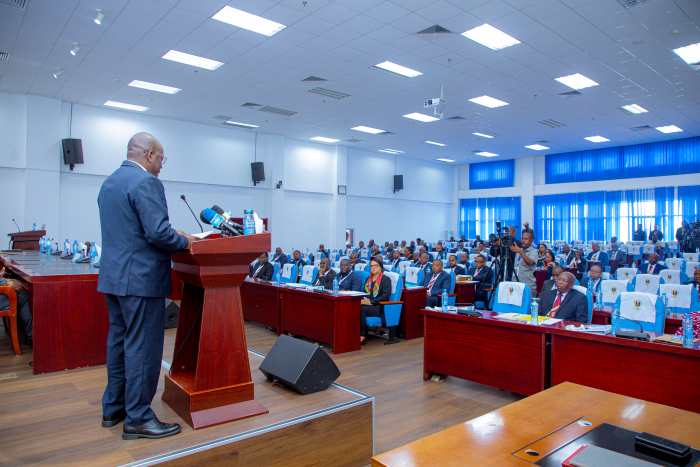
Opening the 17th Capstone Leadership Course at the National Defence College (NDC) in Kunduchi, Dar es Salaam, Finance Minister Khamis Mussa Omar said the government views Public–Private Partnerships (PPPs) as a critical tool for unlocking additional capital and delivering strategic development projects.
Speaking to senior officials and security leaders attending the five-day programme, Mr. Omar noted that while Tanzania has traditionally financed development through taxation, domestic and foreign borrowing, and private investment, these sources have natural limits.
“Government has been using several avenues to mobilise development finance, including tax and non-tax revenues, private sector investment, and loans from domestic and international sources,” he said. “However, these channels are constrained by economic conditions and the need to maintain sustainable levels of public debt.”
For years, Tanzania’s fiscal policy has maintained a ceiling that keeps the budget deficit below three percent of gross domestic product. While the discipline has helped preserve macroeconomic stability, it also restricts the extent to which borrowing can be used to fund major projects.
According to Mr Omar, this is where PPPs become particularly valuable.
“They provide an important solution for implementing large strategic projects without placing excessive financial pressure on the nation,” he said.
Major projects on the horizon
The government is currently planning a new wave of ambitious infrastructure schemes designed to strengthen regional connectivity and expand energy supply.
Among them are plans for a modern Standard Gauge Railway linking Tanga to Musoma via Arusha, as well as another line connecting Mtwara to Ludewa through Mbamba Bay. In addition, the government aims to double Tanzania’s electricity generation capacity by 2030.
Such projects require vast financial resources – far beyond what the public purse alone can comfortably provide. The administration therefore hopes to attract significant private sector participation through structured partnership arrangements.
Under the leadership of President Samia Suluhu Hassan, the sixth-phase government has placed renewed emphasis on strengthening collaboration between public institutions and private investors.
“Public–private partnerships are central to stimulating economic growth and improving service delivery for citizens,” Mr Omar told the participants.
Linking development and national security
The Capstone course, organised by the National Defence College, brings together senior leaders from across government, the private sector and the security services to examine strategic issues affecting Tanzania’s future.
According to NDC Commandant Wilbert Ibuge, the programme aims to build a shared understanding of how economic policy, national development and security intersect.
“This course is designed to help senior leaders analyse the opportunities and risks associated with public–private partnerships, including considerations that may have implications for national security,” he said.
The theme of this year’s course – Public–Private Partnerships in Tanzania as a Catalyst for Sustainable National Development – aligns closely with the country’s long-term ambitions under the Tanzania Development Vision 2050.
The strategy aims to transform Tanzania into an upper-middle-income country by mid-century, driven by industrialisation, effective use of natural resources and a highly skilled workforce.
Building strategic leadership
The five-day course combines lectures, group discussions and analytical sessions examining both the opportunities and the potential risks associated with PPP arrangements. Participants also undertake field visits to key strategic projects.
A total of 82 participants – from government ministries, public institutions, private companies and defence and security agencies – are attending the programme. For Tanzania, the gathering reflects a growing recognition that development challenges cannot be addressed by government alone. Instead, officials increasingly see partnership with the private sector as essential to turning the country’s long-term economic ambitions into reality.