
By Business Insider Reporter and Agencies
East African economies could face renewed pressure on trade costs after global shipping giant Mediterranean Shipping Company (MSC) announced a new war-risk surcharge on cargo shipments bound for African destinations and Indian Ocean islands.
The Switzerland-based container carrier said the surcharge, introduced on Thursday, follows security disruptions to maritime traffic in two of the world’s most strategic shipping corridors – the Strait of Hormuz and the Bab el-Mandeb Strait.
The waterways connect the Persian Gulf and the Red Sea to global shipping routes, making them critical to trade flows into the Indian Ocean and East Africa.
For cargo originating from the Indian subcontinent to East African ports, MSC will impose a surcharge of US$500 per 20-foot equivalent unit (TEU) for dry containers and US$1,000 per TEU for refrigerated cargo.
Shipments from Gulf countries to African destinations will attract higher charges, including US$2,000 for 20-foot containers, US$3,000 for 40-foot containers and US$4,000 for refrigerated units.
Rising freight costs
Shipping and logistics experts warn the decision could translate into higher import costs across East Africa, where most countries depend heavily on maritime trade.
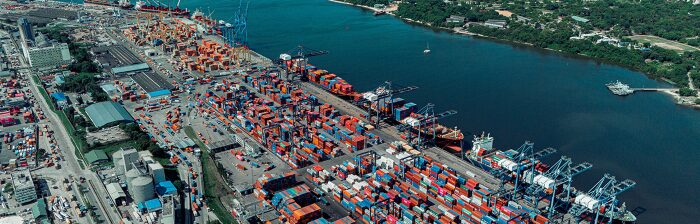
The region’s key gateways – including the Port of Dar es Salaam in Dar es Salaam, the Port of Mombasa in Mombasa and the Port of Djibouti – handle millions of tonnes of cargo annually destined not only for coastal states but also for landlocked economies such as Uganda, Rwanda, Burundi and the Democratic Republic of the Congo.
“Any additional surcharge in maritime freight eventually trickles down to consumers,” said a regional maritime analyst based in Nairobi. “East African economies rely heavily on imports of fuel, fertiliser, machinery and food products shipped through these routes. A rise in shipping costs will inevitably push up prices.”
Impact on food and energy imports
The surcharge is particularly significant for refrigerated cargo, which carries food products such as meat, dairy and pharmaceuticals.
With many East African countries importing food and temperature-sensitive medical supplies from Asia and the Gulf, the higher charges could disrupt supply chains.
Energy imports may also become more expensive. Countries such as Tanzania and Kenya import petroleum products through sea routes linked to the Gulf region, meaning freight adjustments can directly influence domestic fuel prices and transport costs.
Business leaders warn that the additional charges could worsen inflationary pressures already affecting households and industries.
Pressure on regional trade competitiveness
Manufacturers and traders say the move may also weaken East Africa’s competitiveness in global trade.
Exporters shipping products such as tea, coffee, horticultural produce and minerals may face higher logistics costs, reducing profit margins.
The measure comes at a time when the East African Community (EAC) is working to deepen regional trade integration and reduce the cost of doing business across member states.
Logistics industry stakeholders say the surcharge highlights the vulnerability of African economies to geopolitical tensions along global maritime routes.
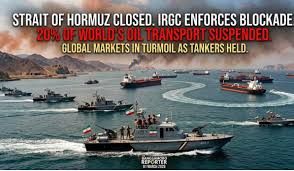
“East Africa sits at the end of some of the world’s most sensitive shipping corridors,” said a freight forwarding executive in Dar es Salaam. “When disruptions occur in the Gulf or the Red Sea, the cost impact is felt almost immediately in African markets.”
Long-term implications
While MSC has not indicated how long the surcharge will remain in place, economists warn prolonged instability along these routes could trigger broader shifts in shipping patterns, insurance costs and freight pricing.
For East Africa, where more than 80 per cent of trade moves by sea, sustained increases in shipping costs could slow economic growth, raise consumer prices and complicate regional trade ambitions. Analysts say governments may need to accelerate investment in port efficiency, regional logistics infrastructure and trade diversification to cushion their economies from future maritime disruptions.