By Business Insider Reporter, Zanzibar
The Sixth Phase Government has significantly strengthened Tanzania’s international cooperation and expanded its contribution to regional and global environmental and climate change initiatives, Minister of State in the Vice-President’s Office, Hamad Yussuf Masauni, has said.
Speaking to journalists in Unguja, Zanzibar on March 3, 2026 during commemorations of Africa Environment Day, the Minister called on citizens, institutions and the private sector to seize opportunities emerging from environmental protection and climate action, describing them as key drivers of sustainable development and economic resilience.
Africa Environment Day is observed annually on March 3 since 2002 when it was installed by the Council of Ministers of the African Union as part of efforts to encourage member states to conserve and protect the environment.
This year’s theme, “Assuring Sustainable Water Availability and Safe Sanitation Systems to Achieve the Goals of Agenda 2063,” underscores the continent’s commitment to improving water security and sanitation as a foundation for long-term prosperity.
Expanding Tanzania’s global footprint
Mr. Masauni said that through the diplomatic influence of President Samia Suluhu Hassan, Tanzania has secured strategic leadership roles in regional and global environmental platforms.
Among these milestones was Tanzania’s hosting of the Africa Heads of State Energy Summit – Mission 300 – held in Dar es Salaam in January 2025, which brought together African leaders to advance access to reliable energy across the continent.
Tanzania has also become a permanent member of the African Union Committee of Heads of State and Government on Climate Change.
In addition, Mr. Masauni will serve as Vice-President of the eighth session of the United Nations Environment Assembly (UNEA-8) from December 2025 to December 2027, elevating the country’s visibility in global environmental governance.
“These achievements demonstrate Tanzania’s growing credibility and influence in environmental and climate diplomacy,” the Minister said.
Environment and economic growth interlinked
Mr. Masauni emphasised that national development and the well-being of citizens are inseparable from the state of the environment.
“When the environment is stable and protected, economic growth and social welfare are also strengthened,” he said, adding that sustainable management of natural resources is essential to securing long-term prosperity.
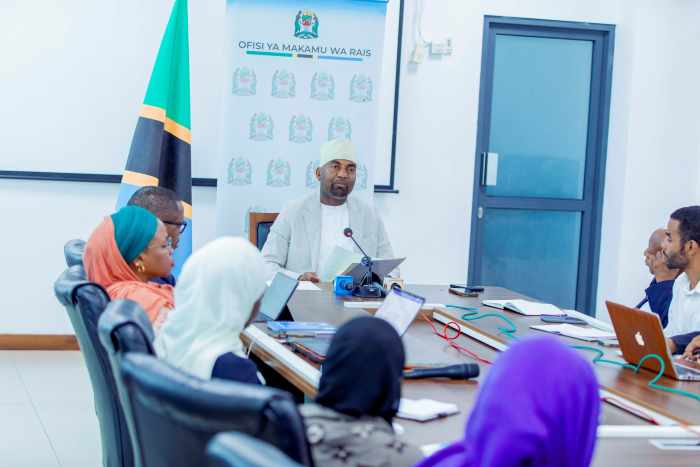
He noted that the Government is determined to integrate environmental protection, climate resilience and sustainable development into national planning and policy implementation. This approach is embedded in the forthcoming Dira 2050, which places environmental conservation and climate change resilience among its key pillars.
Similarly, the ruling party’s 2025–2030 manifesto identifies environmental protection and climate action as priority areas for the next development cycle.
Confronting global environmental challenges
The Minister warned that the world is currently facing three major environmental crises: biodiversity loss, pollution from multiple sources and climate change. These interconnected challenges require coordinated international responses and stronger partnerships.
Tanzania, he said, remains an active signatory to various international environmental conventions aimed at protecting ecosystems and promoting sustainable resource management.
He further stressed that achieving sustainable water availability and safe sanitation systems demands inclusive participation from individuals, communities, institutions and the private sector.
“The theme of this year’s Africa Environment Day reminds us that sustainable water and sanitation are not solely government responsibilities. They require collective commitment and practical action,” Mr Masauni said. As climate risks intensify across Africa, from prolonged droughts to flooding and ecosystem degradation, Tanzania’s leadership is positioning environmental stewardship not only as a moral obligation, but as a strategic opportunity to strengthen resilience, attract green investment and safeguard future generations.