By Business Insider Reporter
The East African Community (EAC) posted a sharp rebound in external trade performance in the third quarter of 2025, signalling renewed resilience across the region’s export sectors despite persistent inflationary pressures.
According to the latest EAC Quarterly Statistics Bulletin released at the bloc’s headquarters in Arusha, total international merchandise trade rose by 21.9 percent year-on-year to US$ 40.3 billion. The standout driver was exports, which jumped 32.3 percent to US$ 19.6 billion, outpacing import growth of 13.3 percent to US$ 20.6 billion.
The result was a significantly narrower trade deficit of US$ 1.0 billion, down from US$ 3.4 billion in the same quarter of 2024 – a marked improvement in the region’s external balance.
Export strength and diversification
The export surge reflects both higher global demand and gradual diversification across commodity and value-added segments.
The region’s leading export categories included base metals, precious stones and metals, mineral fuels, and key agricultural commodities – sectors that remain central to foreign exchange earnings in Partner States such as Tanzania, Kenya, Uganda and the Democratic Republic of the Congo.
China, the United Arab Emirates, South Africa, Hong Kong and Singapore collectively absorbed 58 percent of total exports, underlining East Africa’s growing integration into Asian and Middle Eastern trade corridors.
For policymakers, the narrowing deficit is particularly significant. A stronger export performance reduces pressure on currencies, supports foreign reserve accumulation and improves debt sustainability metrics at a time when many African economies are grappling with elevated borrowing costs.
Intra-African trade gains momentum
Trade within Africa accounted for 32.2 percent of total trade, valued at US$ 10.1 billion, while intra-EAC trade expanded by 15 percent to US$ 4.8 billion.
The data points to steady progress in regional integration under the EAC Common Market framework.
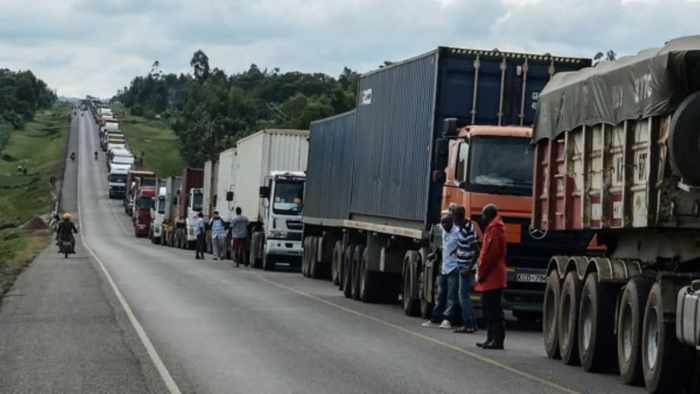
The bloc’s trade linkages with neighbouring regional groupings – including the Common Market for Eastern and Southern Africa (COMESA) and the Southern African Development Community (SADC) – remained robust, reinforcing East Africa’s role as a bridge between continental trade corridors.
For manufacturers and agro-processors, expanding intra-regional trade presents opportunities to scale production for a market that now spans eight Partner States, following recent enlargements of the bloc.
Imports signal investment activity
On the import side, petroleum products, machinery, vehicles and cereals dominated. While higher petroleum imports reflect energy demand and price dynamics, increased machinery and equipment inflows suggest sustained investment in infrastructure and industrial capacity.
For the private sector, this import profile indicates that capital formation and logistics development remain central to the region’s medium-term growth strategy.
Inflation remains a structural challenge
Despite the positive trade momentum, inflationary pressures intensified across the region. Annual headline inflation, measured by the EAC Harmonised Consumer Price Index (EAC-HCPI), rose to 28.3 percent in September 2025 from 24.2 percent in August and 14.8 per cent a year earlier.
The annual average inflation rate for the 2024/2025 financial year stood at 23.0 per cent, up sharply from 6.6 per cent in the previous financial year.
The surge was largely driven by extreme price increases in South Sudan and Burundi, where macroeconomic instability significantly distorted regional averages.
Core inflation – which excludes food and energy – eased to 18.3 percent in September 2025 from 21.1 percent in August, offering tentative signs of underlying price stabilisation. However, the annual average core inflation rate for the financial year climbed to 24.4 percent, reflecting broader structural pressures.
For businesses, sustained high inflation translates into elevated operating costs, tighter margins and cautious consumer spending – factors that could moderate domestic demand even as exports strengthen.
Monetary conditions and credit expansion
Monetary indicators present a mixed but generally stable outlook. Most Partner States recorded declines in 91-day Treasury bill rates in Q3 2025, suggesting easing short-term liquidity conditions, with Rwanda being the exception after a 90-basis-point increase.
Lending rates remained broadly stable, while deposit rates rose in most countries. Interest rate spreads varied significantly, with South Sudan recording the highest spread at 13.7 per cent, compared to Tanzania’s lowest at 6.7 perent – an indicator of relative banking sector efficiency.
Broad money supply (M3) growth moderated to 15.0 percent year-on-year, supported by a 13.2 per cent expansion in private sector credit.
Meanwhile, Net Foreign Assets increased by 21.9 per cent, reinforcing the narrative of improved external positions linked to export gains.
A region at a turning point
The Q3 2025 data suggests that the EAC is navigating a complex economic landscape with a measure of resilience. Strong export growth, improving external balances and steady credit expansion point to structural strengths in trade and financial systems.
However, elevated inflation and uneven macroeconomic conditions across Partner States highlight the importance of coordinated monetary and fiscal responses.
For investors and regional corporates, the message is clear: East Africa’s growth story remains intact, but navigating it will require careful attention to inflation dynamics, currency movements and evolving trade relationships. If export diversification and intra-African trade continue to deepen – supported by infrastructure development and regulatory harmonisation – the EAC could consolidate its position as one of Africa’s most dynamic and strategically integrated economic blocs.