
By Business Insider Reporter
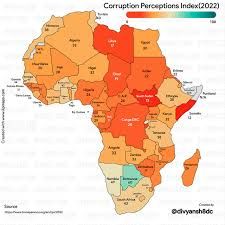
Sub-Saharan Africa has once again emerged as the world’s lowest-performing region in the 2025 Corruption Perceptions Index (CPI), raising fresh questions about governance, public finance management and investor confidence across the continent – including in Tanzania.
Released on February 10, 2026 by Transparency International, the CPI shows the region averaging just 32 out of 100, with only four of 49 countries scoring above 50.
The findings underscore structural weaknesses in public sector accountability and the uneven impact of anti-corruption reforms.
Tanzania in regional context
While the latest CPI places continued pressure on African governments to demonstrate stronger political integrity, Tanzania’s position reflects a mixed trajectory over the past decade.
In recent years, Tanzania has implemented reforms aimed at strengthening public financial management systems, digitalising revenue collection and tightening procurement oversight. Institutions such as the Prevention and Combating of Corruption Bureau (PCCB), the Controller and Auditor General (CAG), and the Public Procurement Regulatory Authority (PPRA) have expanded enforcement visibility.
However, governance analysts note that enforcement consistency, transparency in public contracting, and the handling of high-profile cases remain critical to sustaining credibility.
For Tanzania’s business community, CPI performance is more than a reputational metric – it directly affects: foreign direct investment flows, cost of capital and sovereign risk perception, public procurement competitiveness and private sector confidence in regulatory fairness.
International investors often use the CPI as a proxy indicator when assessing market risk, particularly in infrastructure, extractives, energy and public-private partnership projects.
Public finance and service delivery risks
Transparency International warns that corruption in public fund management disproportionately affects vulnerable citizens by undermining access to essential services such as water, electricity, health and education.
This concern resonates strongly in East Africa, where rapid population growth and infrastructure expansion require substantial public spending. Misallocation or leakages in public funds can delay projects, inflate costs and reduce developmental impact.
Tanzania’s recent push for mega-infrastructure investments – including transport corridors, energy projects and urban housing developments – heightens the importance of procurement integrity and financial oversight.
Regional warning signs
Across Sub-Saharan Africa, governance instability linked to corruption is increasingly visible. In Madagascar, severe corruption allegations contributed to Gen-Z-led uprisings that toppled the government in late 2025. Meanwhile, Mozambique has registered hundreds of new corruption cases in early 2025 alone, highlighting systemic vulnerabilities.
Even relatively strong performers like Seychelles face scrutiny over delays in high-profile financial crime investigations.
The broader message for the region is clear: anti-corruption frameworks exist on paper, but enforcement gaps and political will remain inconsistent.
Implications for economic agenda
Tanzania is currently positioning itself as a regional trade and logistics hub within the East African Community (EAC) and the African Continental Free Trade Area (AfCFTA). Maintaining investor confidence is central to that ambition.

Improved transparency in customs administration, digitisation of tax systems, and reforms in land administration have been positive steps. However, businesses continue to cite concerns over: bureaucratic discretion in licensing and regulatory approvals, delays in dispute resolution and perceived uneven application of rules. For small and medium enterprises (SMEs), informal facilitation payments can significantly raise operating costs and discourage formalisation.