

By Business Insider Reporter
Tanzania has identified nine strategic sectors as the foundation for its long-term economic transformation, according to the the Minister of State in the President’s Office 0 Planning and Investments, Prof. Kitila Mkumbo.
Briefing journalists in Dar es Salaam today July 8, 2025, Prof Mkumbo said these sectors are expected to drive inclusive growth, innovation, job creation and sustainable prosperity over the next 25 years.
He made the remarks when responding to a question from a journalist who wanted to know out of the many sectors which Tanzania rely on its economic development quest, which ones have been singled out as driver of the country economy through the new vision which will become applicable from next July.
According to Prof. Mkumbo, the process to prepare the new plan has been completed and President Dr. Samia Suluhu Hassan is expected to officially launch it in Dodoma on July 17, this year.
Though Prof. Mkumbo did not go into details on the sectors,
the vision document, which Business Insider has seen its copy, lays out an ambitious roadmap anchored in economic diversification, technological advancement, and positioning Tanzania as a competitive player in regional and global markets. The nine sectors singled out as key economic drivers are:
1. Agriculture and food systems
Agriculture remains the backbone of Tanzania’s economy, employing the majority of the population.
Vision 2050 aims to transform the sector through agribusiness, climate-smart agriculture, value addition, and the integration of digital technologies in production and supply chains.

2. Mining and energy
Tanzania will prioritise responsible extraction of minerals – particularly critical and strategic minerals needed for green technologies – alongside major investments in energy generation, diversification, and access.
This includes renewable energy, natural gas and infrastructure for energy security.
3. Tourism and the creative economy
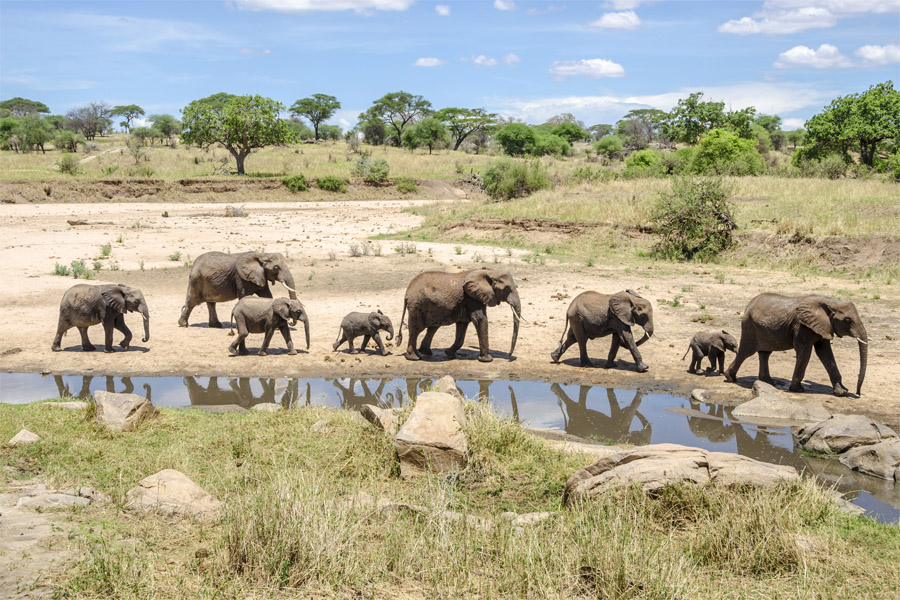
The country plans to reposition itself as a high-value destination for eco-tourism and cultural tourism, while also harnessing the potential of its creative industries – such as music, film, fashion, and the arts – as engines of economic growth.
4. Blue economy
With vast coastal and inland water resources, Tanzania seeks to develop its blue economy by strengthening fisheries, marine transport, port infrastructure, and ocean-based industries while ensuring environmental sustainability.
5. Industrialisation and manufacturing
A key pillar of Vision 2050 is the growth of light and heavy industries, with a focus on value-added production, import substitution, and export-oriented manufacturing. Industrial parks, innovation hubs, and digital manufacturing will be promoted.
6. ICT and innovation
Tanzania is targeting digital transformation across all sectors. Investment in ICT infrastructure, digital literacy, e-commerce, fintech, artificial intelligence, and start-up ecosystems will be crucial in building a knowledge-based economy.
7. Transport and logistics
Strategic investments will continue in railway, road, port, and aviation infrastructure to make Tanzania a regional logistics hub. The country plans to modernise transport corridors and improve connectivity with neighbouring states and international markets.

8. Financial services and investment
The government envisions a robust and inclusive financial system that promotes domestic and foreign investment, enhances access to credit, deepens capital markets, and supports SMEs and innovation-based enterprises.
9. Human capital development
A future-ready economy requires a healthy, skilled population. The vision emphasises quality education, technical and vocational training, research, and health service expansion to empower youth and boost labour productivity.
Broad goals
According to the document, Tanzania aspires to become an upper-middle-income and industrialised country by 2050, with high standards of living, economic competitiveness, and environmental resilience.
The strategy focuses on three key transformations namely; economic Transformation driven by productivity, innovation, and diversification, social transformation centred on equity, inclusion, and human development as well as environmental Sustainability to protect biodiversity and address climate change
Looking ahead
The implementation of Vision 2050 will require strong public-private collaboration, improved governance, institutional reforms, and alignment with regional integration goals under the East African Community (EAC) and African Continental Free Trade Area (AfCFTA). As Tanzania enters this new phase, the nine priority sectors serve not only as economic drivers but also as catalysts for reshaping the country’s development narrative in the decades ahead.