
By Agencies
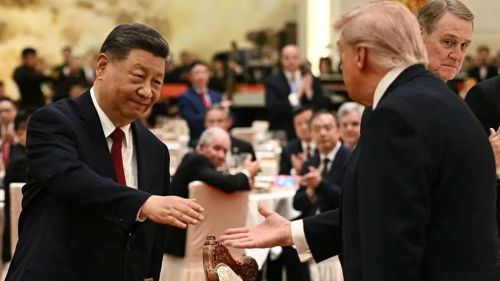
A high-profile meeting between Chinese President Xi Jinping and US President Donald Trump in Beijing has sent fresh ripples through global political and economic circles, with potential implications extending far beyond the two superpowers – including into East Africa’s trade, investment and geopolitical landscape.
During the closed-door two-hour summit, Xi cautioned that mishandling of the Taiwan issue could push China–US relations towards direct confrontation, even as both leaders signalled progress on trade discussions and a shared interest in stabilising strained global supply chains.
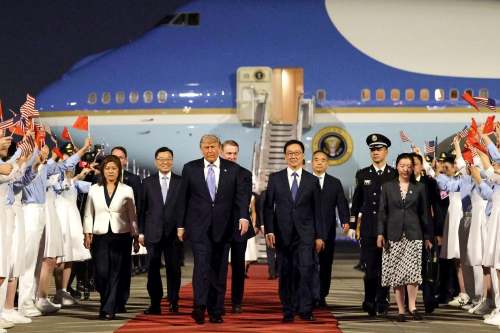
The talks, the first visit by a sitting US president to China in nearly a decade, come at a time of heightened geopolitical volatility, with conflicts in the Middle East already disrupting energy routes such as the Strait of Hormuz and reshaping global commodity flows.
Strategic tensions with global economic spillovers
While the public messaging from Washington emphasised trade cooperation and economic stabilisation, Beijing’s warning on Taiwan underscored the fragility of the broader relationship between the world’s two largest economies.
Analysts say any escalation between China and the United States would have immediate implications for global markets, particularly in manufacturing, technology supply chains and shipping routes—sectors that East African economies are increasingly integrated into.
“Any deterioration in US–China relations tends to translate into volatility in global trade flows, which directly affects import costs, investment sentiment and currency stability in emerging markets,” said a regional trade analyst based in Nairobi.
Trade realignments and East Africa’s opportunity window
The renewed dialogue on trade comes amid ongoing efforts to maintain a fragile economic truce between Washington and Beijing, including discussions on investment frameworks and tariff stabilisation.
For East Africa, which continues to deepen its commercial ties with both China and the United States, the outcome of such negotiations could shape capital flows into infrastructure, energy and manufacturing projects across the region.
China remains a dominant infrastructure financier in East Africa, particularly in transport, energy and industrial zones, while the United States has expanded engagement through private-sector-led investment, technology partnerships and development finance.
A more stable US–China relationship could ease global supply chain disruptions, potentially lowering import costs for East African economies heavily reliant on intermediate goods and industrial inputs.
Conversely, renewed tensions could accelerate supply chain fragmentation, forcing multinational companies to further diversify production bases – an area where East Africa has been positioning itself as an emerging alternative manufacturing hub.
Energy and maritime implications
The summit also touched on global energy security, including interest in stabilising maritime routes affected by conflicts in the Middle East.
Any coordinated effort by major economies to reopen or secure critical shipping corridors such as the Strait of Hormuz would have downstream effects on global oil prices and freight costs.
For East African economies, where fuel imports account for a significant share of foreign exchange expenditure, stabilised energy markets could ease inflationary pressure. However, prolonged geopolitical instability would likely sustain high transport and logistics costs across the region.
Technology and investment competition
The meeting also comes against a backdrop of intensified competition in global technology markets, with leading multinational executives reportedly seeking clarity on China–US regulatory and trade directions.
For East Africa, where digital infrastructure investment and mobile connectivity continue to expand, the direction of global tech rivalry could influence access to semiconductor supply chains, cloud infrastructure pricing, and foreign direct investment in digital platforms.
Countries in the region have been actively courting technology partnerships to support financial inclusion, e-commerce growth and digital public infrastructure development.
Geopolitics and regional positioning
Beyond trade and investment, the Taiwan warning highlights broader geopolitical fault lines that could reshape global alliances.
East African states, which traditionally maintain balanced diplomatic relations with both China and Western partners, may face increasing pressure to navigate competing geopolitical blocs in trade, security and infrastructure financing.
Diplomatic analysts suggest that the region’s strategic importance could rise further as global powers seek alternative economic corridors and new markets amid intensifying great-power competition.
Stability remains key for emerging markets
While the Xi–Trump summit signals an attempt to stabilise relations between Beijing and Washington, the underlying tensions – particularly over Taiwan and global security issues – remain unresolved.
For East Africa, the key takeaway is the continued sensitivity of its growth trajectory to global geopolitical developments. A more predictable global trade environment would support investment inflows and commodity stability. However, any escalation in tensions risks amplifying external shocks in energy prices, supply chains and capital markets – factors that remain central to the region’s economic outlook.