By Business Insider Reporter and Agencies
The joint US–Israeli strike on Iran has rattled global energy markets, but for East Africa the implications go beyond price charts and futures contracts.
From Dar es Salaam to Nairobi and Kampala, policymakers and business leaders are bracing for the possibility that tensions in the Persian Gulf could translate into higher fuel bills, inflationary pressure and renewed strain on fragile current accounts.
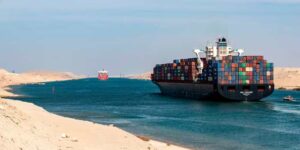
At the centre of concern is the Strait of Hormuz – the narrow maritime chokepoint through which roughly a third of the world’s seaborne crude exports and about 20 per cent of global liquefied natural gas (LNG) shipments pass. Iran, a leading member of OPEC producing just over three million barrels per day in January, sits on the northern coast of the strait and has long threatened to disrupt shipping in retaliation for Western military action.
Analysts warn that even the perception of risk could push Brent crude back above US$100 a barrel if Tehran attempts to make the waterway unsafe for commercial traffic.
While markets have often discounted geopolitical tensions in the Middle East, energy strategists say the scale of traffic through Hormuz leaves little room for complacency.
For East Africa, which relies heavily on imported refined petroleum products, the consequences would be immediate.
Fuel-import vulnerability
Countries such as Kenya, Tanzania and Uganda import the bulk of their fuel requirements, much of it sourced from Gulf producers whose exports transit Hormuz.
A spike in crude prices would quickly feed into higher pump prices, transport costs and electricity tariffs, particularly in economies where thermal generation still plays a significant role in power supply.
In Tanzania, fuel imports are a major component of the import bill and a key driver of inflation during global price shocks. Kenya’s fuel pricing formula, which adjusts pump prices monthly based on international benchmarks and exchange rates, would transmit higher costs directly to consumers.
Uganda, though progressing with upstream oil development around Lake Albert, remains dependent on imports until its refinery and export infrastructure come online.

A prolonged disruption would therefore widen trade deficits, increase demand for foreign currency and put pressure on local currencies across the region.
Inflation and interest rate risks
East African economies have only recently stabilised inflation following earlier global commodity shocks and currency depreciation cycles. A renewed oil rally would threaten that progress.
Transport is a core input across agriculture, manufacturing and retail supply chains.
Higher diesel and petrol prices would raise food distribution costs and erode household purchasing power. Central banks could be forced to maintain tight monetary policy for longer, delaying credit growth and investment recovery.
For governments already managing high public debt levels, the fiscal implications are equally serious. Fuel subsidies – whether explicit or implicit – could resurface as political pressure mounts to cushion consumers, straining budgets that are still consolidating after pandemic-era spending.
LNG and industrial implications
Beyond crude oil, about one-fifth of global LNG exports also move through the Strait of Hormuz, primarily from Qatar. East Africa’s industrial ambitions – from fertiliser production to cement and manufacturing expansion – depend on stable global energy markets.
While Tanzania is developing its own large-scale LNG export project, the country remains years away from commercial output. In the interim, regional economies are price takers in global gas markets.
A supply squeeze could raise costs for energy-intensive industries and slow industrialisation efforts under regional blueprints such as the East African Community’s manufacturing strategy.
Shipping, insurance and trade flows
Even without a full closure of Hormuz, missile strikes or naval incidents in the Gulf could raise maritime insurance premiums and tanker freight rates.
Those costs would ultimately be embedded in the landed price of fuel in Mombasa and Dar es Salaam – the two main petroleum entry points for the region.
For landlocked economies such as Rwanda, Burundi and parts of the Democratic Republic of Congo that depend on East African ports, higher transport costs would ripple through cross-border trade corridors.

If Asian economies – the largest recipients of Gulf crude – begin hoarding supplies in response to perceived shortages, global bidding wars could intensify. That would disadvantage smaller import-dependent economies in Africa with limited fiscal firepower.
Strategic reserves and limited buffers
In the United States, policymakers could draw on the Strategic Petroleum Reserve to dampen price spikes. East Africa has far more limited buffers.
Kenya operates strategic petroleum stocks, but volumes are modest relative to consumption needs. Tanzania has been working to enhance storage capacity through the Tanzania Petroleum Development Corporation (TPDC), yet regional reserves would not be sufficient to offset a prolonged global supply shock.
Moreover, much of the world’s spare oil production capacity lies in Gulf states whose exports would also be constrained if Hormuz were closed. That means alternative supply channels could prove limited.
A stress test for regional resilience
In the worst-case scenario – a sustained closure of the Strait – analysts warn of a potential global recession. For export-oriented East African sectors such as horticulture, tea, coffee and tourism, weaker global demand would compound the shock of higher energy costs.
The crisis would effectively test the region’s economic resilience and reform momentum. Diversifying energy sources, accelerating renewable deployment, strengthening strategic reserves and deepening regional trade integration would move from policy aspirations to urgent imperatives. For now, markets are watching whether tensions escalate further. But in East Africa’s boardrooms and treasury offices, contingency planning has already begun – a reminder that events thousands of kilometres away in the Persian Gulf can swiftly reshape economic realities along the Indian Ocean coast.