
By Business Insider Reporter
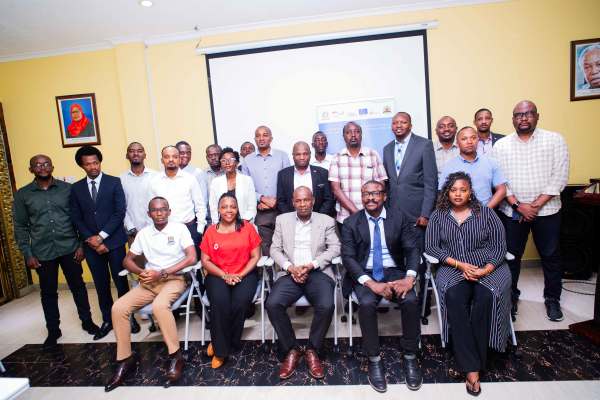
Tanzania’s ambition to reposition itself as a regional hub for services trade received a fresh boost this week, as 40 local firms underwent specialised training on export strategy development under a regional initiative backed by the East African Business Council (EABC), the East African Community (EAC), the European Union (EU), and Germany’s development agency GIZ.
The capacity-building workshop, held in Dar es Salaam, forms part of the Leveraging Integration Frameworks for Trade in Services (LIFTED) project – an initiative designed to unlock the largely underutilised potential of services trade across East Africa.
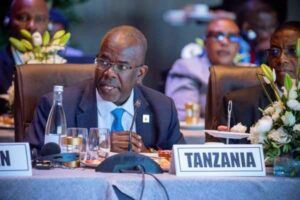
Representing EABC Executive Director John Bosco Kalisa, Mr. Adrian Njau underscored the growing importance of services in Tanzania’s economic structure.
“Services are the fastest-growing component of our economies, contributing nearly 28–29 percent of Tanzania’s GDP and accounting for approximately US$6.9 billion in export earnings in 2025,” he noted.
Strategic shift toward services-led growth
The training comes at a time when Tanzania is increasingly pivoting toward services as a key driver of export diversification. Traditionally reliant on commodities such as gold, tourism, and agricultural exports, the country is now seeking to expand into higher-value services including finance, ICT, logistics, professional services, and education.
This shift aligns with broader regional and continental frameworks, notably the African Continental Free Trade Area (AfCFTA), which places significant emphasis on liberalising trade in services as a catalyst for intra-African trade and industrialisation.
However, despite its growing contribution to GDP, Tanzania’s services export sector remains constrained by structural and regulatory bottlenecks.
Industry stakeholders point to fragmented regulatory regimes, limited cross-border recognition of professional qualifications, and insufficient market intelligence as key barriers limiting competitiveness.
Bridging regulatory and knowledge gaps
The LIFTED programme directly targets these constraints by equipping firms with practical tools to navigate complex regulatory environments and develop market-specific export strategies.
Participants are being trained on compliance requirements, regional market access rules, and sector-specific export planning, with a strong emphasis on leveraging opportunities within the EAC and beyond. The programme also includes tailored one-on-one coaching to support firms in refining their export models.
Mr. Genya Charles from Tanzania’s Ministry of Industry and Trade reaffirmed the government’s commitment to strengthening the services sector as part of its broader economic transformation agenda.
“Promoting services exports is central to boosting economic growth and enhancing Tanzania’s competitiveness in regional and global markets,” he said.
From a financial sector perspective, Ms. Sophia Peter of the Tanzania Bankers Association highlighted the importance of regulatory clarity for cross-border banking services. She noted that the training would help financial institutions better understand compliance frameworks when expanding into regional markets.
SMEs at the centre of regional integration
A notable feature of the programme is its focus on small and medium-sized enterprises (SMEs), particularly those led by women and youth.
These enterprises often face disproportionate challenges, including limited access to financing, lack of export readiness, and weak institutional support.
By addressing these gaps, the LIFTED project aims to foster a more inclusive services economy while strengthening regional value chains.

The initiative also builds on the Trade in Services Policy Advocacy Agenda 2025–2030, developed jointly by EABC and business membership organisations. The agenda seeks to accelerate policy reforms, promote regulatory harmonisation, and position East Africa as a competitive services export hub.
Policy reform remains critical
Despite ongoing efforts, stakeholders stress that meaningful growth in services trade will depend on the full implementation of key regional commitments.
These include Annex V of the EAC Common Market Protocol, which mandates the progressive liberalisation of services, and Annex VII, which focuses on mutual recognition of academic and professional qualifications.
Without these reforms, experts warn that East Africa risks underperforming in one of the fastest-growing segments of global trade.
As Tanzania advances its industrialisation and economic diversification agenda, the services sector is increasingly emerging as a strategic pillar.
Programmes such as LIFTED signal a growing recognition among policymakers and development partners that unlocking services trade could significantly enhance export earnings, create jobs, and deepen regional integration. For the 40 firms participating in the current training, the immediate challenge will be translating knowledge into market entry. But at a macro level, the initiative reflects a broader shift – one that could redefine Tanzania’s role in the regional and global economy.