By Business Insider Reporter
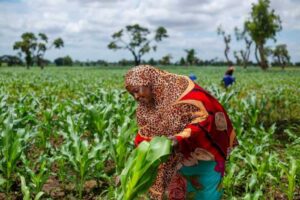
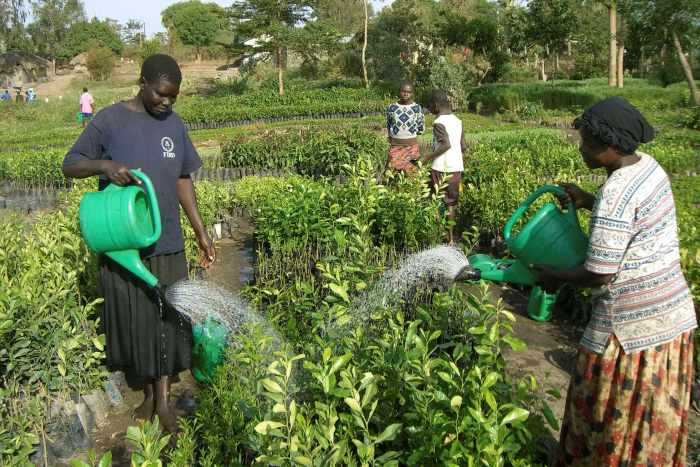
The country’s ambition to build a climate-resilient agricultural economy faces a structural hurdle: women, who form the backbone of the sector, remain largely excluded from land ownership, finance and decision-making.
A new policy brief by NexGen Deutsche-Afrik (NEDEA) warns that Africa’s climate adaptation goals are under threat unless systemic barriers confronting women in agribusiness are addressed through coordinated reforms.
The report, titled The Gender Lens in Climate-Resilient Agribusiness, uses Tanzania as a case study to illustrate how deep-rooted inequalities are undermining resilience.
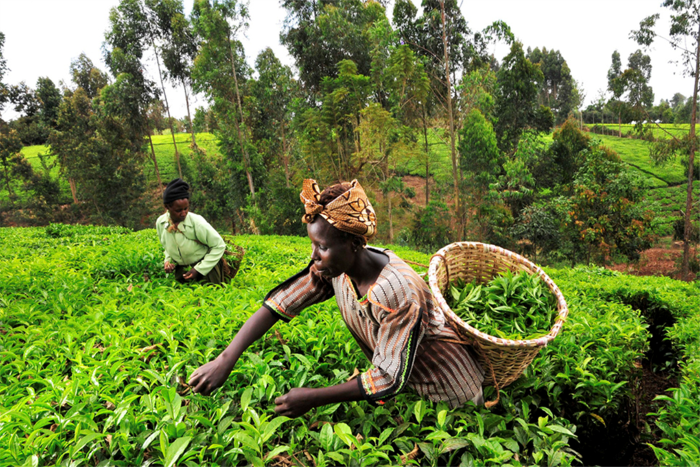
According to the findings, women account for approximately 76 percent of the agrifood workforce in Sub-Saharan Africa.
In Tanzania specifically, women make up 69 percent of the agricultural labour force but own only 2 percent of registered land.
This disparity, the report argues, severely constrains their ability to invest in irrigation, improved seeds, mechanisation and climate-smart technologies.
“This imbalance affects access to technology, training, irrigation systems and extension services – all of which are critical for climate adaptation,” the report states. “The cumulative effect is that women-led agribusinesses often lack the financial buffers, productive assets and institutional support to withstand climate shocks.”
For Tanzania, where agriculture contributes roughly a quarter of GDP and employs the majority of the population, the implications are significant.
The country has prioritised agricultural transformation and climate adaptation within its national development strategies, particularly as erratic rainfall, prolonged droughts and flooding increasingly disrupt productivity.
Yet the NEDEA brief suggests that resilience is not solely an environmental challenge but a socio-economic one.
Michael Osei, NEDEA Research Assistant and PhD candidate in Climate Change and Agriculture, notes that “the gendered nature of climate vulnerability is not incidental; it is systemic.”
A central constraint is finance. The report identifies a US$96 billion financing gap for Africa’s agri-SMEs, with women-led enterprises facing the highest loan rejection rates. In Tanzania, where smallholder farmers dominate the sector, limited collateral – often tied to land ownership – further locks women out of formal credit markets.
Digital exclusion compounds the challenge. Women in Sub-Saharan Africa are nearly 30 percent less likely to use mobile internet services, restricting access to early-warning weather systems, market information platforms and digital financial services.
In climate-sensitive sectors such as agriculture, delayed access to weather alerts can mean the difference between profit and loss.
The report also highlights the burden of unpaid care work. Climate-induced droughts and food shortages increase household responsibilities, reducing the time women can devote to training, agribusiness management or adopting adaptive practices.
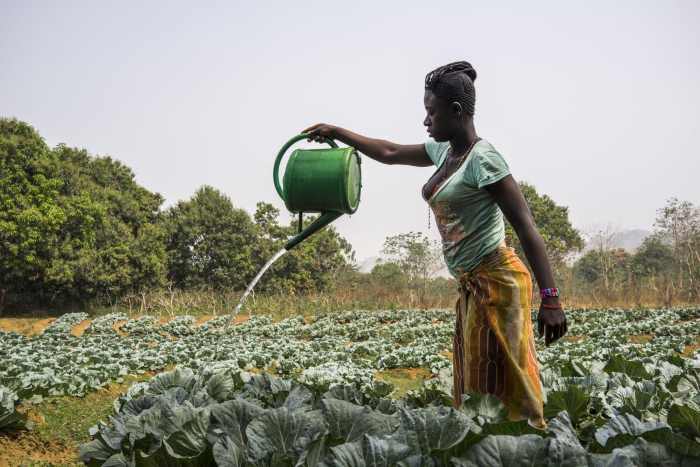
As Tanzania deepens agricultural partnerships with international development actors – including German-backed initiatives implemented through agencies such as GIZ and supported by BMZ – the report argues that gender-responsive climate finance must move from rhetoric to action.
Among its recommendations are de-risked credit lines for women-led agribusinesses, legal reforms to strengthen women’s land rights, targeted digital inclusion programmes and greater representation of women in high-level climate governance structures.
For policymakers and investors alike, the message is clear: empowering women agripreneurs is not simply a social imperative but an economic strategy. In a country where food security, export growth and rural incomes are closely tied to climate performance, closing the gender gap in agribusiness may prove decisive in safeguarding Tanzania’s long-term resilience.