
By Correspondent Joseph Mahumi
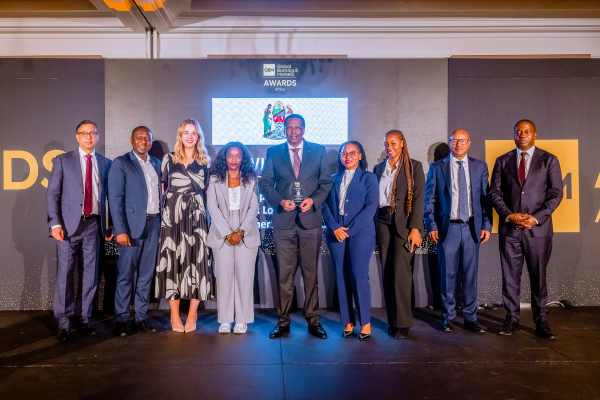
Tanzania has secured a major international accolade for its innovative infrastructure financing strategy, after winning the prestigious Infrastructure Finance Deal of the Year 2026 award from Global Banking & Markets, in recognition of a landmark US$1.78 billion concessional loan arrangement for the expansion of the country’s Standard Gauge Railway (SGR).
The award highlights Tanzania’s growing credibility in structuring complex, large-scale financing deals and signals increasing investor confidence in the country’s economic management and long-term development agenda.
Strategic financing for transformative infrastructure
The financing package – mobilised to support the third and fourth phases of the Standard Gauge Railway (SGR) Tanzania – was secured through a coordinated framework involving export credit agencies from Sweden, Poland and Italy, alongside regional development finance institutions.
The deal was arranged under the coordination of Standard Chartered.
Acting Deputy Permanent Secretary at the Ministry of Finance, Rished Bade, received the award on behalf of the government at a ceremony held in Cape Town, South Africa.
Officials say the structure of the loan – characterised by concessional terms and diversified risk-sharing – was a key factor behind its recognition, particularly at a time when many emerging economies face tightening global credit conditions.
Policy discipline and leadership
The Minister of Finance, Khamis Mussa Omar, attributed the achievement to disciplined fiscal management and strong political leadership under President Samia Suluhu Hassan.
“This award reinforces Tanzania’s position in international financial markets,” the minister said, noting that the country has demonstrated its ability to design and execute sophisticated financing frameworks for strategic development projects.
He added that the government’s approach – anchored on prudent debt management and a preference for concessional borrowing – has helped maintain macroeconomic stability while accelerating infrastructure delivery.
Reinforcing Tanzania’s regional logistics ambitions
The SGR project remains central to Tanzania’s ambition of becoming a regional logistics hub, linking the port of Dar es Salaam to inland markets across the Great Lakes region, including Rwanda, Burundi and the Democratic Republic of Congo.
Economists note that improved rail connectivity is expected to significantly reduce transport costs, enhance trade efficiency and stimulate industrial growth – particularly in mining, agriculture and manufacturing.
The award therefore not only recognises a financing deal but also underscores the broader economic impact of infrastructure-led growth strategies.
A broader pattern of recognition
The latest accolade comes just days after Tanzania was named overall winner at the Commonwealth Public Debt Management Awards, while also securing the Best Debt Management Office in Africa through its Debt Management Division.
Taken together, these recognitions suggest a broader shift in how Tanzania is perceived globally – from a frontier borrower to a more sophisticated and credible player in international finance.
Implications for investment and capital access
For investors, the award sends a strong signal about Tanzania’s improving risk profile and institutional capacity.
Analysts argue that such recognition could lower borrowing costs over time and open doors to more diversified financing options, including syndicated loans, blended finance and capital market instruments.
Moreover, the government’s ability to structure bankable projects aligned with international standards is likely to attract greater participation from private capital, particularly in infrastructure, energy and industrial sectors.
The challenge ahead
As global competition for capital intensifies, Tanzania’s success in securing and managing concessional financing could prove decisive in sustaining its development trajectory.
The challenge ahead will be to maintain this momentum – ensuring that infrastructure investments translate into tangible economic returns while keeping public debt within sustainable thresholds. For now, the SGR financing deal stands as a benchmark—both for Tanzania and for other African economies seeking to balance ambitious infrastructure expansion with fiscal prudence.