By Correspondent Joseph Mahumi
Tanzania is seeking to shift its climate-finance agenda from plans and pledges towards bankable projects and actual investment, as the government looks to mobilise more private and development capital for its transition to a climate-resilient, low-carbon economy.
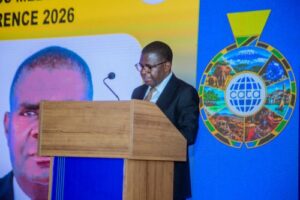
Deputy Finance Minister Laurent Luswetula (pictured above) said the country must increasingly translate climate ambitions into investments capable of delivering measurable economic and environmental results.
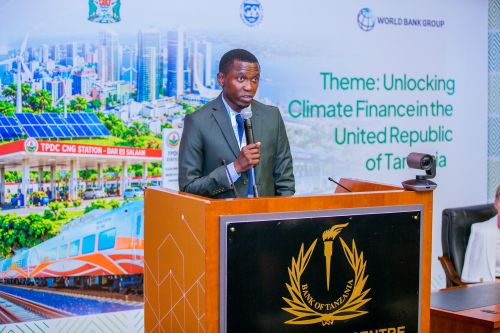
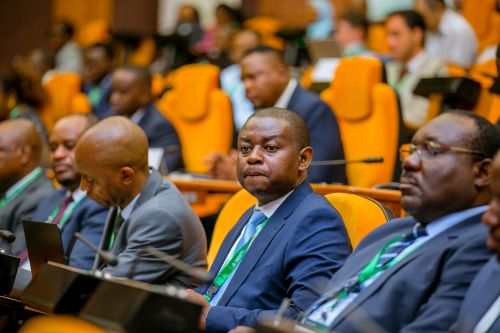
He made the remarks while closing the 2026 Tanzania Climate Finance Roundtable, held under the theme “Unlocking Climate Finance in the United Republic of Tanzania” at the Bank of Tanzania (BoT) Conference Centre in Dar es Salaam.
The meeting brought together government officials, development partners, financial institutions and private-sector representatives to discuss ways of expanding Tanzania’s access to climate finance and turning available funding opportunities into implementable projects.
Luswetula said Tanzania was prioritising three areas: strengthening the national climate-finance architecture, expanding the pipeline of high-quality bankable projects and developing risk-sharing mechanisms capable of unlocking more investment.
“The roundtable has laid the foundation for collaboration and a common direction in ensuring that Tanzania accesses and utilises climate finance effectively and in line with national priorities,” Luswetula said.
The emphasis on bankable projects reflects one of the central challenges facing developing economies seeking climate finance: converting climate priorities into commercially and technically viable projects capable of attracting financing.
For Tanzania, stronger project preparation and risk-sharing mechanisms could also provide an avenue for attracting greater private-sector participation alongside public and concessional financing.
Bankable projects take centre stage
World Bank Regional Director for the Planet Practice Group, Anna Wellenstein, stressed the importance of developing a strong pipeline of investment-ready projects, saying climate change remained critical to the future of Tanzania and the wider region.
She said accessing climate finance required projects capable of attracting investment, backed by arrangements that allow the public and private sectors to work together in their implementation.
The approach could prove particularly important as Tanzania seeks to finance climate-resilient infrastructure and other investments while reducing the burden placed solely on public finances.
Risk-sharing mechanisms can help address some of the barriers that discourage commercial investors from entering climate-related projects, particularly where investments involve high upfront costs, long repayment periods or risks that conventional lenders may be reluctant to assume.
Strengthening the pipeline of bankable projects could therefore determine how successfully Tanzania converts international climate-finance opportunities into investment on the ground.
Government seeks coordinated financing
IMF Resident Representative Nicolas Blancher welcomed the government-led collaborative process and urged development partners to align their interventions around clearly identified implementation areas.
Such coordination, he said, would help ensure that recommendations and agreements emerging from climate-finance discussions are followed through and implemented effectively.
“The roundtable should serve as a platform to strengthen and formalise collaboration between the government, development partners and the private sector in the area of climate finance, while preparations towards the United Nations Climate Change Conference (COP31) are given importance,” Blancher said.
The discussions point towards an increasingly investment-oriented approach to Tanzania’s climate agenda, with greater emphasis on connecting government priorities with financiers, development institutions and private investors.
Participants concluded the meeting with commitments to continue working together to expand access to financing, develop investment-ready projects and strengthen risk-sharing mechanisms.
For Tanzania, the bigger test will now be implementation: whether stronger coordination and project preparation can turn climate-finance discussions into projects capable of attracting capital and delivering measurable results. The government’s message from the roundtable was clear — the next phase of Tanzania’s climate-finance agenda must be measured less by commitments made and increasingly by capital mobilised, projects financed and results delivered.