
By Peter Nyanje
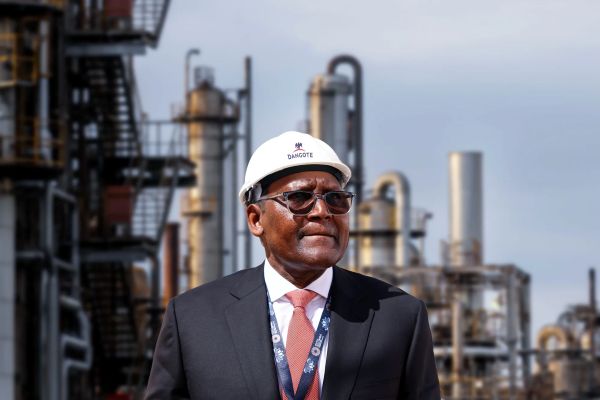
Nigerian billionaire Aliko Dangote’s US$16 billion oil refinery in Kenya is facing a second legal challenge just days after construction was launched, adding a new dimension to East Africa’s emerging race to build refining capacity and reduce its dependence on imported petroleum products.
For Tanzania, the dispute carries particular significance. Dangote had initially considered Tanga as the location for the 700,000-barrel-a-day refinery before choosing Lamu, citing technical and logistical advantages including sea depth, water availability and suitable land.
Tanzania has since moved ahead with a separate plan to develop Tanga as a regional energy hub, including refinery and petroleum storage infrastructure.
The latest challenge to the Lamu project was filed by the Consumers Federation of Kenya (COFEK), which wants greater disclosure of the Kenyan government’s proposed participation in the refinery.
COFEK has asked Kenya’s Public Private Partnerships Petition Committee to scrutinise the proposed government equity stake, use of public land, financing arrangements, feasibility studies and evidence of public participation.
Kenya has been offered a 10 peracent stake in the refinery, while regional governments have collectively been offered up to 30 per cent.
The challenge comes after more than 130 Lamu residents separately went to court claiming rights over land earmarked for the project. That case is due for hearing on October 14.
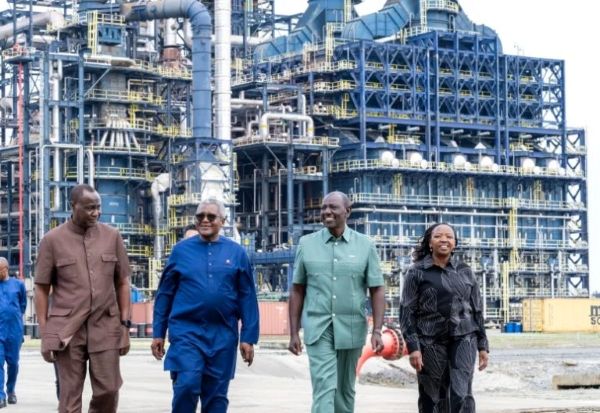
Dangote has played down the disputes and maintained that the refinery will proceed. The company broke ground for the project on September 30, with completion targeted around 2030.
Why Tanzania should be watching
The significance for Tanzania extends well beyond competition between Tanga and Lamu.
Tanzania remains heavily dependent on imported refined petroleum, making global oil prices and disruptions to international shipping an important source of economic vulnerability.
Bank of Tanzania data show the country spent about US$3.3 billion on refined petroleum products in the year ending July 2026, up 42.3 percent from about US$2.32 billion a year earlier. Petroleum products accounted for almost 19 percent of Tanzania’s goods import bill.
That dependence means additional refining capacity within East Africa could eventually reshape where Tanzania and neighbouring countries source fuel and potentially shorten some supply chains.
The scale of Tanzania’s existing petroleum logistics business is already substantial. Between July 2024 and March 2025, the country imported 6.74 billion litres of petroleum products through Dar es Salaam, Tanga and Mtwara. Significantly, 52 percent was destined for neighbouring countries, demonstrating Tanzania’s existing role as a regional fuel gateway.
A large refinery in Lamu would therefore not simply be a Kenyan industrial project. It could alter regional fuel flows and intensify competition among East African ports and transport corridors.
Tanga still in the race
The loss of the Dangote investment did not end Tanzania’s refining ambitions.
Tanzania and Uganda are developing plans for a Tanga Regional Energy Hub at Chongoleani, with preliminary technical work covering a refinery, petroleum storage and associated infrastructure now moving forward.
That creates the possibility that East Africa could eventually host several refining projects rather than depend on a single facility.
Uganda is also pursuing its own planned refinery at Hoima. President Yoweri Museveni said during the Lamu groundbreaking that multiple refineries could operate in the region, rather than viewing the projects as mutually exclusive.
The commercial question will be whether regional demand can support all the proposed capacity and how competitively each project can source crude, refine it and move finished products to consumers.
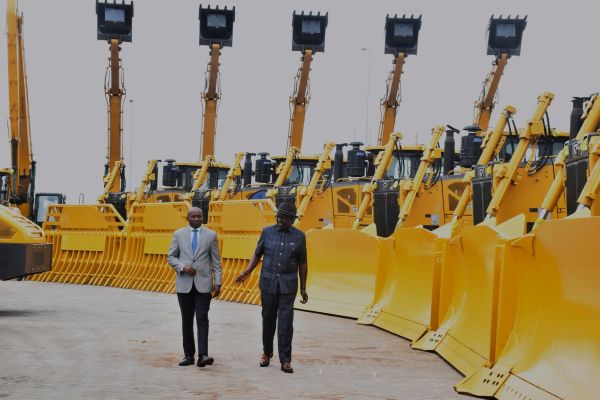
Dangote’s Lamu plant alone is designed to process 700,000 barrels per day, making regional markets essential to its business model. It is expected to supply Kenya and neighbouring countries and form part of a broader industrial complex involving petrochemicals, fertiliser and power generation.
For Tanzania, this raises both a competitive threat and an opportunity.
If Lamu reaches production first and operates efficiently, it could emerge as an important source of refined fuel for East Africa. But a successful Tanga hub could leverage Tanzania’s ports, existing petroleum infrastructure and connections to landlocked markets to compete for the same regional trade.
The legal battles in Kenya, however, underline another lesson for both projects: mega-investments are not determined by capital and engineering alone.
Land rights, environmental safeguards, transparency, community consent and the terms under which governments commit public resources can become decisive investment risks. For Tanzania, therefore, the real contest may not simply be Tanga versus Lamu. It will be about which location can combine infrastructure, financing and market access with regulatory certainty and community acceptance – and turn those advantages into the most competitive energy hub in East Africa.