

By Business Insider Reporter
Tanzania has taken a decisive step in expanding the use of natural gas as a cleaner and more affordable source of energy, following the official launch of Africa’s largest and most advanced Compressed Natural Gas (CNG) mother station by Puma Energy Tanzania.
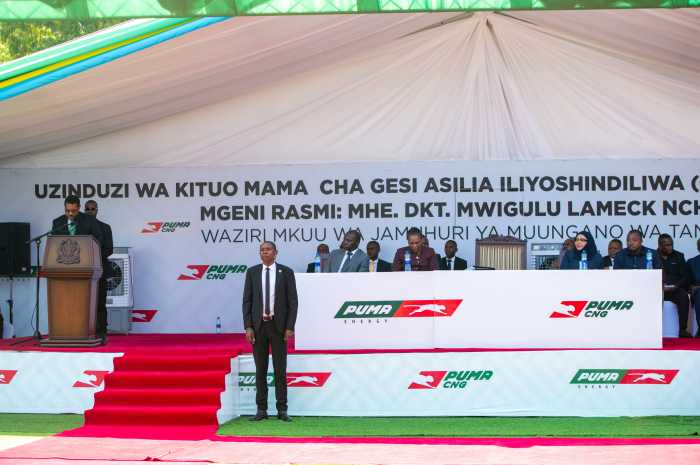
The landmark facility, inaugurated in Dar es Salaam by the Prime Minister, Dr. Mwigulu Nchemba, signals a major milestone in the country’s long-term transition away from imported liquid fuels towards domestically available natural gas. It also reinforces Tanzania’s broader strategy to cut energy costs, lower emissions and build resilience in its transport and industrial sectors.
Located in the commercial capital, the state-of-the-art CNG mother station is designed to meet rapidly growing demand for gas-powered transport.
It will serve light vehicles, buses and heavy-duty trucks, while also functioning as a national distribution hub supplying gas to satellite CNG stations across the country using specialised tube-trailers.
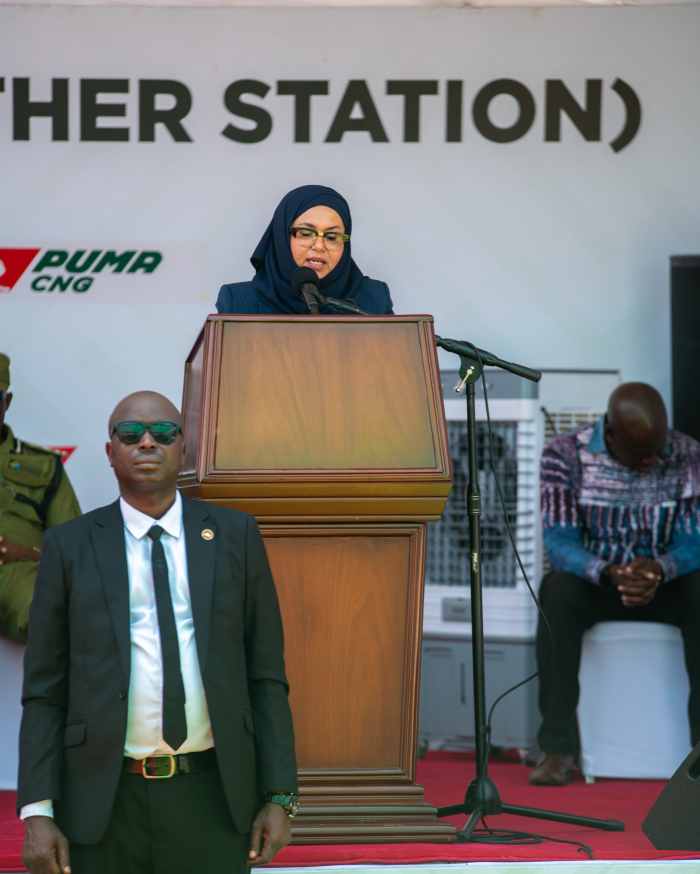
“This CNG mother station is more than infrastructure; it is a symbol of our long-term confidence in Tanzania and our commitment to creating shared value,” said Ms Fatma Abdallah, Managing Director of Puma Energy Tanzania. “We are proud to partner with the Government on a project that will help drive the nation forward for decades to come.”
Natural gas at the centre of Tanzania’s energy transition
Tanzania holds an estimated 57 trillion cubic feet of proven natural gas reserves, largely concentrated offshore and in southern regions such as Mtwara and Lindi.
Over the past decade, the government has increasingly positioned gas as a bridge fuel – cleaner than diesel and petrol, cheaper for consumers, and capable of supporting industrialisation while renewable energy capacity continues to grow.
CNG, in particular, has gained traction as an alternative transport fuel due to its lower operating costs and significantly reduced emissions.
According to sector estimates, vehicles running on CNG can cut fuel costs by up to 50 per cent compared to petrol or diesel, while emitting fewer particulates and greenhouse gases.
The new Puma Energy facility substantially strengthens the supply backbone needed to scale up CNG adoption nationwide.
By enabling bulk compression and distribution, the station lowers logistical barriers that have previously constrained expansion beyond major urban centres.
Government backs private investment and PPPs
Speaking at the inauguration, Premier Dr. Nchemba described the project as a practical demonstration of the Sixth Phase Government’s commitment to improving the investment climate and leveraging public–private partnerships (PPPs) to deliver strategic infrastructure.
“Puma Energy Tanzania is a strong example of successful collaboration between government and the private sector, delivering quality energy services while contributing to government revenue, employment and the development of strategic infrastructure,” said Dr. Nchemba. “This investment aligns fully with our national priorities and our vision for sustainable economic growth.”
A representative of Treasury Registrar echoed the sentiment, highlighting the company’s ownership structure, which ensures that commercial success translates directly into national benefits.
“This partnership shows that combining state participation with private-sector efficiency can deliver critical infrastructure and generate substantial financial returns for Tanzanians,” Mr the representative.
Jobs, skills and local economic impact
Beyond energy security, the project has delivered tangible economic benefits. During the construction phase, more than 300 Tanzanians were employed, including 100 skilled positions for engineers and technicians.
Local contractors and small and medium-sized enterprises were prioritised, injecting capital into the surrounding economy.
As operations ramp up, the facility is expected to create permanent jobs and support skills transfer in Tanzania’s fast-growing natural gas sector – an area seen as critical for supporting transport, manufacturing and logistics as the economy expands.
“This investment forms part of Puma Energy’s long-term commitment to Tanzania,” said Mr. Emmanuel G. Bakilana, Head of Legal and Corporate Affairs at Puma Energy Tanzania.
Over the past three years, the company has paid more than TSh1.4 trillion in taxes and levies, underscoring its role as a significant contributor to public finances.
In 2025 alone, Puma Energy declared dividends of TSh21 billion to shareholders, a record of financial performance and transparency that has earned the company multiple recognitions from the Tanzania Revenue Authority (TRA).
A foundation for cleaner growth
The inauguration ceremony drew senior government leaders, including the Minister for Energy, alongside officials from key regulatory and sector institutions such as EWURA, TPDC and TANESCO. Their presence reflected the coordinated policy and regulatory support underpinning Tanzania’s gas expansion agenda.
As Tanzania pushes forward with plans to industrialise, modernise transport and reduce reliance on imported fuels, investments such as the Puma Energy CNG mother station are increasingly seen as foundational. By anchoring natural gas at the heart of its energy mix, the country is not only unlocking value from its domestic resources but also laying the groundwork for a cleaner, more competitive and more sustainable economy.