By Business Insider Reporter
Sweden is set to expand its financial and commercial footprint in Tanzania’s flagship Standard Gauge Railway (SGR), with new export credit and guarantee-backed financing agreements expected to accelerate construction of key sections of the country’s electrified rail network.
The agreements, scheduled for signing in Dodoma, will cover Lots 3 and 4 of the SGR, reinforcing momentum behind a project widely regarded as one of East Africa’s most ambitious infrastructure undertakings. Valued at approximately US$10 billion, the SGR is central to Tanzania’s long-term strategy to modernise transport, enhance trade corridors, and position itself as a regional logistics hub.
At the core of the deal is a growing alignment between development finance and commercial interests. Sweden’s export credit framework – combining loans and risk guarantees – has emerged as a critical enabler of large-scale infrastructure financing, allowing Tanzanian authorities to secure advanced technology while spreading project risk across multiple stakeholders.
For Tanzania, the significance of this financing extends beyond construction timelines. The SGR is designed to link Dar es Salaam to the interior, including Dodoma and ultimately Mwanza on Lake Victoria, while integrating with regional networks serving Uganda, Rwanda, Burundi, and the Democratic Republic of Congo. This connectivity is expected to unlock new trade flows, reduce logistics costs, and enhance the competitiveness of Tanzanian exports.
The railway also addresses structural inefficiencies in the country’s transport system. Currently, more than 95 percent of cargo from the Port of Dar es Salaam is transported by road, contributing to congestion, high freight costs, and increased accident risks.
By shifting bulk cargo to rail, authorities anticipate significant efficiency gains alongside environmental benefits, including reduced emissions from heavy-duty trucking.
Sweden’s involvement highlights a broader shift in its development cooperation strategy, which increasingly integrates trade promotion with infrastructure investment. Swedish firms have already secured contracts worth over SEK 1.5 billion in areas such as signalling and advanced rail systems, with future procurement opportunities potentially reaching SEK 10 billion as the network expands.
This model reflects a growing global trend in which export credit agencies play a pivotal role in infrastructure delivery, particularly in emerging markets.
By offering competitive long-term financing and risk mitigation, these institutions enable technology exporters to compete in capital-intensive projects while supporting host countries’ development agendas.
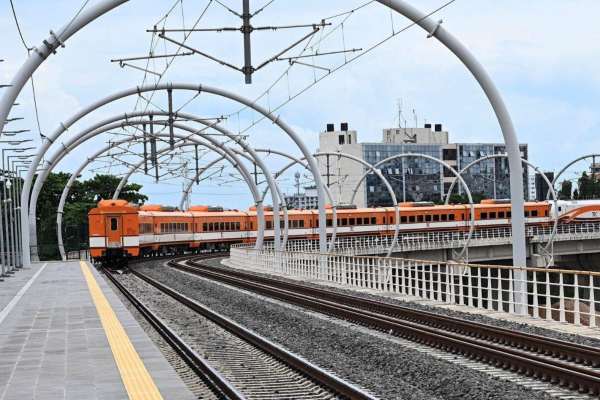
Early indicators suggest the SGR is already reshaping mobility patterns within Tanzania.
Millions of passengers have adopted the service on operational routes, citing speed, safety, and reliability as key advantages. For businesses, improved rail connectivity is expected to reduce transit times and logistics costs, particularly for bulk commodities such as agricultural produce and minerals.
The project has also attracted a diverse financing mix. Institutions such as the African Development Bank have mobilised additional funding through syndication arrangements with international banks, signalling strong investor confidence in Tanzania’s infrastructure trajectory. This blended financing approach – combining export credit, development finance, and commercial lending – is increasingly defining how large-scale projects are funded across Africa.
From a policy perspective, the SGR aligns closely with Tanzania’s broader economic transformation agenda, including industrialisation, regional integration, and trade facilitation.
By improving inland connectivity and linking to neighbouring markets, the railway is expected to stimulate industrial clusters, support value chains, and enhance access to regional and global markets.
For Sweden, the partnership underscores the strategic value of aligning sustainability, technology, and trade. Electrified rail systems not only reduce carbon emissions but also position Swedish firms at the forefront of green infrastructure solutions in Africa. As Tanzania advances subsequent phases of the SGR, the evolving partnership with Sweden may serve as a blueprint for future infrastructure financing – one that balances development impact with commercial viability. The outcome could redefine how large transport corridors across the region are designed, funded, and executed.