By Business Insider Reporter
The 50th Dar es Salaam International Trade Fair (DITF), popularly known as Sabasaba, is more than a celebration of a long-standing national institution. It is a reflection of Tanzania’s economic transformation over the past five decades and a glimpse into the country’s ambitions for the next quarter century.
As the nation advances towards Vision 2050, the Golden Jubilee edition of the fair offers an opportunity to assess how trade promotion has evolved from facilitating commercial exchange to becoming a strategic instrument for industrialization, investment attraction, export growth and regional economic integration.
Since its inception, the Dar es Salaam International Trade Fair has served as Tanzania’s premier marketplace for connecting producers with buyers, innovators with investors and local enterprises with international partners. Over the years, it has grown beyond a conventional exhibition into one of East and Central Africa’s leading trade and investment platforms, showcasing the country’s productive capacity while opening doors to regional and global markets.
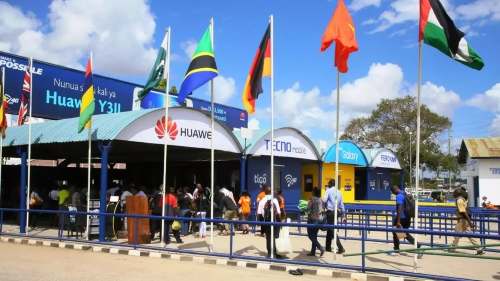
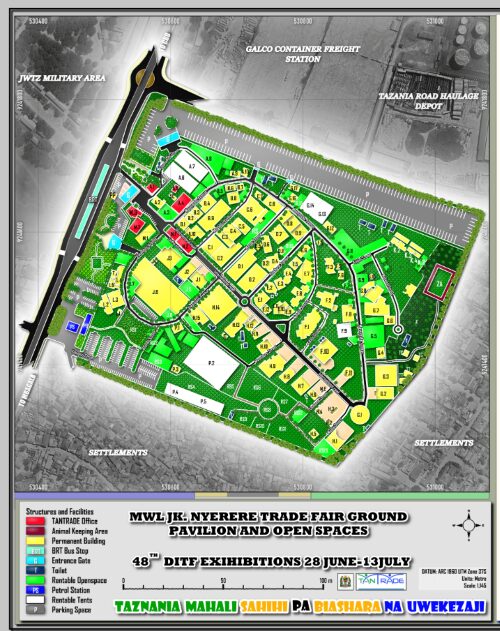
The significance of the Golden Jubilee is underscored by the scale of participation. Nearly 3,900 exhibitors from more than 23 countries have converged at the Mwalimu J.K. Nyerere Trade Fair Grounds, making the 50th edition one of the largest in the fair’s history.
The diversity of participants – from manufacturers and agribusinesses to financial institutions, technology companies, development partners and government agencies – illustrates the increasingly interconnected nature of modern trade and the expanding opportunities available to Tanzanian enterprises.

Perhaps the most defining feature of this year’s exhibition is its embrace of digital transformation. The introduction of electronic ticketing, digital visitor management and the TanTrade Biashara App signals a deliberate shift towards smart trade facilitation.
While these innovations improve operational efficiency and visitor experience, they also symbolize a broader transition in Tanzania’s economy, where competitiveness is increasingly driven by technology, data and digital commerce. In the era of artificial intelligence, e-commerce and integrated value chains, trade promotion can no longer rely solely on physical exhibitions; it must also create digital ecosystems that connect businesses throughout the year.
This transformation aligns closely with the aspirations of Vision 2050, which seeks to position Tanzania as a diversified, competitive and knowledge-driven economy. Achieving such ambitions will require sustained growth in manufacturing, services, agriculture and innovation, all of which depend on effective market access.
Trade promotion agencies such as Tantrade therefore become strategic facilitators, helping enterprises identify opportunities, understand market requirements, forge partnerships and expand exports.
The evolution of Sabasaba mirrors Tanzania’s own economic journey. In its early years, the fair primarily showcased locally produced goods and encouraged domestic commerce. Today, it has become a gateway for foreign direct investment, technology transfer and cross-border business collaboration.
International exhibitors increasingly view Tanzania not merely as a consumer market but as a regional production and investment hub serving the wider East African Community, the Southern African Development Community and the African Continental Free Trade Area (AfCFTA).
This broader regional context is particularly important. The AfCFTA presents unprecedented opportunities for Tanzanian businesses to access a continental market of more than 1.4 billion people. However, market access alone does not guarantee success. Businesses require quality standards, competitive products, efficient logistics, financing and reliable market intelligence.
Trade fairs such as Sabasaba provide an environment where these elements converge, enabling enterprises to build networks, learn from international competitors and establish commercial relationships that extend far beyond the exhibition period.
The Golden Jubilee edition also demonstrates that trade promotion has become increasingly inclusive. Small and medium-sized enterprises, youth innovators, women entrepreneurs and technology startups now occupy a more visible place alongside established corporations.
This inclusiveness is essential if economic growth is to generate broad-based prosperity. By providing smaller enterprises with exposure to investors, distributors and international buyers, the fair contributes to enterprise development and job creation, two priorities that will remain central to Tanzania’s long-term development agenda.
Equally important is the participation of sectors such as banking, insurance, logistics, telecommunications and digital services. Modern trade depends not only on products but also on the financial, technological and infrastructure ecosystems that enable businesses to grow. The strong presence of these supporting industries reflects an increasingly sophisticated business environment in which collaboration across sectors drives competitiveness.
Looking towards 2050, the role of trade promotion will become even more strategic. Global commerce is being reshaped by digitalization, sustainability, climate resilience, changing consumer preferences and evolving supply chains. Tanzania’s competitiveness will increasingly depend on its ability to help businesses innovate, comply with international standards and integrate into regional and global value chains.
Future trade fairs are therefore likely to evolve into hybrid platforms that combine physical exhibitions with virtual marketplaces, business matchmaking, investment forums and continuous digital engagement.
Sabasaba at 50 is therefore not simply a celebration of history; it is a statement of intent. It demonstrates that trade promotion remains a vital pillar of Tanzania’s economic strategy and a catalyst for private sector development. As the country charts its course towards Vision 2050, institutions that connect entrepreneurs to markets, investors to opportunities and innovation to commercial success will become even more critical.
The Golden Jubilee serves as a reminder that the true measure of a trade fair is not the number of exhibition stands or visitors it attracts, but the businesses it helps to grow, the investments it catalyses, the exports it generates and the partnerships it creates. If the momentum so far demonstrated by the 50th Dar es Salaam International Trade Fair is sustained, Sabasaba will continue to shape Tanzania’s economic future – not merely as an annual exhibition, but as a powerful engine of trade, investment and inclusive national development on the road to 2050.