

By Mwanamkasi Jumbe
Tanzania is on the verge of securing a new export market for its tea industry after Russian buyers signaled plans to enter into a supply agreement that could open fresh commercial opportunities for local producers and strengthen trade ties between the two countries.
The development follows a series of business engagements between Tanzanian and Russian stakeholders aimed at expanding bilateral trade beyond traditional sectors.
Industry officials say the planned deal could provide Tanzania’s tea sector with access to one of the world’s largest tea-consuming markets while helping diversify export destinations.
Speaking in Dar es Salaam after meetings with tea industry stakeholders, Chief Executive Officer of Industrial Localization Hub, Oksana Mayorova, said Russian importers had traditionally sourced tea from Kenya and India but were now increasingly attracted by the quality and consistency of Tanzanian tea.
“For many years we purchased tea from Kenya and India, but after evaluating samples from Tanzania we have discovered excellent quality products and we are extremely interested in establishing long-term business relations,” she said.
Mayorova revealed that at least ten Russian companies have already expressed interest in sourcing Tanzanian tea, with discussions now at an advanced stage ahead of the signing of a commercial supply agreement.
The initial phase of the arrangement is expected to involve purchases of about 40 tonnes of tea per month, equivalent to nearly 500 tonnes annually. However, officials believe volumes could rise significantly as the market develops.
The planned introduction of direct shipping links between Russian ports and the Port of Dar es Salaam is expected to strengthen the business case further by reducing logistics costs and improving supply chain efficiency.

“We will begin with approximately 500 tonnes per year, but this is only the starting point. The potential demand is much larger,” Mayorova noted.
The Russian market consumes vast quantities of tea annually. According to industry estimates, Russia imports more than one million tonnes of tea from international suppliers each year, making it one of the most attractive destinations for global tea exporters.
The tea variety attracting Russian buyers is PT1, a widely consumed black tea grade commonly used for everyday household consumption. Its affordability and strong flavour profile make it suitable for mass-market retail channels.
The emerging trade partnership comes at a time when Tanzania is actively seeking to expand agricultural exports and increase value addition within the tea industry. Tea remains one of Tanzania’s traditional export crops alongside coffee, tobacco, cashew nuts, cotton and horticultural products.
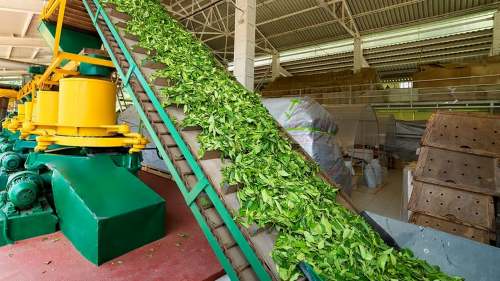
According to the Tea Board of Tanzania, the country produces more than 30 million kilograms of made tea annually, with major growing regions including Njombe, Iringa, Mbeya, Rungwe, Tanga and Kagera. Most exports are currently destined for markets in Pakistan, the United Kingdom, Germany, South Africa and the Middle East.
Tea Board of Tanzania Director General Beatrice Banzi said the industry is working closely with Russian buyers to meet quality requirements and secure market access.
“We continue to submit tea samples from different factories for quality assessment and market evaluation,” she said.
Factories that have already provided samples include Mponde and Kwamkoro-Amani in Tanga Region, as well as Malangali Tea Factory and Brown Plantation in Njombe Region. Additional samples have come from Luponde, Itona, Ijaga and Kibena factories operated by DIL.
Banzi noted that some samples had already been dispatched to Russia while additional consignments were recently delivered through the Russian Embassy for further evaluation.
“The Russian delegation inspected our facilities and requested PT1-grade tea samples. Once their assessments are completed, they will determine the volumes required from each factory,” she explained.
Industry data indicate that approximately five percent of tea currently consumed in Russia originates from Tanzania through indirect trade channels.
Stakeholders believe a direct procurement arrangement could significantly increase that share while providing better prices and stronger market visibility for Tanzanian producers.
For Tanzania, the prospective deal represents more than just a new export contract. It signals growing international recognition of the country’s tea quality and highlights broader efforts to diversify export markets amid shifting global trade patterns. If successfully concluded, the agreement could strengthen Tanzania’s foreign exchange earnings, create additional opportunities for tea growers and processors, and position the country more competitively within the global tea trade.