
By Business Insider Reporter, Morogoro
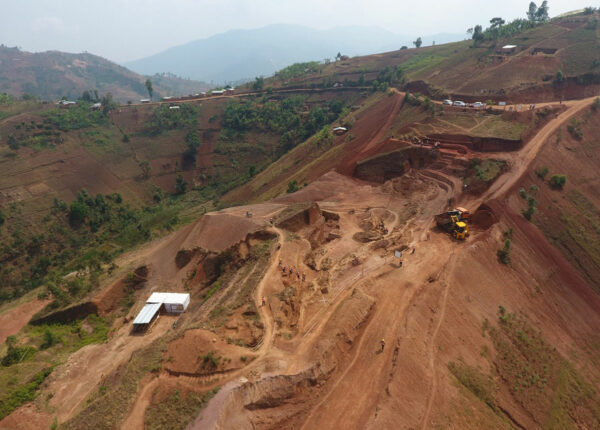
In a landmark decision with far-reaching economic implications, the government has granted a large-scale exploration and mining licence to the State Mining Corporation (STAMICO) for the extraction of Rare Earth Elements (REE) at the Wigu Hills in Morogoro.
The move signals a new chapter in country’s quest to leverage its vast mineral endowment for inclusive national development, while repositioning the country as a critical player in the global green economy.
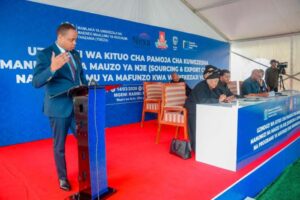
The licence was officially handed over on 24 July 2025 by the Minister of Minerals, Anthony Mavunde, during a public ceremony in Sesenga village, Morogoro District.
The decision follows a resolved investment dispute at the International Centre for Settlement of Investment Disputes (ICSID), which led to a US$27 million settlement paid by the government to Canadian firm Montero Mining & Exploration Ltd, whose previous licence was revoked.
The granting of the licence marks STAMICO’s formal entry into large-scale rare earth mining, an industry that underpins the 21st-century global economy.
Rare Earth Elements are essential inputs in high-tech sectors including electric vehicle batteries, wind turbines, smartphones, defence systems, and medical technologies.
“This is a golden opportunity not only for the people of Morogoro but for the entire country,” said Minister Mavunde. “Tanzania is now poised to become a key supplier of minerals that are essential to the global energy transition and digital revolution.”
By tapping into the Wigu Hills deposit, Tanzania is positioning itself strategically amid soaring global demand for REEs, driven by the global shift to renewable energy and electric mobility.
According to market analysts, global REE demand is expected to double by 2030, making Tanzania’s move both economically and geopolitically significant.
Jobs, business and infrastructure
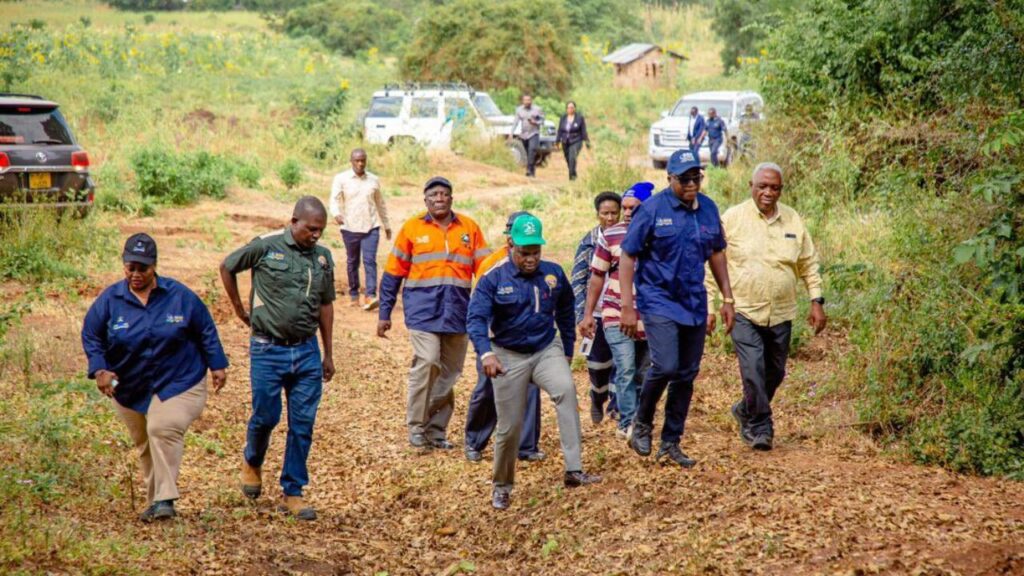
Beyond macroeconomic gains, the project is expected to catalyse localised development in Morogoro Region.
Minister Mavunde emphasised that communities in Sesenga and surrounding areas stand to benefit through employment opportunities, infrastructure upgrades, and local procurement contracts.
“This licence is not just about mining minerals. It’s about mining opportunity. It’s about ensuring that every Tanzanian – especially the youth and local businesses – shares in the nation’s prosperity,” Mavunde said.
The government has reiterated its policy on local content, requiring companies to procure goods and services from Tanzanian suppliers, and to prioritise Tanzanian labour. STAMICO’s entry as a state-owned operator is also expected to serve as a model of ethical and inclusive mining, particularly as global scrutiny over responsible mineral sourcing intensifies.
Strengthening state-led mining vision
The award of the Wigu Hills licence to STAMICO is not just a technical or commercial milestone – it is a symbolic and strategic shift towards increased state participation in critical mineral value chains.
For decades, Tanzania’s mining sector was dominated by foreign multinationals.
Now, through STAMICO, the government is reclaiming a larger stake in the management and benefits of its mineral wealth.
“STAMICO’s large-scale entry into rare earth mining aligns perfectly with the government’s vision to build national capacity, retain value, and ensure strategic minerals contribute to long-term national development,” said a senior official from the Ministry of Minerals.
The move also helps reposition Tanzania in global supply chains at a time when Western nations are urgently seeking alternative sources of rare earths beyond China, which currently controls more than 80% of global supply.
Turning point
Tanzania’s development of Wigu Hills comes at a time when East African countries are ramping up efforts to integrate their mineral economies with regional industrialisation goals. The REE project in Morogoro could spur cross-border investment in processing, refining and downstream manufacturing, particularly if aligned with the East African Community’s ambitions for green economic growth. As climate change accelerates and technology continues to evolve, minerals like those found in Wigu Hills are not just economic resources – they are strategic enablers of the future.