
By Business Insider Correspondent, Njombe
Tanzania is stepping up efforts to protect its fast-growing forestry economy, with authorities in Njombe Region unveiling a coordinated strategy to curb recurrent wildfire outbreaks that have inflicted heavy economic losses on timber investments and rural livelihoods.
The initiative, led by Regional Commissioner Antony Mtaka, will bring together the Vice President’s Office Tanzania and the Ministry of Natural Resources and Tourism Tanzania to strengthen fire prevention, response systems, and community awareness across rural timber-producing areas.
The move follows mounting losses in the region’s forestry sector. Between 2021 and 2026, wildfire incidents have caused damage exceeding TSh 200 billion, affecting investors, traders, and smallholder farmers engaged in timber production, including logs and utility poles.
The scale of the losses underscores the growing vulnerability of Tanzania’s commercial forestry value chain to climate and environmental risks.
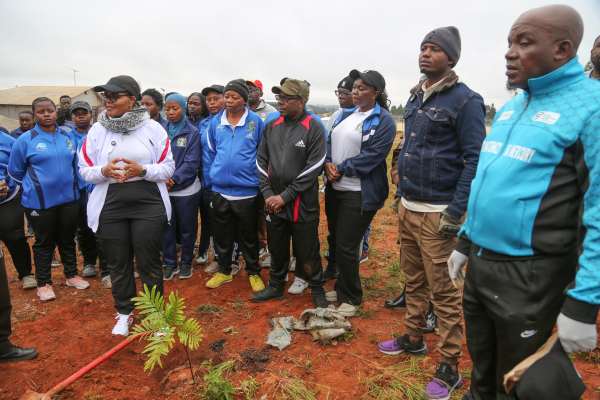
Speaking during a tree-planting exercise under the “27 Green, Mother Tree” campaign, Mtaka said the region is shifting from reactive firefighting to preventive management. The strategy centres on public education campaigns targeting rural communities, where most fires originate, often linked to land preparation, uncontrolled burning, or limited awareness of fire risks.
The regional administration is already working with the Tanzania Fire and Rescue Force and the Tanzania Forest Services Agency to roll out awareness programmes on fire prevention and rapid response. These efforts are expected to be scaled up through formal collaboration with national institutions, ensuring consistency in policy and execution.
Protecting a Strategic Economic Sector
Njombe is one of Tanzania’s key forestry hubs, with commercial tree planting forming a critical pillar of local economic activity. The sector supports a wide ecosystem of businesses – from plantation owners and timber processors to transporters and exporters – while also contributing to employment and rural incomes.
As Tanzania advances its industrialisation agenda, forestry has increasingly been recognised as a strategic sector, particularly for construction materials, energy infrastructure, and export diversification. However, recurring fire outbreaks threaten not only production but also investor confidence in long-term plantation development.
The government’s intervention signals a broader policy shift towards safeguarding natural resource-based industries through stronger environmental management. By reducing wildfire risks, authorities aim to stabilise supply chains, protect asset values, and sustain growth in the timber economy.
Linking environmental management to national development
The initiative aligns with Tanzania’s wider development frameworks, including Vision 2025 and the emerging Dira 2050 agenda, which emphasise sustainable resource management as a foundation for economic transformation.
It also reflects increasing policy attention to climate resilience, particularly as changing weather patterns heighten the frequency and intensity of environmental hazards.
Beyond firefighting, the campaign integrates reforestation and environmental conservation efforts. The “27 Green” initiative, which promotes monthly tree planting, is part of a national push to restore ecosystems and enhance carbon sinks. Participation from institutions such as National Environment Management Council and labour groups under Trade Union Congress of Tanzania highlights a growing multi-stakeholder approach to environmental stewardship.
Community engagement at the core
A key pillar of the strategy is behavioural change at the grassroots level. Authorities are working with village environmental committees and private sector partners in commercial forestry to embed fire prevention practices within communities. This includes training, awareness campaigns, and promoting responsible land management.
Private sector participation, particularly from commercial tree-planting organisations, is expected to enhance outreach and ensure that best practices are adopted across the value chain.
Building resilience in a climate-constrained future
As Tanzania continues to expand its forestry and natural resource sectors, the ability to manage environmental risks will be critical to sustaining growth. The Njombe initiative offers a model for integrating economic priorities with environmental protection, ensuring that development gains are not undermined by preventable disasters. If successfully implemented, the programme could significantly reduce wildfire-related losses, strengthen investor confidence, and position Tanzania’s forestry sector as both commercially viable and environmentally sustainable.