
By Our Correspondent, Dodoma
Tanzania has recorded significant milestones in environmental conservation and climate governance, with sustainability now firmly anchored in the country’s long-term development blueprint, the Tanzania Development Vision 2050.
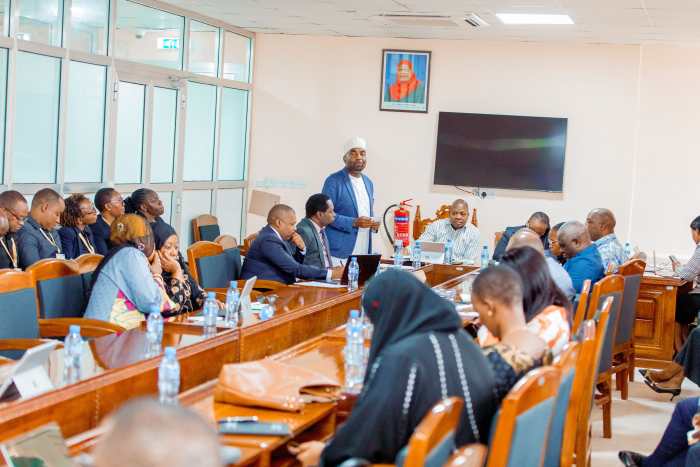
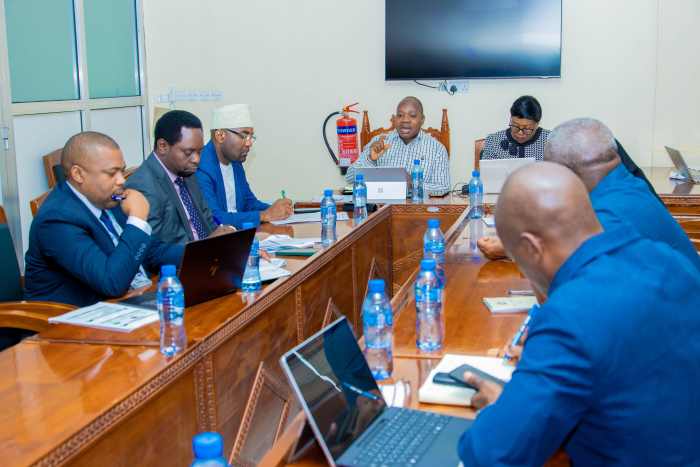
Speaking in Dodoma on February 13, 2026 during a seminar organised by the Office of the Vice President of Tanzania for the Parliamentary Standing Committee on Water and Environment, Minister of State in the Vice President’s Office, Hamad Yussuf Masauni, described the mainstreaming of environmental and climate change issues into the Dira 2050 framework as a “major achievement” in implementing national conservation and environmental management strategies.
Climate Policy moves from periphery to core
For years, environmental policy in many developing economies has been treated as a parallel agenda rather than a central economic pillar. According to Masauni, Tanzania is now reversing that trend.
“The recognition and prioritisation of environmental and climate change issues in Dira 2050 marks a significant step forward in aligning our development pathway with sustainability principles,” he said.
From a business perspective, the integration of climate considerations into long-term planning signals regulatory certainty and opens new avenues for green investment, carbon markets, and climate-resilient infrastructure.
Among the key achievements cited by the Minister is the formal establishment of the National Carbon Monitoring Centre and the National Climate Change Committee.
These institutions are designed to strengthen governance frameworks, enhance carbon accounting, and position Tanzania to benefit from emerging global carbon trading mechanisms.
Environmental and climate change issues have also been integrated into government policies, strategies, plans, and budgets – a move that analysts say could improve inter-ministerial coordination and ensure that sustainability targets are backed by fiscal commitments.
Carbon trading and pollution control projects
Masauni further highlighted progress in implementing carbon trading projects across the country, an area with growing potential for revenue generation and foreign investment. With global demand for verified carbon credits rising, Tanzania’s vast forest resources and land restoration initiatives offer a competitive edge in voluntary and compliance carbon markets.
At the same time, the government is addressing environmental degradation linked to artisanal and small-scale mining – a sector critical to rural livelihoods but often associated with mercury pollution.
The Minister noted that environmental pollution control projects targeting mercury use are being implemented in Geita, Mwanza, Mara, Shinyanga, Singida, Mbeya and Songwe regions. These initiatives aim to reduce health and ecological risks arising from informal gold processing practices.
Infrastructure for Safer Gold Processing
In a move that blends environmental protection with economic formalisation, the government has constructed eight model centres for safer gold processing using controlled mercury systems in Mwanza, Geita, Singida, Mara, Mbeya, Songwe and Shinyanga.
Additionally, an awareness and training centre has been established in Geita to educate small-scale miners on mercury management and environmentally responsible practices.
Laboratory infrastructure has also been strengthened, with new facilities and equipment enabling monitoring of mercury levels in water, air and soil in artisanal mining areas. This is expected to enhance compliance with international environmental standards and improve Tanzania’s credibility in responsible mineral sourcing – a growing requirement in global supply chains.
For investors in the mining value chain, such measures may reduce reputational risk and align local production with ESG (Environmental, Social and Governance) benchmarks increasingly demanded by international buyers and financiers.
Parliamentary Oversight and Public Awareness
Chairperson of the Parliamentary Standing Committee on Water and Environment, Jackson Kiswaga, emphasised that environmental conservation has no boundaries and requires collective responsibility across institutions and communities.
He underscored the importance of public education, particularly in waste separation and environmental stewardship at the grassroots level. Kiswaga also called for closer scrutiny of environmental budgeting from local government upwards, noting that tangible change requires adequate and well-tracked financial allocations.
A Strategic Shift for Sustainable Growth
Tanzania’s push to institutionalise climate governance and environmental management comes at a time when global capital is increasingly flowing towards green economies. By embedding sustainability within Vision 2050 and strengthening its regulatory and institutional frameworks, the country is positioning itself to leverage climate finance, carbon markets, and responsible mining investments. For the business community, the message is clear: environmental compliance is no longer a peripheral issue but a strategic imperative – and, increasingly, a source of competitive advantage.