
By Business Insider Correspondent, Dodoma
The International Monetary Fund (IMF) has commended Tanzania for strong policy coordination and effective implementation of key economic reform programmes, reinforcing investor confidence and macroeconomic stability at a time of heightened global uncertainty.
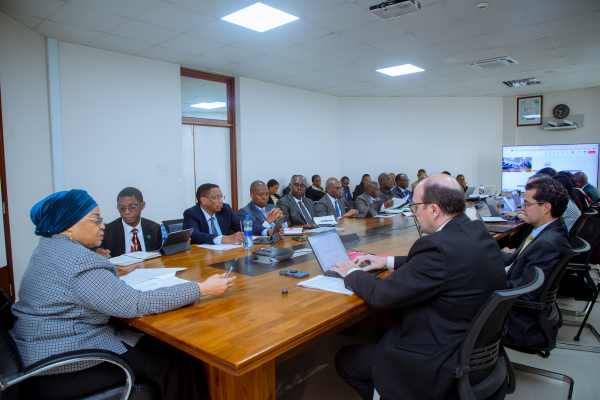
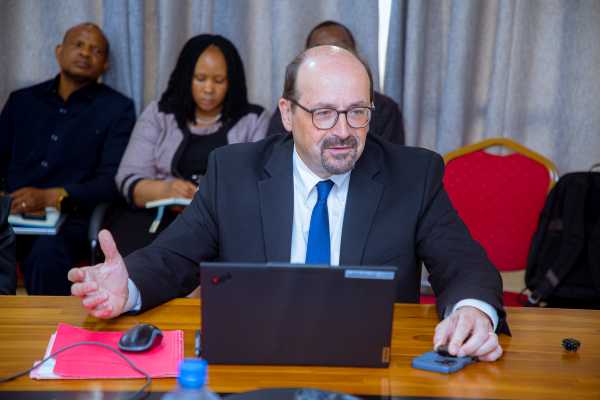
The endorsement came during a high-level review mission led by IMF mission chief Nicolas Blancher, who met a Tanzanian delegation headed by the Permanent Secretary in the Ministry of Finance, Natu El-maamry Mwamba, in Dodoma.
At the centre of discussions were Tanzania’s ongoing engagements under the IMF-supported Extended Credit Facility (ECF) and the Resilience and Sustainability Facility (RSF) – two programmes that have become pivotal in shaping the country’s economic reform agenda.
Reform Momentum Under IMF Programmes
The IMF noted that Tanzania has demonstrated strong commitment in executing reforms aimed at strengthening fiscal discipline, enhancing financial sector resilience, and supporting inclusive growth.
The ECF programme, which provides concessional financing, is designed to stabilise the macroeconomic environment while supporting structural reforms in public finance management, investment frameworks, and financial sector governance. Meanwhile, the RSF programme focuses on climate resilience, helping countries integrate climate risks into economic planning and unlock green financing.
Blancher said the IMF remains committed to supporting Tanzania as it completes ongoing programme reviews and transitions into the next phase of reforms. He added that the two-week mission also assessed how external shocks – including geopolitical tensions in the Middle East – are influencing Tanzania’s economic outlook.
Policy priorities: Financial stability, social spending
The IMF has encouraged Tanzania to deepen reforms in the financial sector while maintaining a careful balance between fiscal consolidation and social investment.
Key policy recommendations include:
- Strengthening financial sector stability and liquidity frameworks
- Expanding social spending, particularly in health and education
- Supporting private sector growth and job creation
- Aligning reforms with the country’s long-term development blueprint, Dira 2050
For Tanzania, these priorities are central to sustaining growth momentum, which has remained relatively strong compared to regional peers, supported by infrastructure investment, services expansion, and improved policy coordination.
Progress on reform benchmarks
According to the Ministry of Finance, Tanzania has made measurable progress under both programmes.
Under the ECF: two out of eight key reform benchmarks have been completed, including the establishment of an Emergency Liquidity Assistance (ELA) framework and improvements to financial collateral systems and five additional reforms are ongoing, including upgrades to public investment management systems, VAT refund mechanisms, and legal frameworks to broaden acceptable collateral
Under the RSF:
- Five out of eight climate-related reforms have been achieved
- Progress includes long-term energy sector planning aligned with climate goals and the development of financial sector climate risk data systems
These milestones reflect a gradual but structured reform trajectory, aimed at strengthening institutional capacity and improving economic resilience.
A longstanding IMF–Tanzania partnership
Tanzania’s relationship with the IMF has evolved significantly over the past decades – from stabilisation programmes in the 1990s to more targeted, reform-oriented engagements today.
In 2022, the IMF approved a combined package under the ECF and RSF frameworks, signalling renewed confidence in Tanzania’s policy direction under President Samia Suluhu Hassan. The programmes have since supported fiscal reforms, improved debt management, and increased transparency in public finance.
The partnership has also helped catalyse additional funding from development partners and international lenders, positioning Tanzania as a relatively stable investment destination within East Africa.
Investor signal and outlook
For investors, the IMF’s positive assessment sends a strong signal on policy predictability and macroeconomic stability – two critical factors in long-term capital allocation.
Government officials reaffirmed their commitment to maintaining close cooperation with the IMF to ensure timely access to financing, sustain reform momentum, and drive inclusive growth.
“The government remains committed to working closely with the IMF to achieve sustainable development and inclusive growth,” Mwamba said, expressing confidence that continued collaboration will unlock further financial resources and strengthen the national economy.
Strategic Implications
As Tanzania advances its Dira 2050 ambitions, the IMF-backed programmes are increasingly seen not just as financing tools, but as anchors for broader structural transformation. With reforms spanning fiscal policy, climate resilience, and financial systems, the country is positioning itself to navigate global shocks while accelerating its transition towards a more diversified and competitive economy.