By Correspondent Joseph Mahumi, Washington D.C.
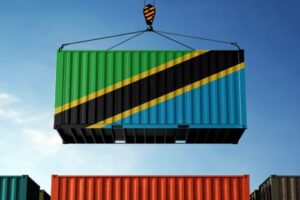
Tanzania is repositioning itself as a central logistics and economic hub in Africa, leveraging large-scale investments in transport corridors to unlock trade, industrialisation and regional integration.
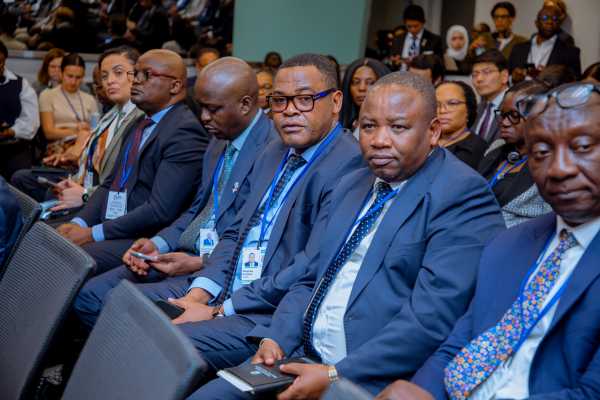
Speaking during a high-level panel at the IMF/World Bank Spring Meetings 2026 in Washington D.C., Finance Minister Khamis Mussa Omar outlined the country’s evolving strategy: shifting from traditional transport corridors to fully-fledged economic corridors designed to drive production, value addition and inclusive growth.
A strategic shift in corridor development
For decades, Tanzania’s transport corridors – most notably the TAZARA Railway – served primarily as transit routes linking landlocked neighbours to the Indian Ocean. While effective in facilitating movement of goods, their broader economic impact along the routes remained limited.
That model is now being redefined.
“The new direction is to transform these corridors into economic corridors,” Omar said, noting that the goal is to stimulate industrial activity, expand trade and develop service ecosystems along transport routes.
This shift reflects a broader policy recalibration: infrastructure is no longer viewed as an end in itself, but as a catalyst for economic clusters, rural transformation and market integration.
Central Corridor and regional reach
At the heart of Tanzania’s regional strategy is the Central Corridor, anchored by the Port of Dar es Salaam. The corridor connects Tanzania to Burundi, Rwanda, the Democratic Republic of Congo, Uganda and South Sudan through a network of roads, railways and inland waterways linked to Lakes Victoria and Tanganyika.

This network has significantly strengthened Tanzania’s position as a trade gateway for East and Central Africa, enabling landlocked economies to access global markets more efficiently.
For businesses, the implications are substantial. Improved corridor efficiency reduces transport costs, shortens delivery times and enhances supply chain reliability – key factors in regional competitiveness.
SGR investment and trade expansion
The transformation is being underpinned by heavy capital investment, most notably the Standard Gauge Railway (SGR), a flagship project valued at over US$10 billion.
The railway, currently under construction in multiple phases across Tanzania, is expected to extend beyond national borders into Burundi and the Democratic Republic of Congo. Once completed, it will significantly expand regional connectivity and freight capacity.
This expansion is not just about transport. It is closely linked to Tanzania’s industrialisation agenda, particularly in agro-processing and mineral beneficiation, where efficient logistics are essential for scaling production and accessing export markets.
Tourism is also expected to benefit, as improved infrastructure enhances accessibility to key destinations.
Global perspective: corridors as growth engines
The World Bank has strongly backed the shift towards economic corridors. Ndiamé Diop emphasised that corridors have the potential to drive job creation, improve competitiveness and deepen regional integration.
However, he pointed to structural challenges in how such projects are financed and sequenced. Coastal countries often invest first, while landlocked nations reap early benefits – raising questions about how to balance costs and returns across participating economies.
This dynamic highlight the need for coordinated regional planning and innovative financing models to ensure equitable outcomes.
Private sector at the centre
From a business perspective, the success of Tanzania’s corridor strategy will depend heavily on private sector participation.
Zarau Wendeline Kibwe stressed the importance of creating an enabling environment that allows businesses to invest, operate and scale along these corridors.
Without supportive policies, efficient customs systems and reliable regulatory frameworks, infrastructure investments alone may not translate into economic gains.
For investors, the opportunities are broad. Economic corridors create demand across multiple sectors, including logistics, warehousing, manufacturing, energy, real estate and financial services. They also open up previously underserved regions, linking production zones to domestic and international markets.
Implications for East Africa’s business landscape
Tanzania’s corridor-led strategy is reshaping the competitive dynamics of East Africa.
As infrastructure improves, Dar es Salaam is increasingly positioning itself as a viable alternative to traditional regional gateways. This could intensify competition among ports and logistics hubs while also expanding overall trade volumes across the region.
For businesses operating in East and Central Africa, the emergence of integrated corridors offers new opportunities to optimise supply chains, reduce costs and access larger markets.
At the same time, it raises the bar for efficiency, requiring firms to adapt to faster, more interconnected trade systems.
A platform for long-term transformation
The broader significance of Tanzania’s approach lies in its alignment with continental ambitions for industrialisation and economic self-reliance.
By integrating transport infrastructure with production systems, the country is moving towards a model where corridors function as engines of growth rather than passive transit routes.
International financial institutions, including the World Bank and the African Development Bank, are expected to play a key role in mobilising the capital required for these large-scale projects.
As Africa seeks to accelerate economic transformation, Tanzania’s evolving corridor strategy offers a case study in how infrastructure, policy and investment can converge to reshape regional trade and development. The challenge ahead will be execution – ensuring that investments translate into tangible economic outcomes, and that the benefits of connectivity are widely shared across sectors and communities.