

By Isaac Lubeja
When the Dar es Salaam Stock Exchange (DSE) closed September 2026 with a total market capitalisation of TSh40.57 trillion, it marked more than another milestone. It was the highest valuation in the bourse’s history, 69 percent above its level at the end of 2025 and roughly double its value in February 2025.
The market added about 4.7 percent in September alone, rising from TSh38.74 trillion at the end of August. The Tanzania Share Index, which tracks locally listed companies, had gained nearly 80 percent since the beginning of the year. Even after accounting for a seven percent depreciation of the shilling, the exchange was worth about US$15.3 billion, representing a 55 percent increase.
In our assessment, September extended the market’s August breakout rather than marking the beginning of an entirely new rally. Three factors were particularly influential: strong half-year bank earnings, NMB Bank’s share split and gains spreading to other listed companies.
The fundamentals have provided important support. CRDB Bank reported a half-year profit of TSh417 billion, while NMB entered the year on the back of a TSh756 billion profit for 2025 and a record dividend of TSh305 billion. These results suggest that at least part of the market’s appreciation reflects improving corporate performance rather than price momentum alone.
Perhaps more encouraging is the changing investor dynamic.
During the third quarter, foreign investors sold shares worth TSh273.4 billion and purchased only TSh53.4 billion, resulting in net outflows of about TSh220 billion. Tanzanian investors absorbed the selling, yet share prices continued to rise. This points to growing domestic capacity to sustain the market, even when foreign participation weakens.
Equity turnover reached TSh824 billion in the third quarter, six times the level recorded in the final quarter of 2025. The combination of rising valuations and stronger trading activity suggests that the rally has been accompanied by increased market participation, rather than being driven by prices alone.
NMB leads a bank-powered rally
There is little doubt about where the bulk of this year’s gains originated: the banking sector.
Of the TSh16.2 trillion added to market capitalisation between January 2 and October 2, NMB Bank contributed TSh5.9 trillion, CRDB Bank TSh3.7 trillion and KCB Bank TSh2.5 trillion. Together, the three stocks accounted for roughly three-quarters of the increase. The Banks, Finance and Investment Index more than doubled.
NMB deserves particular attention. It has become the exchange’s largest listed company, with a market capitalisation of about TSh10.2 trillion, equivalent to about a quarter of the total market.
Adjusted for its one-for-ten share split on August 24, NMB’s share price rose 137 percent during the year, from TSh859 to TSh2,040.
We regard the split as one of the year’s most significant market-development events. By reducing the price of an individual share from around TSh20,000 to about TSh2,000, it lowered the entry cost for investors and potentially widened participation among ordinary savers.
The effect on trading activity was striking. In the week ending August 28, NMB accounted for 69 percent of all equity trading. On October 2, its 516,034 shares changed hands, worth TSh1.05 billion. On January 2, only 1,839 shares were traded, valued at TSh15.8 million.
The performance was not confined to banks. Vodacom Tanzania rose 85 percent, helping lift the Commercial Services Index by 79 percent. Tanga Cement gained 58 percent, NICO rose 99 percent, Maendeleo Bank advanced 152 percent and TOL Gases gained 70 percent.
Industrial stocks, however, lagged, with the Industrial and Allied Index rising by only 18 percent. This divergence is important: the rally has created substantial opportunities, but its benefits have not been distributed evenly across the market.
Bonds and ETFs broaden investment opportunities
Beyond share-price appreciation, developments in other segments of the capital market offer encouraging evidence of diversification.
Exchange-traded funds (ETFs) grew elevenfold by September this year, from TSh21.6 billion to TSh238.9 billion, following the February listing of the iTrust EAC Large Cap ETF, which attracted subscriptions equivalent to 540 percent of its initial offer.
ETF trading reached TSh28.7 billion in the third quarter, more than double the second-quarter level.
ETFs are investment funds traded on an exchange like ordinary shares. They allow investors to gain exposure to a basket of securities through a single investment, potentially reducing the cost and complexity of building a diversified portfolio. Their growth could therefore help broaden participation in the market, particularly among investors who may not have the resources or expertise to select individual stocks.
The debt market is also expanding. Outstanding corporate bonds rose 62 percent to TSh513 billion, while sukuk, green bonds, infrastructure bonds and sub-national instruments are adding to the range of financing and investment options alongside government securities.
We also welcome the July decision to open government Treasury bills and bonds to all non-resident investors. Over time, this could widen the investor base and attract additional foreign capital, although the scale of the benefit will depend on market conditions and investor appetite.
Taken together, equities, ETFs, government and corporate bonds, Islamic finance instruments, green bonds and sub-national securities point to a market that is gradually becoming more diverse.
For us, this diversification is a more meaningful indicator of capital-market development than any single index record. A deeper market should not only generate investment returns; it should also mobilise domestic savings, provide businesses with alternatives to bank borrowing and channel capital towards productive economic activity.
Why we remain cautiously optimistic
We expect the fourth quarter to remain firm, but increasingly selective. Following a 69 percent rise in market capitalisation since the end of 2025, sustaining the rally will require continued earnings growth, credible corporate performance and sound investor judgement. Valuations cannot rise indefinitely on momentum alone.
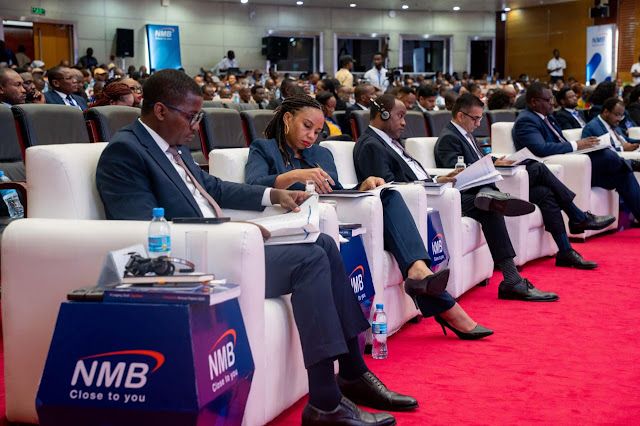
The next important test will be the third-quarter results of listed banks, expected from late October. These results should help investors assess whether earnings can support current share prices and whether the sector’s growth remains sustainable.
Our greatest concern, however, is market concentration. NMB and CRDB together account for 64 percent of domestic market value. This means that any significant setback affecting the two banks could have an outsized impact on the wider market.
Investors should also monitor monetary conditions following the Bank of Tanzania’s July rate increase to 6.25 percent, continued pressure on the shilling and persistent foreign selling. Higher interest rates can influence borrowing costs, corporate profitability and the relative attractiveness of different investments, while currency movements can affect foreign investors’ returns.
The market’s slight retreat to TSh40.38 trillion by October 2, from September’s closing level of TSh40.57 trillion, should be viewed in this context. After such a strong run, some profit-taking is neither unusual nor necessarily unhealthy.
Ultimately, Tanzania’s capital market is showing encouraging signs of maturity: domestic investors are absorbing foreign selling, trading activity has increased, listed companies are delivering strong earnings and new instruments are widening investment choices.
The challenge now is to turn these gains into lasting progress. That will require more listed companies, broader sectoral representation, stronger participation by domestic institutional and individual investors, and continued development of the bond and ETF markets.
The DSE’s record valuation is a significant achievement. But the more important measure of success will be whether the market can sustain investor confidence, finance productive investment and distribute opportunities more broadly across Tanzania’s economy.
The author is an Advisory Manager at Zan Securities.